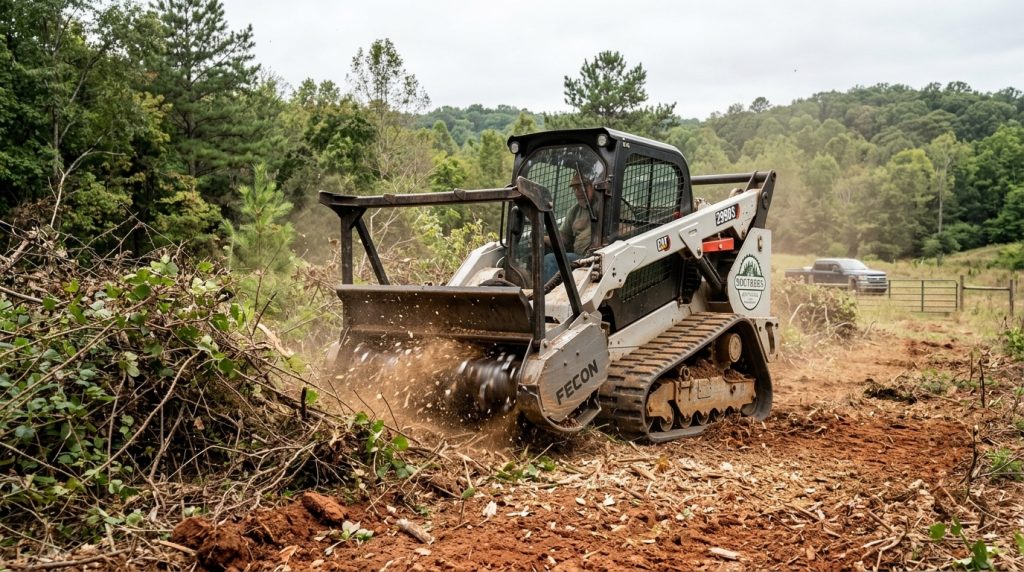
Forestry Mulching for Trails, Fence Lines, and Property Access starts with a clear outcome and a clearly marked work area. A property owner may want a trail, fence line, driveway approach, sight line, homesite buffer, pasture edge, or access route. Those goals call for different widths, finish levels, equipment, and treatment of trees and debris. SG Land Management serves Northwest Georgia with land clearing, forestry mulching, bush hogging, and related property-management services.
The short answer
Before equipment arrives, mark boundaries, access points, utilities, wet areas, structures, and every tree or feature that must remain. Explain how the cleared area will be used afterward. For selective access work, forestry mulching may reduce brush and small vegetation while leaving processed material on site. Construction-ready work may require a different combination of land clearing, excavation, grading, and material removal.
Define what “cleared” means
Property owners and contractors can use the same word while picturing different results. “Clear a trail” might mean a walkable path through brush. “Clear for a fence” may require room for equipment, posts, gates, and maintenance. “Clear a homesite” may mean removing roots and organic material from a building footprint. Write down the intended use, desired width, finish level, and what should happen to cut material.
Mark the work zone before the site visit
- Walk the proposed boundary and flag corners or edges.
- Use a different color to mark trees, vegetation, or features that must remain.
- Identify the planned entrance and any narrow gates or weight-limited surfaces.
- Mark known utilities, septic components, wells, drainage structures, and easements.
- Flag wet areas, steep slopes, exposed rock, fencing, and debris piles.
- Photograph the route and any sensitive conditions.
Forestry mulching works well for selective access
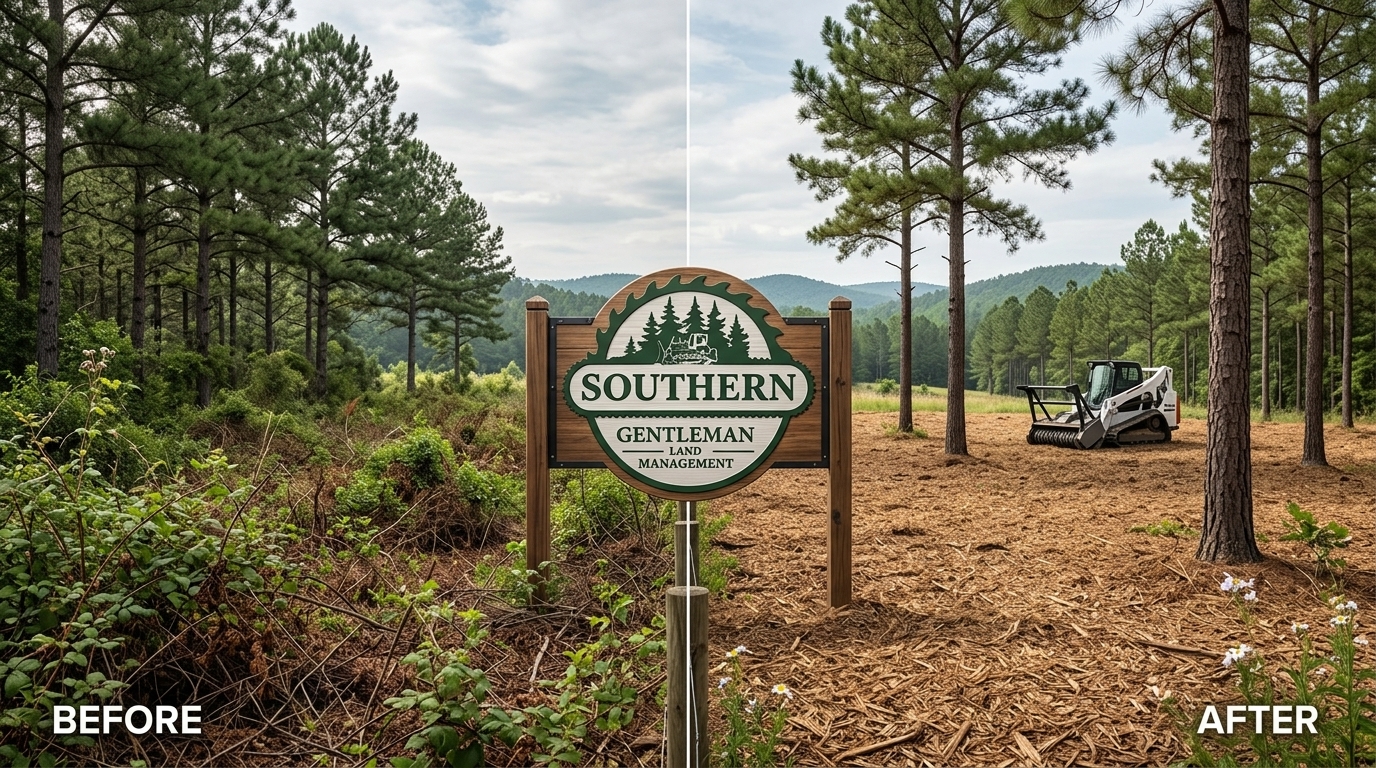
A mulcher can process brush and smaller woody vegetation near ground level while the operator works around selected trees. That makes the method useful for trails, fence lines, utility access, hunting lanes, and the reclamation of overgrown edges. The remaining mulch can help cover exposed soil, although depth and final appearance vary with vegetation density.
When traditional clearing may be necessary
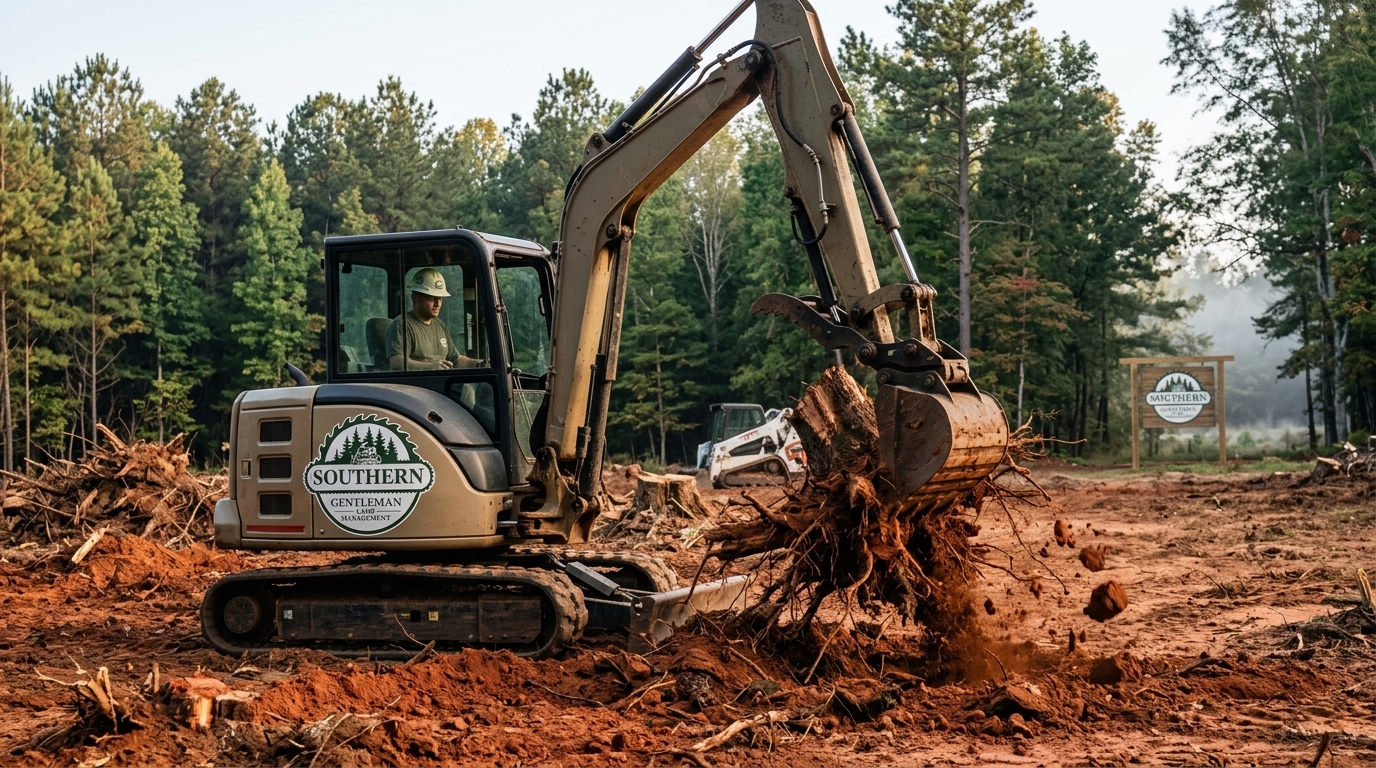
Traditional equipment may be needed for large timber, stump extraction, major grading, building pads, road bases, buried debris, or projects that require bare mineral soil. A hybrid scope can use mulching for the perimeter and selective areas while excavation or dozer work handles the construction footprint.
Conditions that change production
- Tree diameter, density, species, and vine load
- Rock, stumps, wire, trash, and hidden debris
- Wet soil, drainage, slope, and erosion risk
- Equipment access and room to turn or stage material
- Required width and finished surface
- Whether material remains, is piled, is hauled, or requires another disposal method
Plan for what happens after clearing
A trail may need drainage, compaction, stone, or recurring vegetation control. A fence line needs sufficient working width and future maintenance access. A homesite may require survey work, permits, erosion controls, grading, and soil preparation. Clearing is one step in a larger property plan.
Avoid these common mistakes
Do not rely on an informal boundary if neighboring property could be affected. Do not assume utility markings identify every private line or septic component. Do not ask an operator to decide which trees stay after work begins. Do not compare estimates without checking whether they include hauling, grading, stump work, cleanup, and the same finish standard.
Useful related resources
Property owners comparing methods can review SG Land Management’s existing guide to forestry mulching versus traditional land clearing. Owners planning future construction can also review preparing a lot for new construction before defining the work zone.
Frequently asked questions
Does forestry mulching remove the entire root system?
No. It processes vegetation near the surface but is not the same as excavating every stump and root.
How wide should a trail or fence line be?
The width depends on its use, equipment, drainage, turns, gates, and future maintenance. Define those needs before marking it.
Can the operator choose which trees to preserve?
The operator can work selectively, but the owner should mark preservation trees and discuss clearance around them in advance.
Is a mulched surface ready for construction?
Not automatically. Foundations, road bases, and hardscape typically require different preparation and removal of unsuitable organic material.
