What You Are Actually Dealing With
Before any work begins, you need an honest assessment of your lot. North Georgia’s climate and rainfall create ideal conditions for aggressive plant growth, and a property left alone for even two to three years can look like it has been abandoned for a decade.
Here is what we typically find on overgrown residential lots in Bartow, Cherokee, Cobb, and Paulding counties:
Invasive species: Kudzu is the obvious one, capable of growing a foot per day in summer. But Chinese privet, Japanese honeysuckle, and English ivy are just as destructive in the long run. Privet forms dense thickets that choke out native plants. Honeysuckle smothers everything it climbs. English ivy kills mature trees by adding weight, trapping moisture, and blocking sunlight from the canopy.
Volunteer saplings and brush: Sweet gum, pine, and poplar saplings spring up fast on neglected lots. Within three to five years, you can have hundreds of saplings with trunks two to four inches in diameter packed into a quarter acre.
Hazard trees: Dead standing trees, trees with root damage from vine overgrowth, and leaners that threaten structures or power lines. These are safety priorities.
Buried debris: Old fencing, concrete, metal, and trash that previous owners left behind, now hidden under years of growth.
Walk your lot (carefully) and take photos. Note any structures, property lines, drainage patterns, and trees worth keeping. If the growth is too dense to enter safely, that tells you something about the scope of the job.
The Restoration Process: Step by Step
Step 1: Assessment and Planning
Mark every tree you want to keep. Identify property boundaries. Check for utilities (call 811 before any ground work). Note any slopes, wet areas, or drainage issues that will affect equipment access. If your lot is on a hillside, which is common across Cherokee and Bartow counties, erosion control becomes part of the plan from day one.
Step 2: Hazard Tree Removal
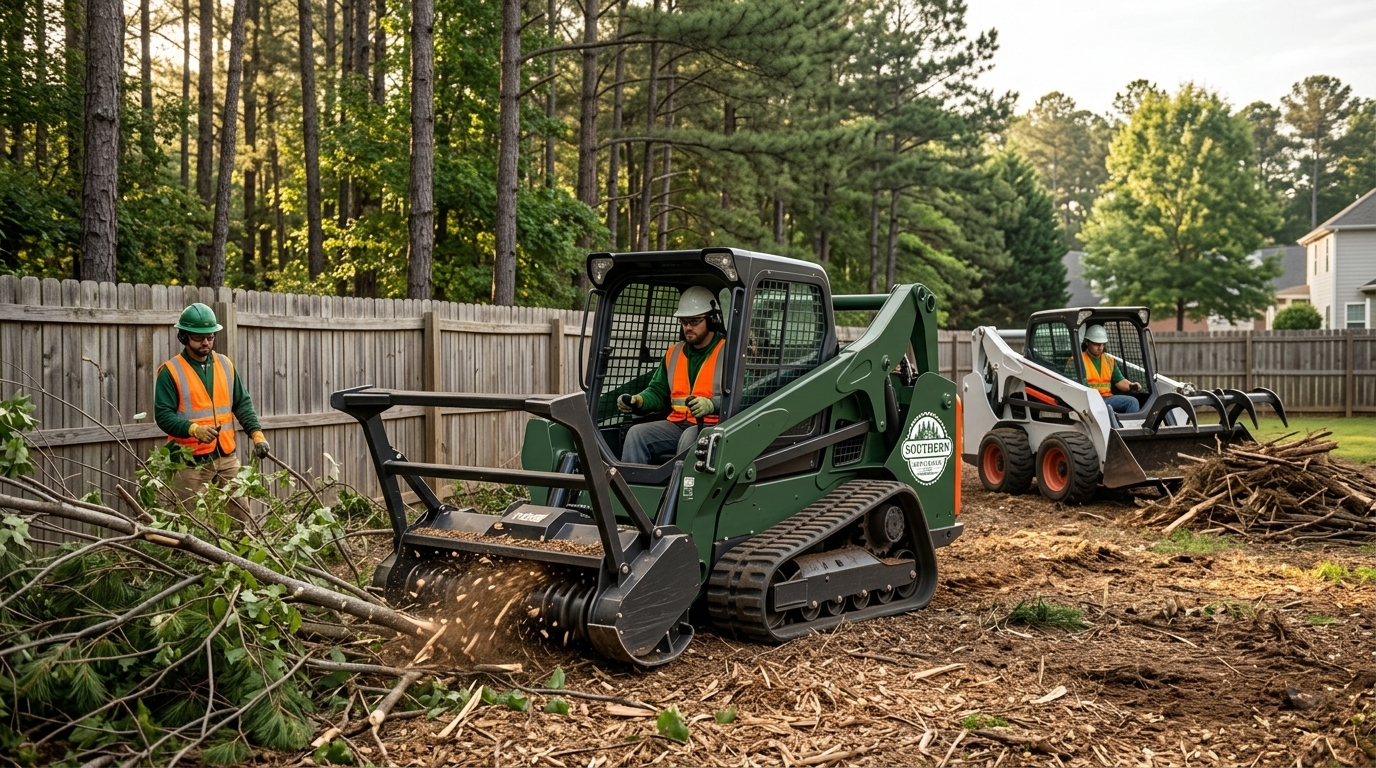
Dead, dying, or dangerously leaning trees come down first. This is not optional and not a DIY job. A dead pine near a house or power line requires professional felling, and the consequences of getting it wrong are severe.
If your property is in the Kennesaw or Acworth area, we recommend Vilchis Tree Services Pro for tree removal in Acworth. They handle hazard trees, full removals, and stump grinding throughout that part of Cobb and Cherokee counties.
For properties in Bartow County and surrounding areas, tree work is typically the first subcontracted step before our land clearing crews move in.
Step 3: Brush Clearing and Vine Removal
With hazard trees handled, the next phase is removing the understory: brush, vines, privet thickets, and small saplings. On smaller lots, this can mean chainsaw work and hand clearing. On anything over a quarter acre, you need equipment.
Bush hogging handles tall grass, weeds, and light brush on lots where the growth has not yet turned woody. If your lot was mowed two years ago and has knee-high to chest-high growth, bush hogging may be all you need.
For heavier growth with saplings, vines, and dense brush, you are looking at a more involved land clearing approach.
Step 4: Forestry Mulching
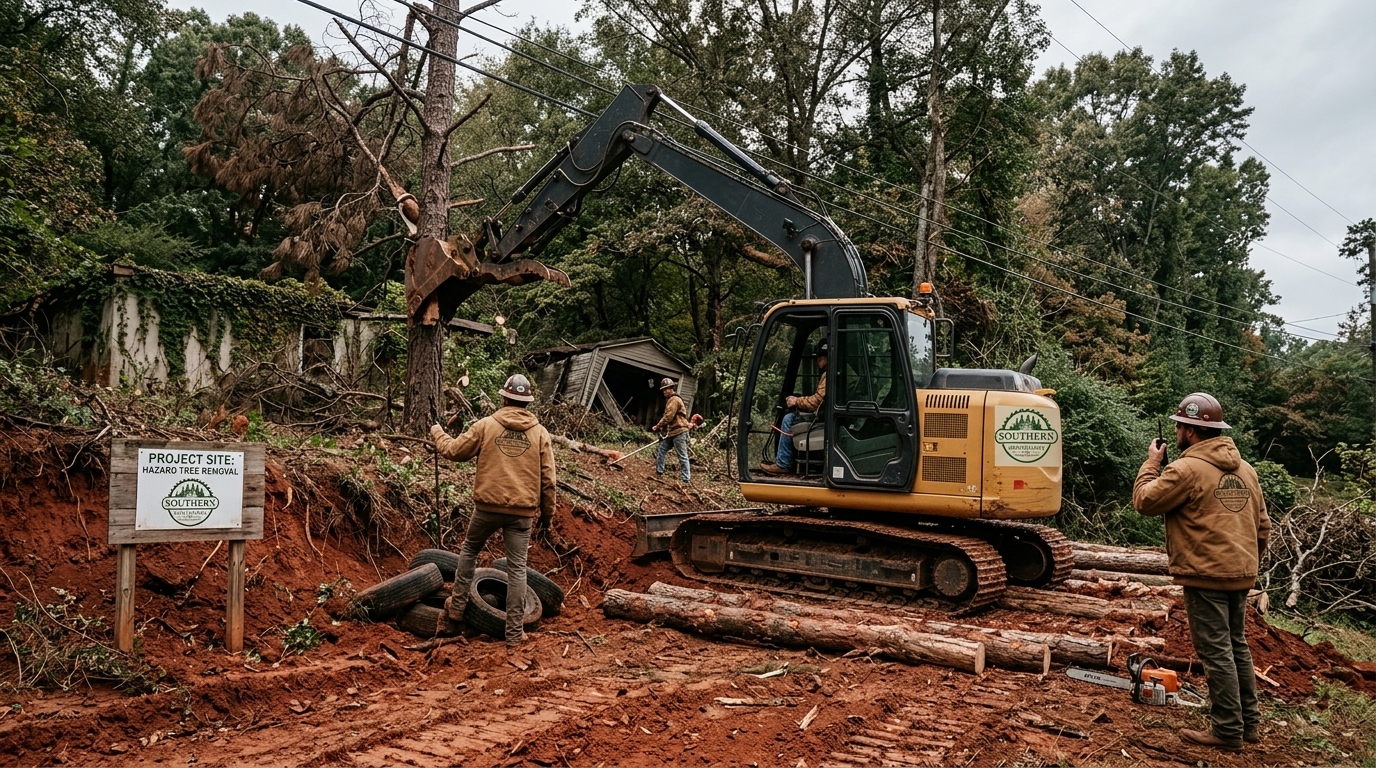
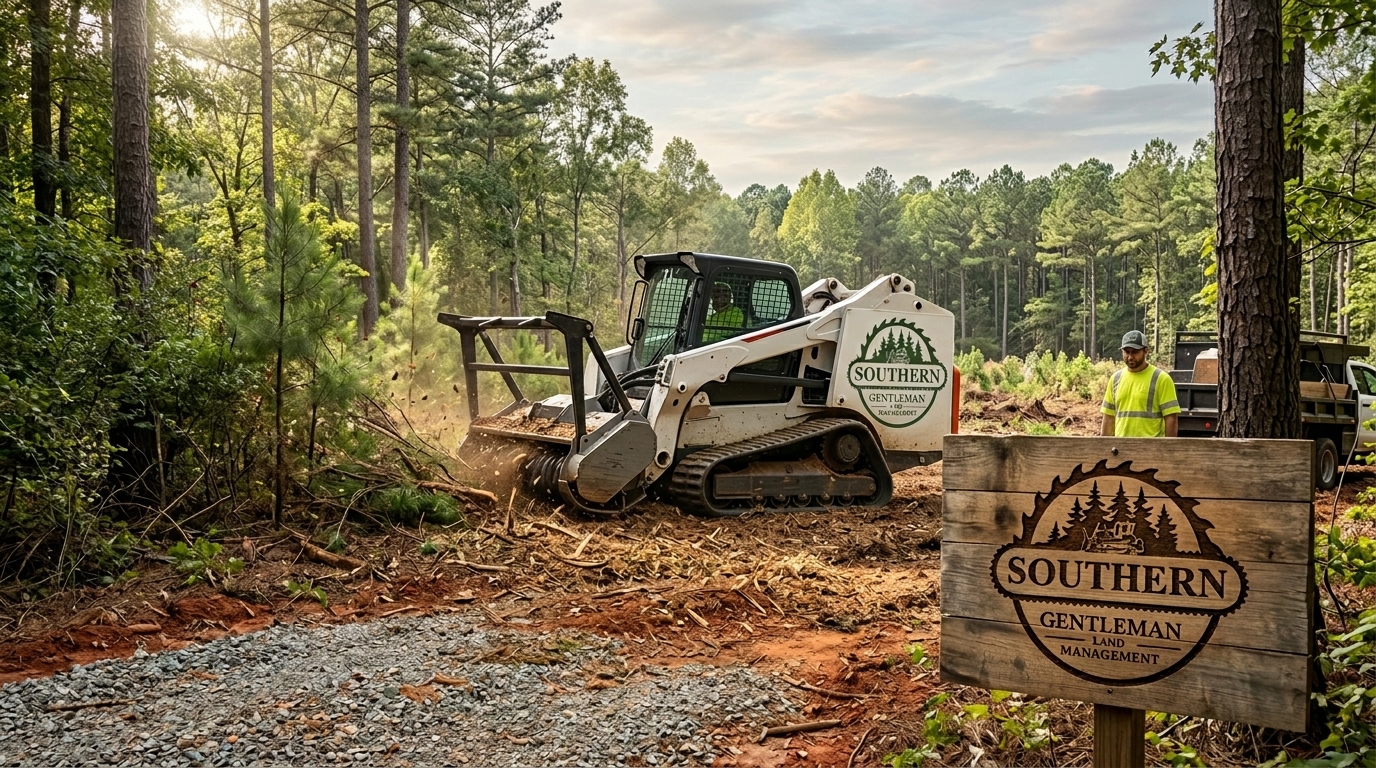
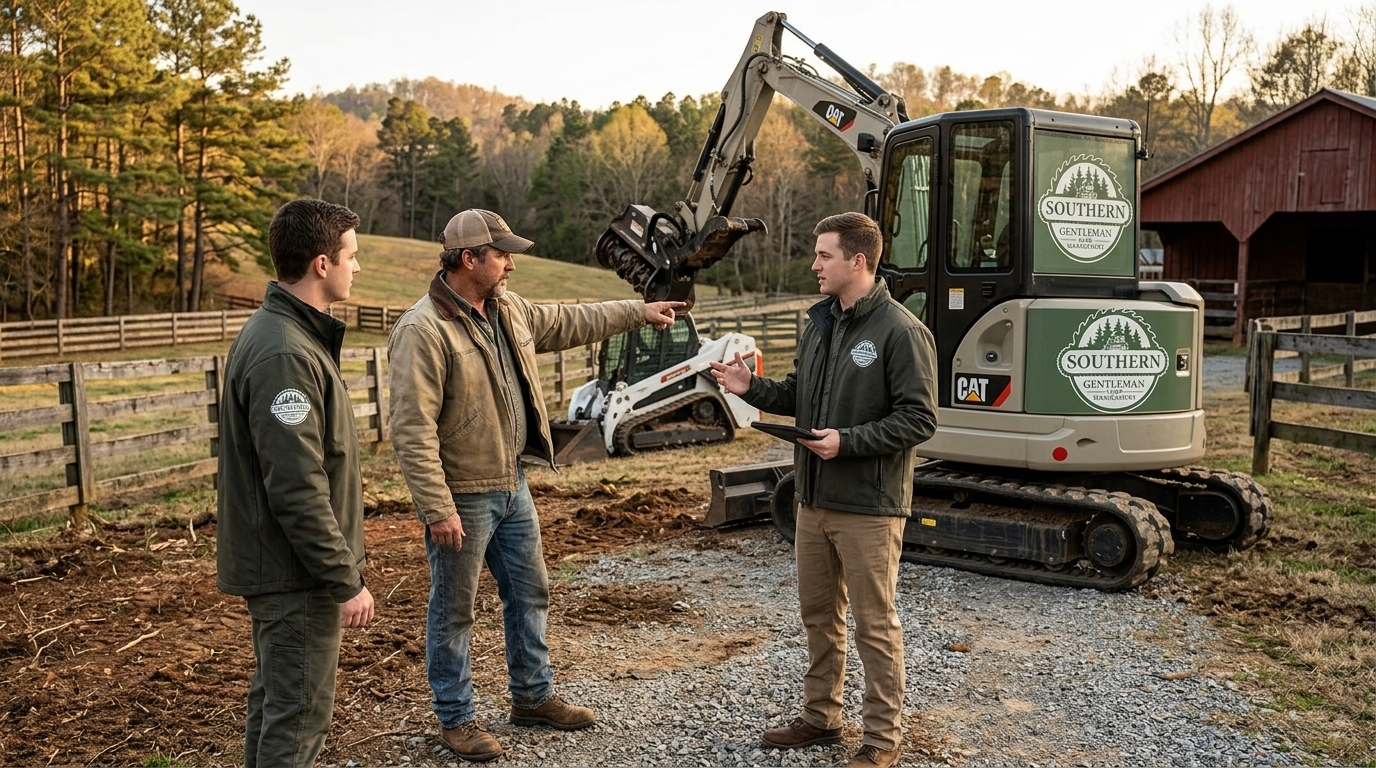
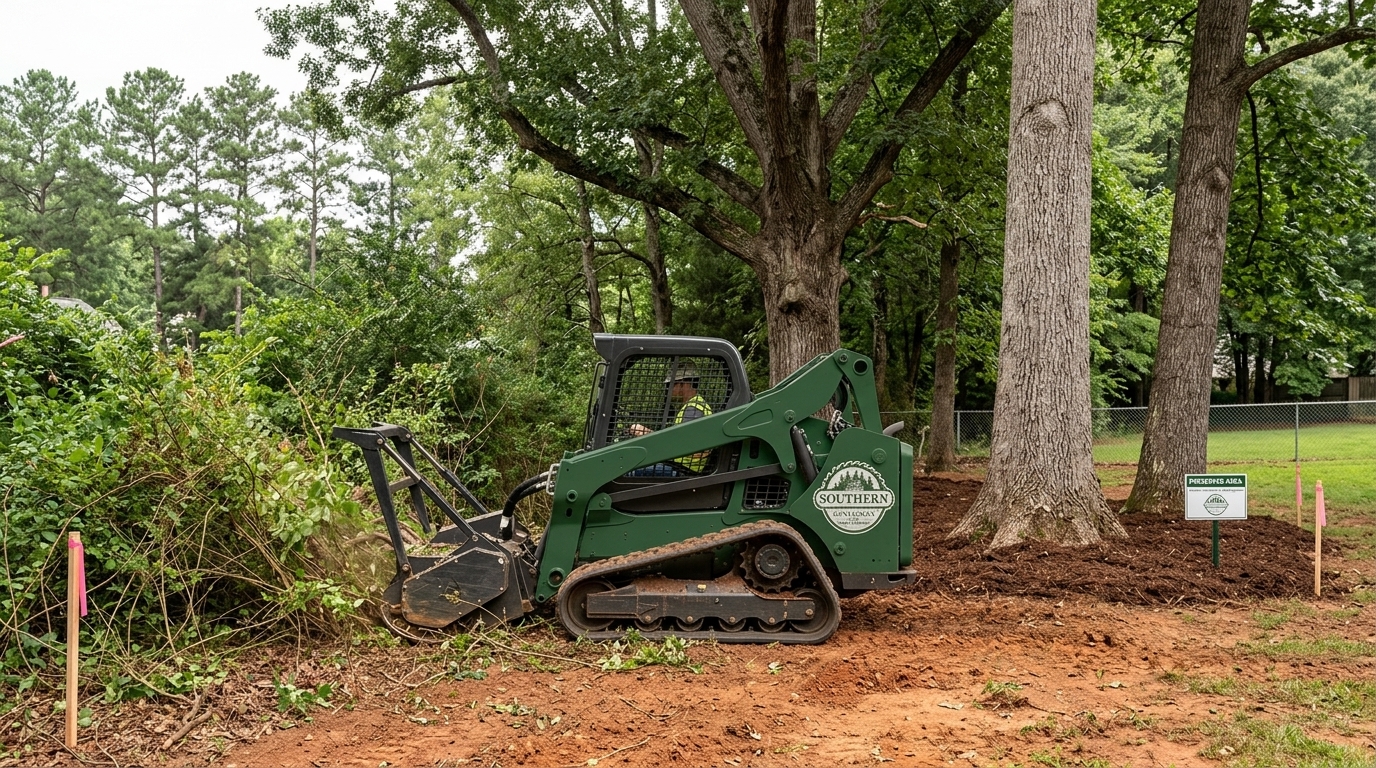
This is where overgrown lot restoration gets efficient. Forestry mulching uses a single machine to cut, grind, and clear trees, brush, and stumps up to about six to eight inches in diameter. The mulched material stays on the ground as a natural cover that suppresses regrowth, prevents erosion, and breaks down into the soil over time.
For residential lot restoration, forestry mulching is often the most cost-effective option because it combines several steps into one: no hauling debris off-site, no burning, no separate stump grinding for smaller trees. One machine, one pass, and the lot is clear.
Forestry mulching works best on:
- Lots with dense saplings and brush (the sweet spot is growth under eight inches in diameter)
- Properties where you want to keep select mature trees and clear everything else around them
- Sloped lots where you need ground cover left behind to prevent erosion
- Vacant lots being prepared for building, fencing, or landscaping
Step 5: Grading and Drainage (If Needed)
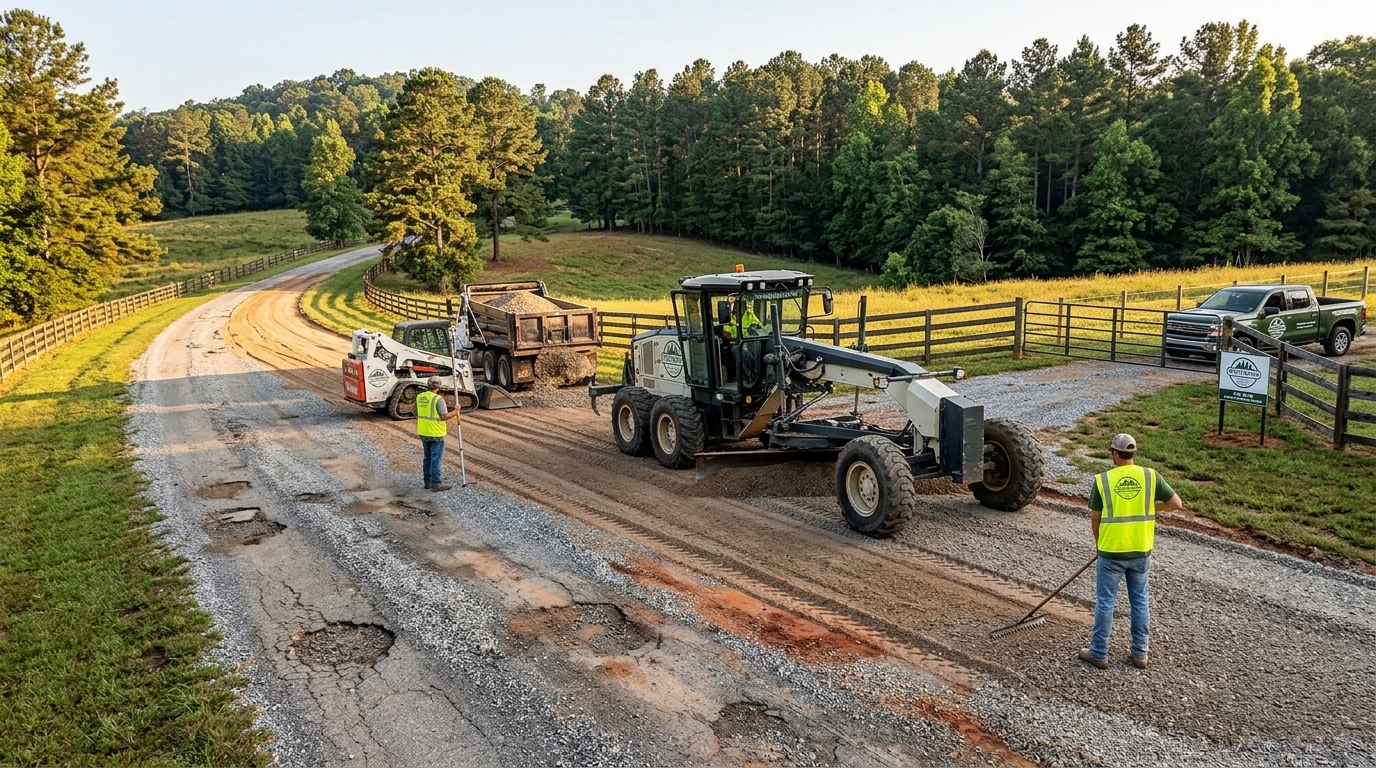
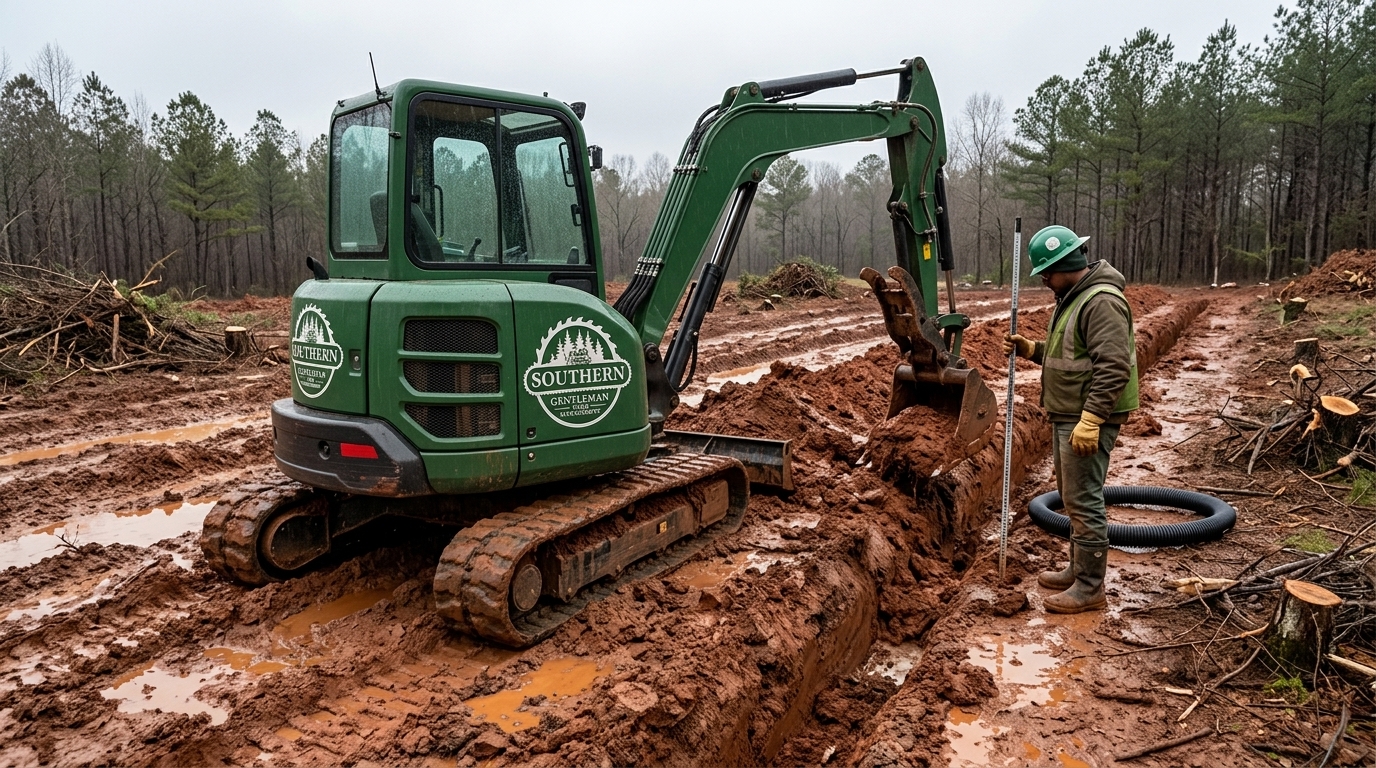
Once the lot is cleared, you may discover grading issues that were hidden under all that growth. Low spots that hold water, uneven terrain, or slopes that direct runoff toward a structure. Light grading work can correct drainage problems and create a usable surface for the next phase of your project, whether that is a lawn, garden, driveway, or building pad.
Step 6: Ongoing Maintenance Plan
This is the step most property owners skip, and it is exactly why they end up calling us in the first place. North Georgia does not give you a break. Without a maintenance plan, kudzu and privet will be back within a single growing season.
Your maintenance plan should include:
- Quarterly mowing or bush hogging on cleared areas through the growing season (April through October)
- Targeted herbicide treatment on invasive species stumps and root systems, especially privet and kudzu, immediately after clearing and again at 90 days
- Annual inspection of the lot perimeter for new invasive growth creeping in from neighboring properties
- Selective pruning of kept trees to maintain canopy health and airflow
When DIY Works vs. When to Hire Professionals
DIY is reasonable when:
- The lot is under a quarter acre with no trees over four inches in diameter
- Growth is limited to grass, weeds, and light brush (no woody vines or privet thickets)
- No dead or leaning trees are present
- The terrain is flat and accessible
- You own or can rent a quality brush mower or walk-behind brush cutter
Hire professionals when:
- Trees need to come down, especially anything near structures or power lines
- The lot has dense privet, kudzu, or other invasive species that require equipment and herbicide follow-up
- Saplings are over four inches in diameter or packed too densely for hand tools
- The terrain is steep, rocky, or has drainage issues
- The lot is over a quarter acre with heavy growth
- You need the job done in days, not weekends spread over months
Most residential lot owners in our service area fall into the second category. By the time you call, the lot is usually past the point where a weekend with a chainsaw will make a real dent.