Why Property Line Clearing Matters
Overgrown property lines create real problems that get worse the longer you wait.
Survey visibility: When boundary markers and iron pins are buried under brush, you have no reliable way to confirm where your property ends and your neighbor’s begins. That ambiguity leads to encroachment issues and legal headaches.
Fence installation: If you are planning a new fence, the fence company needs clear, accessible property lines to work along. Clearing comes first, or you pay the fence crew to stand around while someone else clears ahead of them.
Fire prevention: Overgrown boundary areas accumulate dead wood, leaf litter, and dry brush that become fuel corridors carrying fire from one lot to the next. This risk increases as residential lots push closer to wooded areas throughout Cobb County.
Pest control: Dense undergrowth along property lines harbors ticks, mosquitoes, snakes, and rodents. A clear boundary creates a buffer zone between the woods and your yard. This is especially relevant in Marietta neighborhoods that back up to creek corridors and undeveloped parcels.
Neighbor relations: A visible, maintained boundary line is the simplest form of good fencing. Less ambiguity means fewer disagreements.
Cobb County Regulations and Tree Ordinances
Before you clear anything, understand what Cobb County allows and what it does not.
Tree Removal Permits
Cobb County enforces a tree ordinance in unincorporated areas. If a tree on your property line has a diameter at breast height (DBH) of 6 inches or greater, you may need a removal permit. Certain hardwoods (oaks, hickories, maples) receive additional protections as specimen or heritage trees.
The City of Marietta has its own tree preservation ordinance. Within city limits, trees with a DBH of 8 inches or more typically require review before removal. Penalties for unauthorized removal can run into the thousands per tree.
What You Can Clear Without a Permit
In most cases, you are free to clear the following from your own property without a permit:
- Understory brush, vines, and scrub growth
- Dead or fallen trees and limbs
- Invasive species (privet, kudzu, English ivy, Chinese wisteria)
- Saplings under the DBH threshold
Shared Boundary Trees
Trees that straddle the property line are legally shared. You cannot remove a boundary tree without your neighbor’s consent. Georgia law (O.C.G.A. 44-9-1) gives landowners the right to trim overhanging branches up to the property line, but not beyond it.
For larger trees along the boundary that need trimming or full removal, a qualified tree service in Marietta can handle the work properly and help navigate permitting requirements.
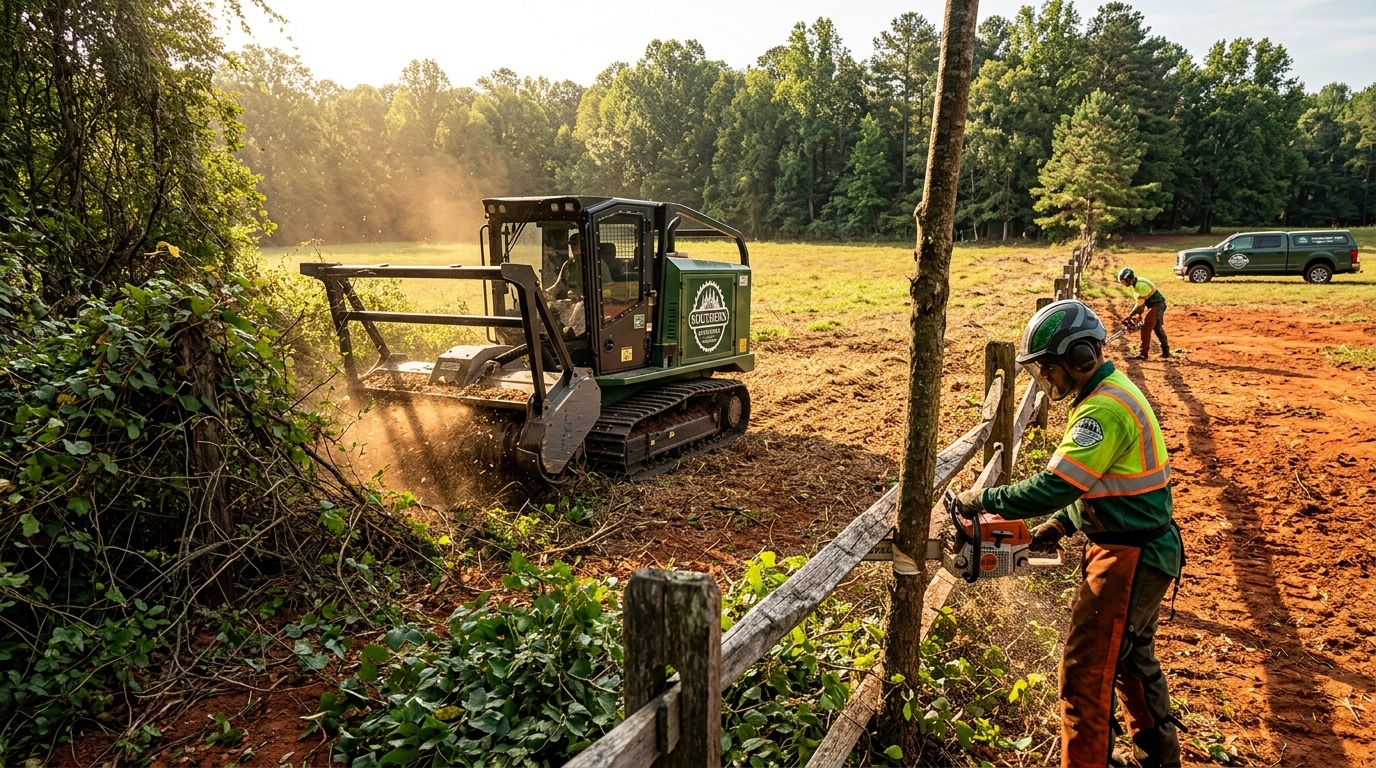
The Process: How to Clear Property Lines the Right Way
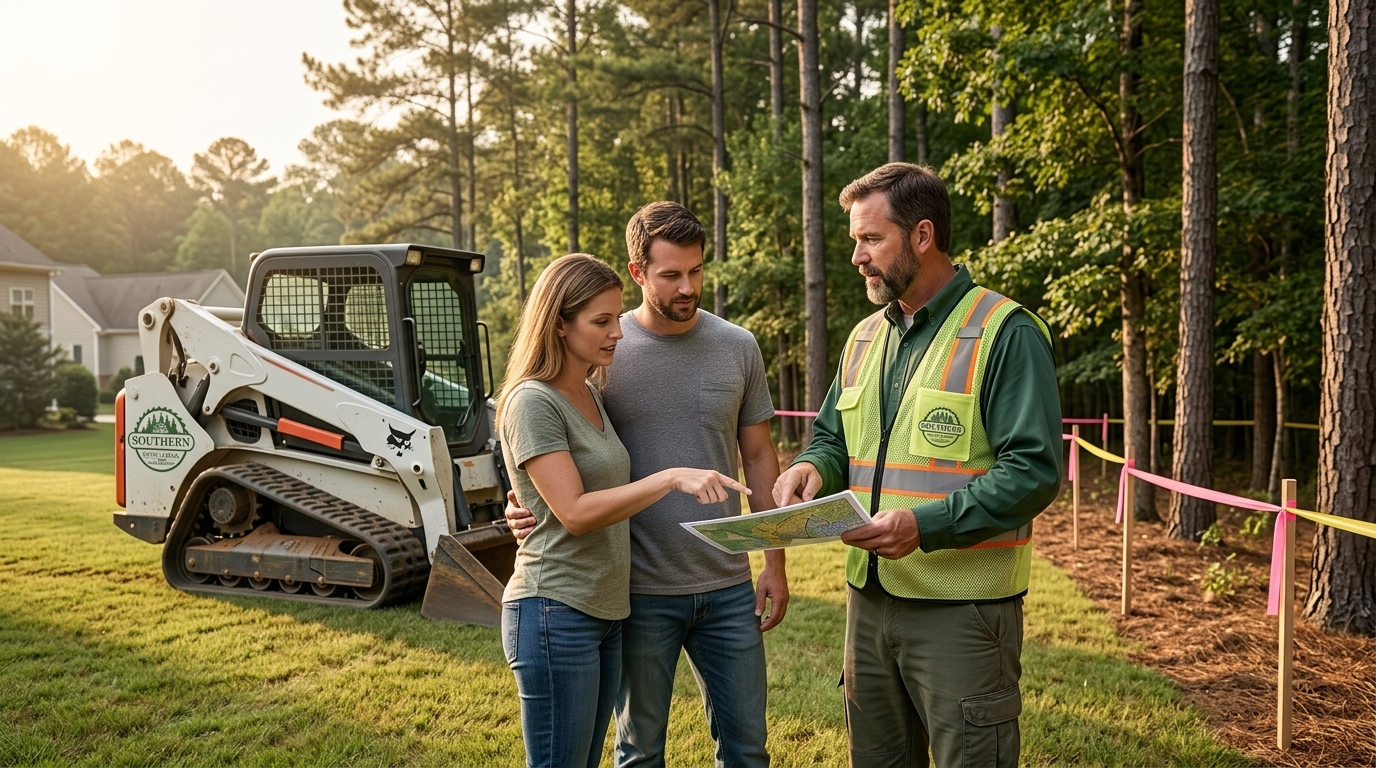
Step 1: Get a Current Survey
Do not guess where your property lines are based on old fence posts or what the previous owner told you. A licensed Georgia surveyor will locate and mark your pins and boundaries. Expect to pay $400 to $800 for a standard residential survey in Cobb County. This prevents you from accidentally clearing your neighbor’s property.
Step 2: Walk the Lines and Assess
Once the survey is done, walk every boundary. Note what is growing along each section: brush only, small trees, large trees, vines on existing fences, or a mix. This assessment determines which clearing method makes sense for each stretch.
Step 3: Clear Using the Right Method
Not all property lines need the same treatment. Match the method to the conditions (see below).
Step 4: Establish a Maintenance Schedule
Property lines that get cleared once and then ignored will look the same as before within two to three growing seasons in North Georgia’s climate. Plan for annual or biannual touch-ups.
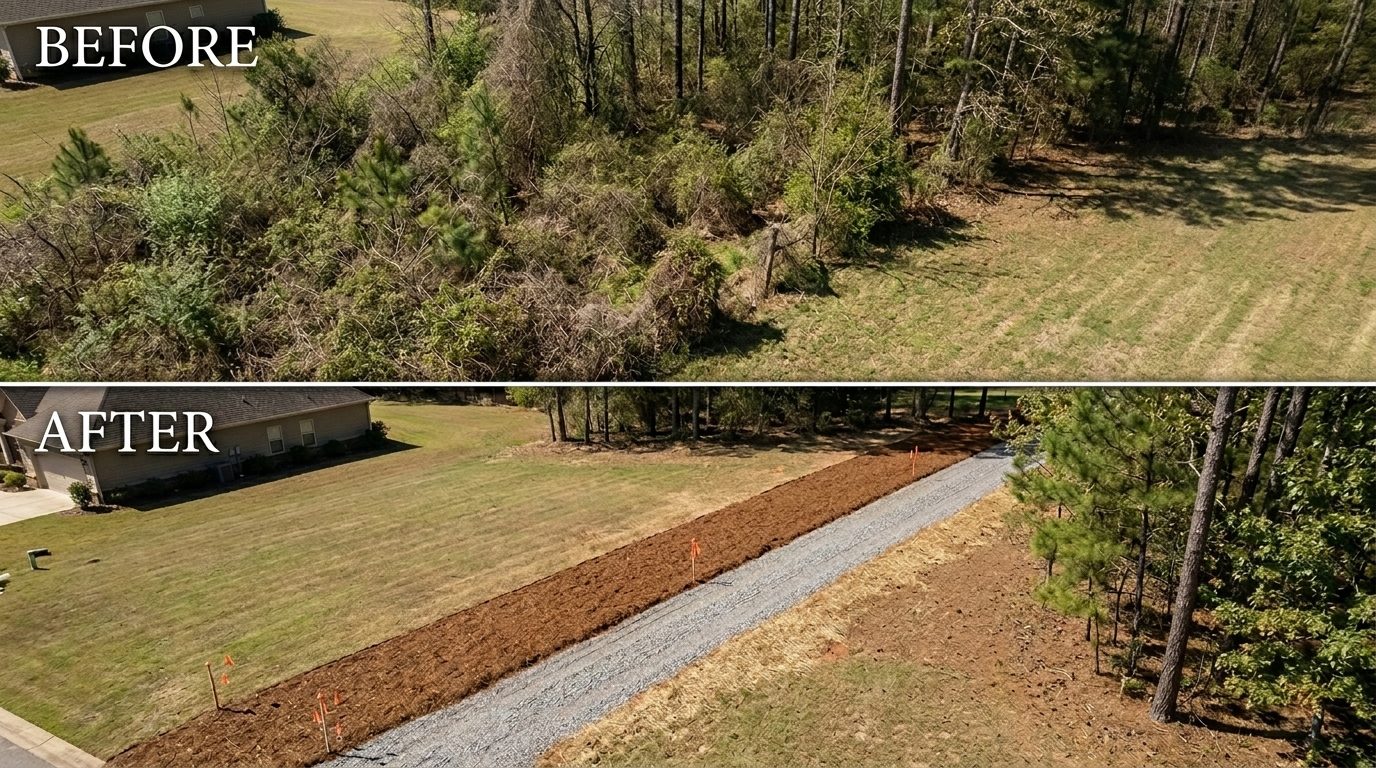
Best Methods for Property Line Clearing
Forestry Mulching
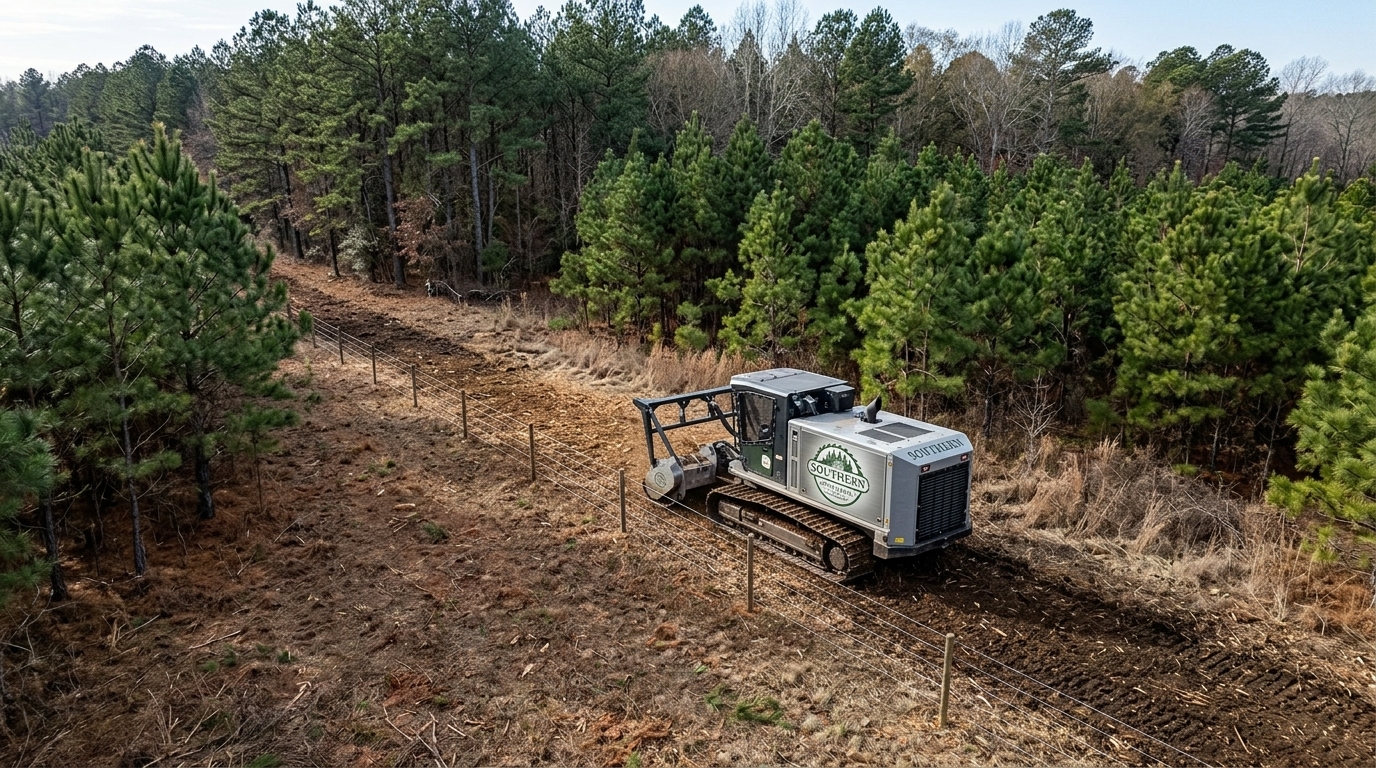
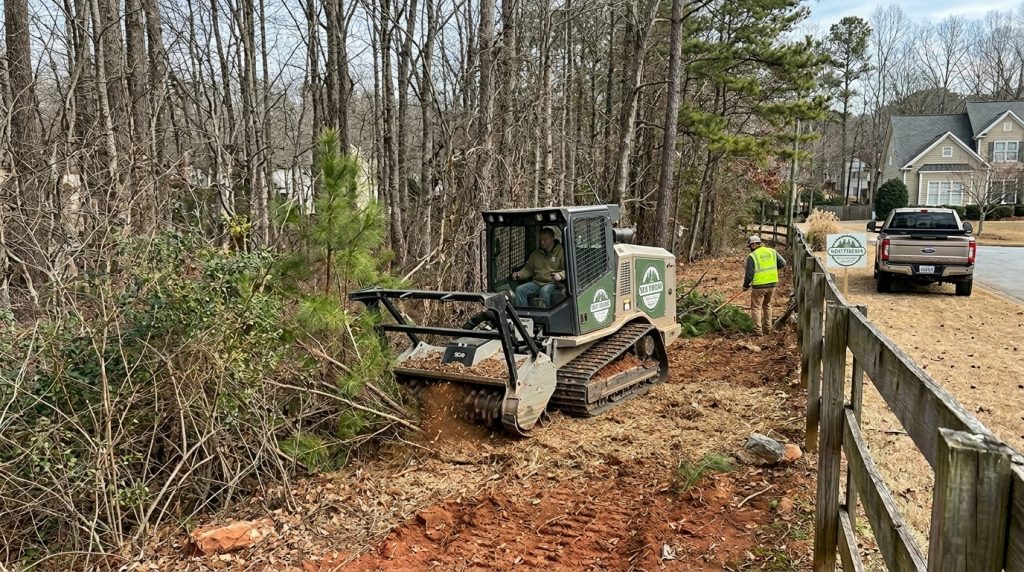
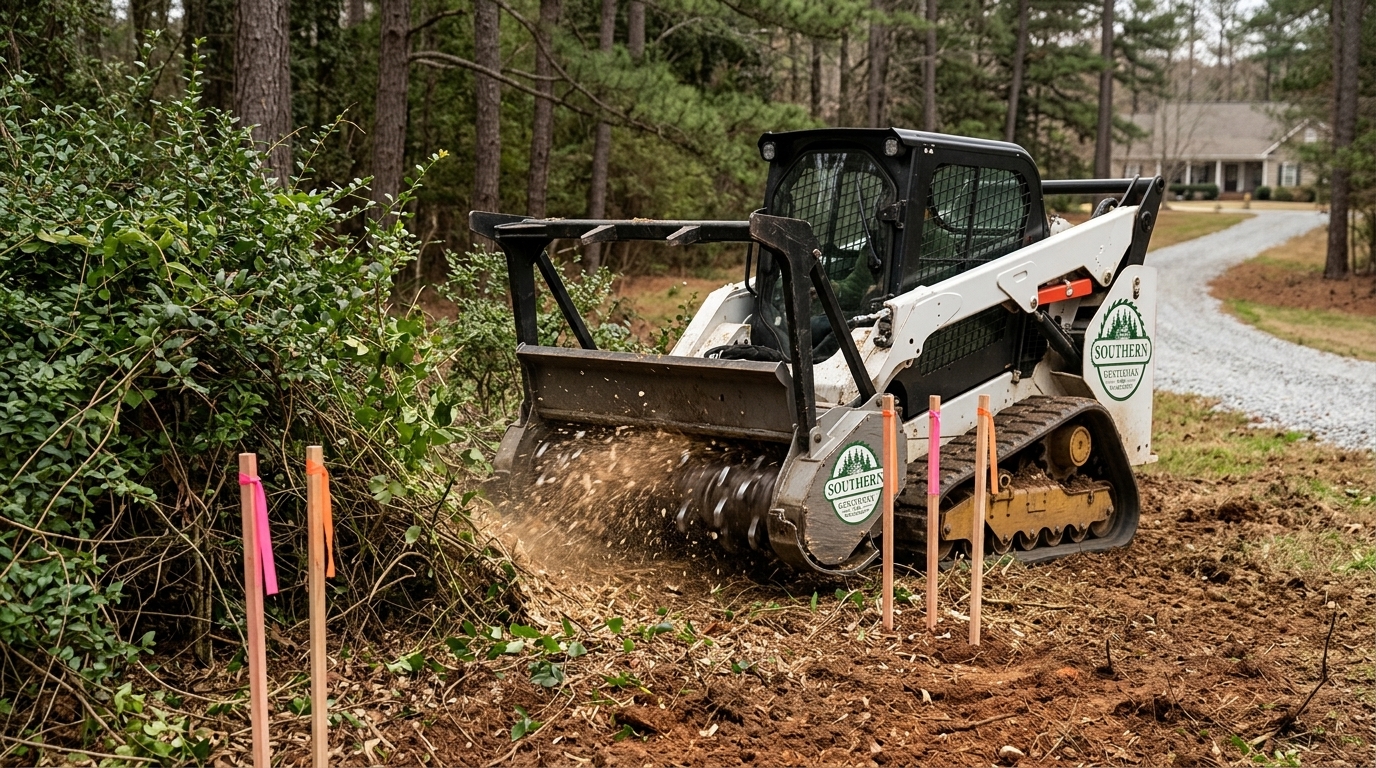
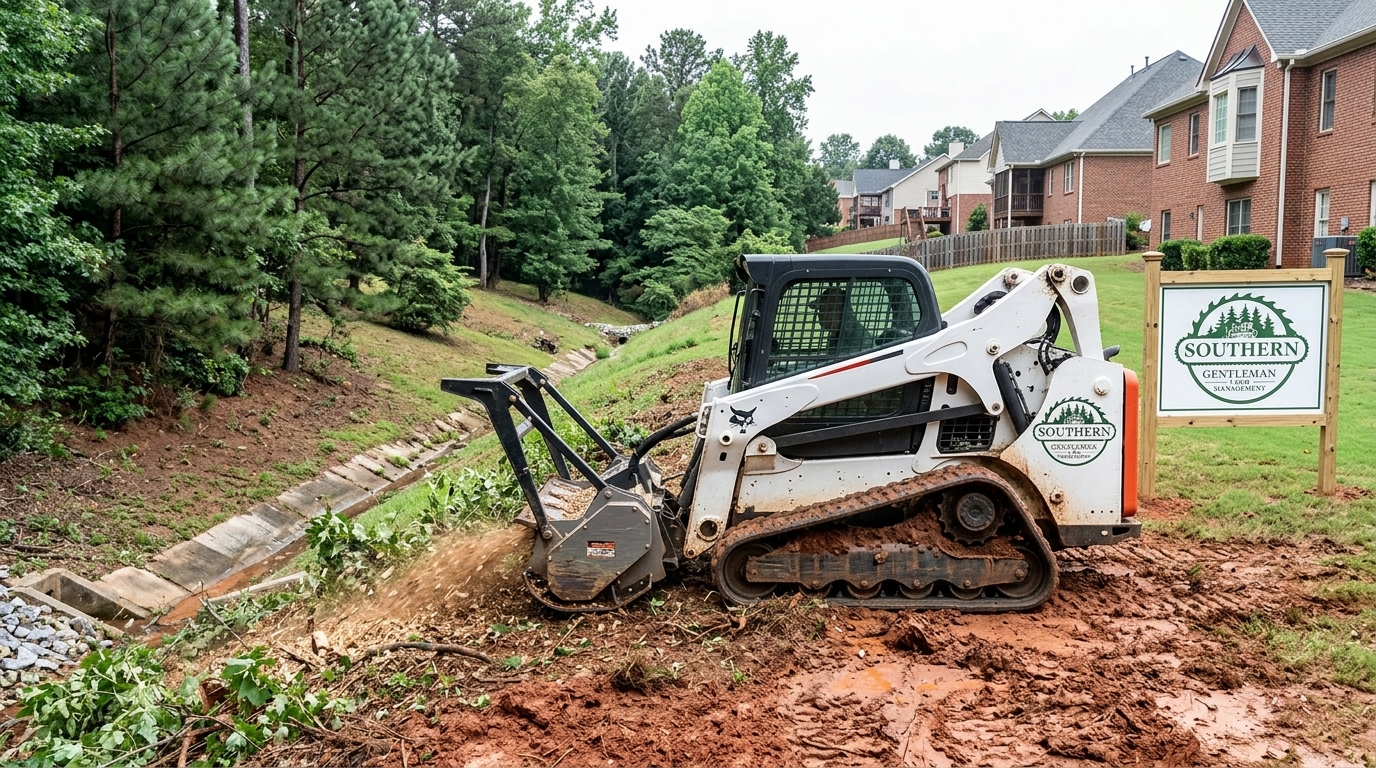
Forestry mulching is the most efficient method for property lines choked with understory brush, small trees (up to 6 to 8 inches), vines, and invasive growth. A forestry mulcher grinds vegetation in place, leaving natural mulch that suppresses regrowth and prevents erosion.
For property line work, the advantages are specific:
- No hauling required: Mulched material stays on site, cutting labor costs
- Minimal ground disturbance: No grading or soil disruption that could affect drainage between properties
- Precision: A skilled operator clears a defined strip (10 to 20 feet) along the boundary without damaging trees you want to keep
- Speed: Most residential property line jobs in Cobb County take one day or less
Selective Tree Removal
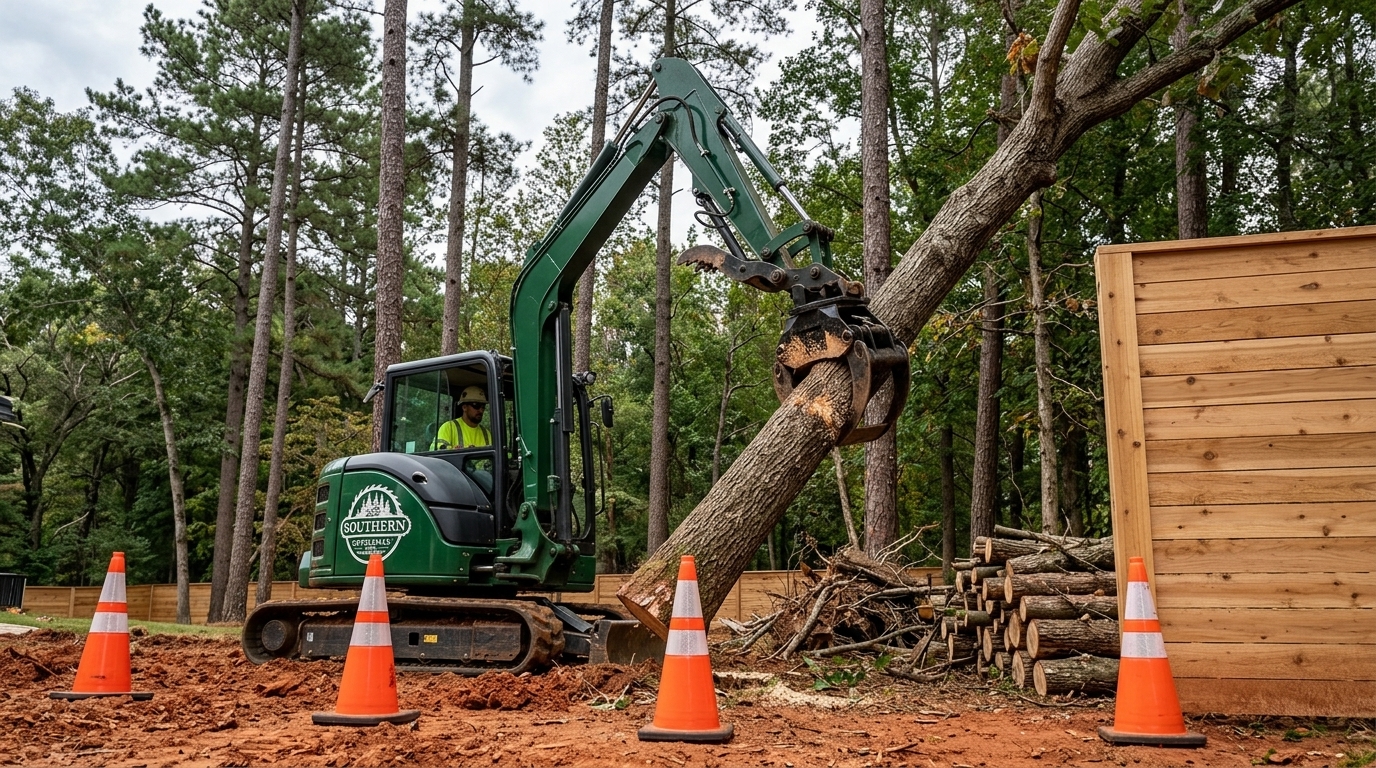
For larger trees that are dead, damaged, leaning toward structures, or need to come out for fence installation, selective removal is the answer. This means felling specific trees while preserving healthy, desirable ones.
Combination Approach
Most property line clearing jobs in Marietta use both methods. The forestry mulcher handles the understory first, then individual trees are addressed as needed. This two-pass approach gives you the cleanest result.
Cost Expectations
Pricing depends on the density of growth, property line length, terrain, and access.
Forestry mulching: $150 to $250 per hour, with most residential property lines taking 3 to 8 hours. A typical half-acre lot with two overgrown boundaries runs $800 to $1,500.
Selective tree removal: $300 to $1,500 per tree depending on diameter and complexity.
Full perimeter clearing: For a standard residential lot in Marietta or Kennesaw, expect $1,200 to $3,500 for thorough clearing that includes mulching and selective removal.
These numbers reflect 2026 pricing in the North Georgia market. Steep terrain, limited access, or heavy hardwood stands will trend higher.
Communicating With Your Neighbors
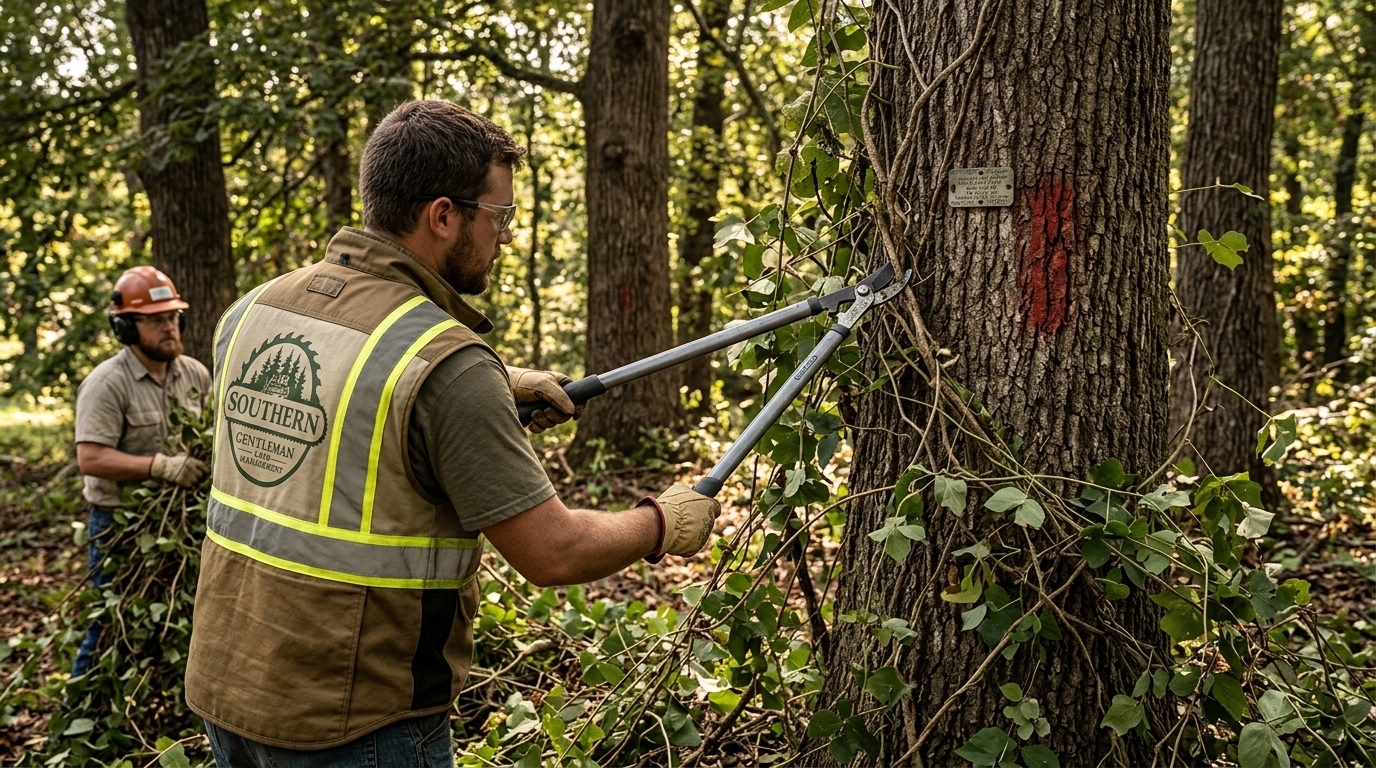
Before clearing begins, talk to your neighbors. Not legally required for work on your own property, but practical and respectful.
Let them know when the work will happen, that you have a current survey, and that you are only clearing on your side. If they want to clear their side too, coordinating the work saves both parties money since the equipment is already on site.
For shared boundary trees, get written agreement before any cutting starts. A simple email or text documenting mutual consent is better than a handshake.
When to Schedule the Work
Late fall through early spring (November to March) is the best window for land clearing and property line work in Cobb County. Dormant vegetation is easier to clear, snakes and insects are inactive, and visibility improves without full leaf canopy.
That said, property line clearing can be done year-round. If you have a fence installation scheduled for summer, get the clearing done first so your project stays on track.