Immediate Safety Steps After a Storm
Before you touch a single branch, walk the property carefully and look for hazards.
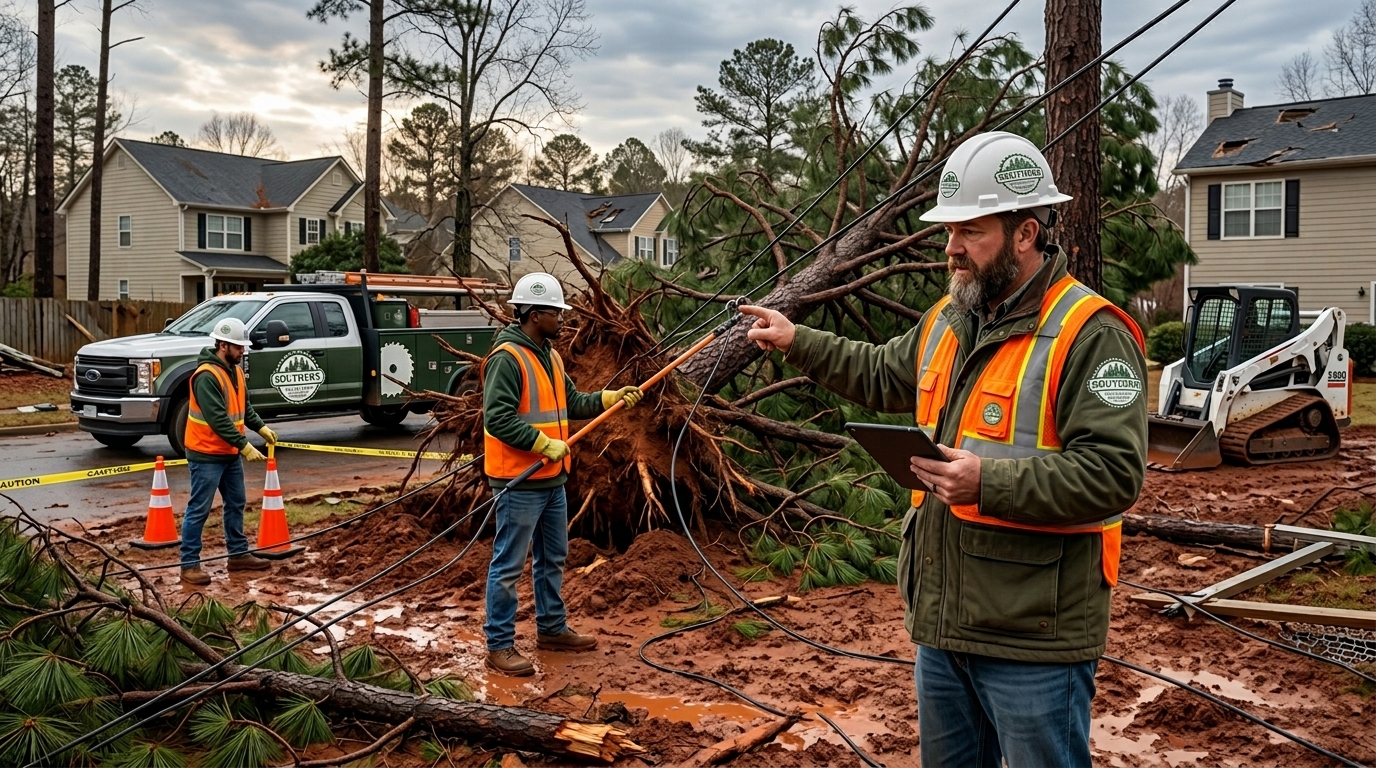
Check for downed power lines. If you see a wire on the ground or draped across a tree, stay at least 35 feet away. Call Georgia Power or your local utility immediately. Assume every downed line is live.
Watch for hanging limbs. Arborists call them “widow makers” for a reason. Broken limbs caught in the canopy can drop without warning, especially when wind picks back up or you start cutting nearby.
Assess structural damage. If a tree has fallen on your home, garage, barn, or fence line, document it with photos before moving anything. Your insurance adjuster will want to see the damage as it happened.
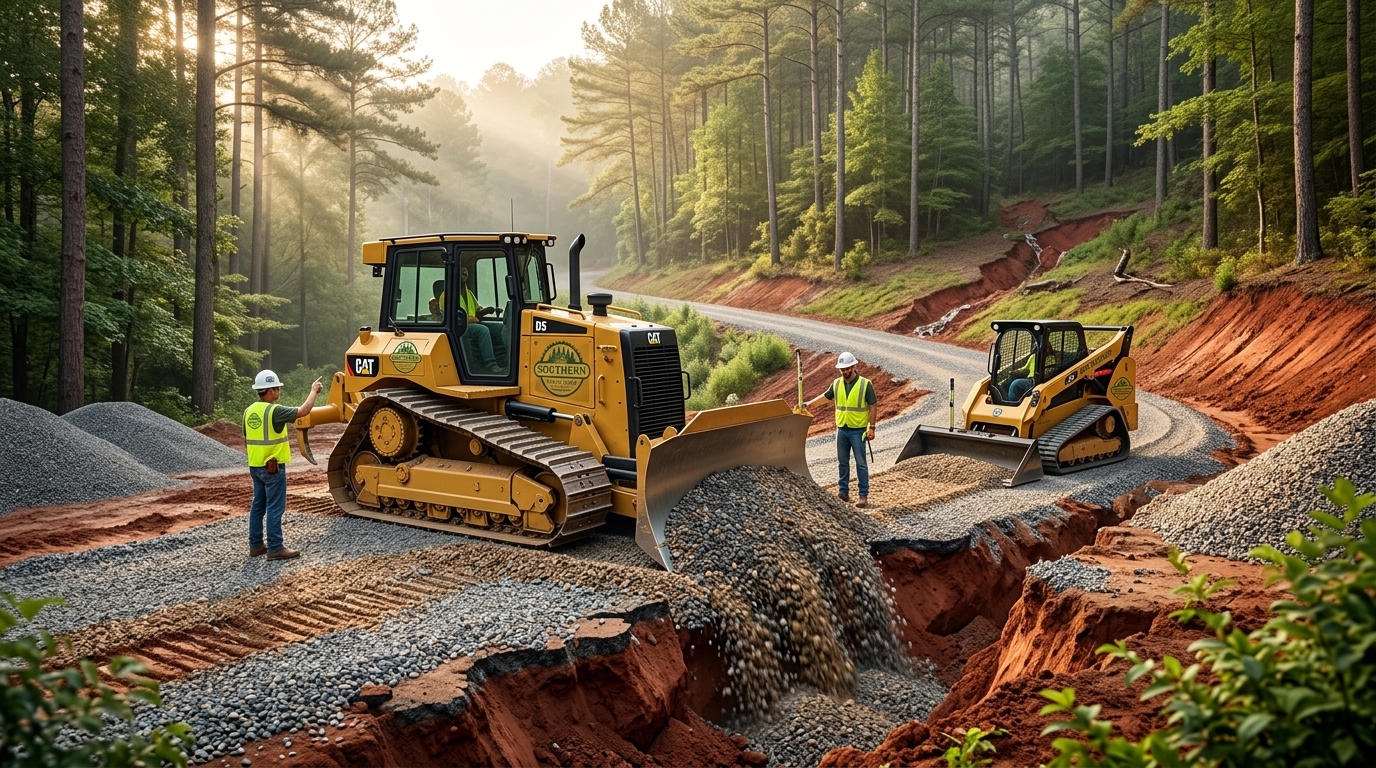
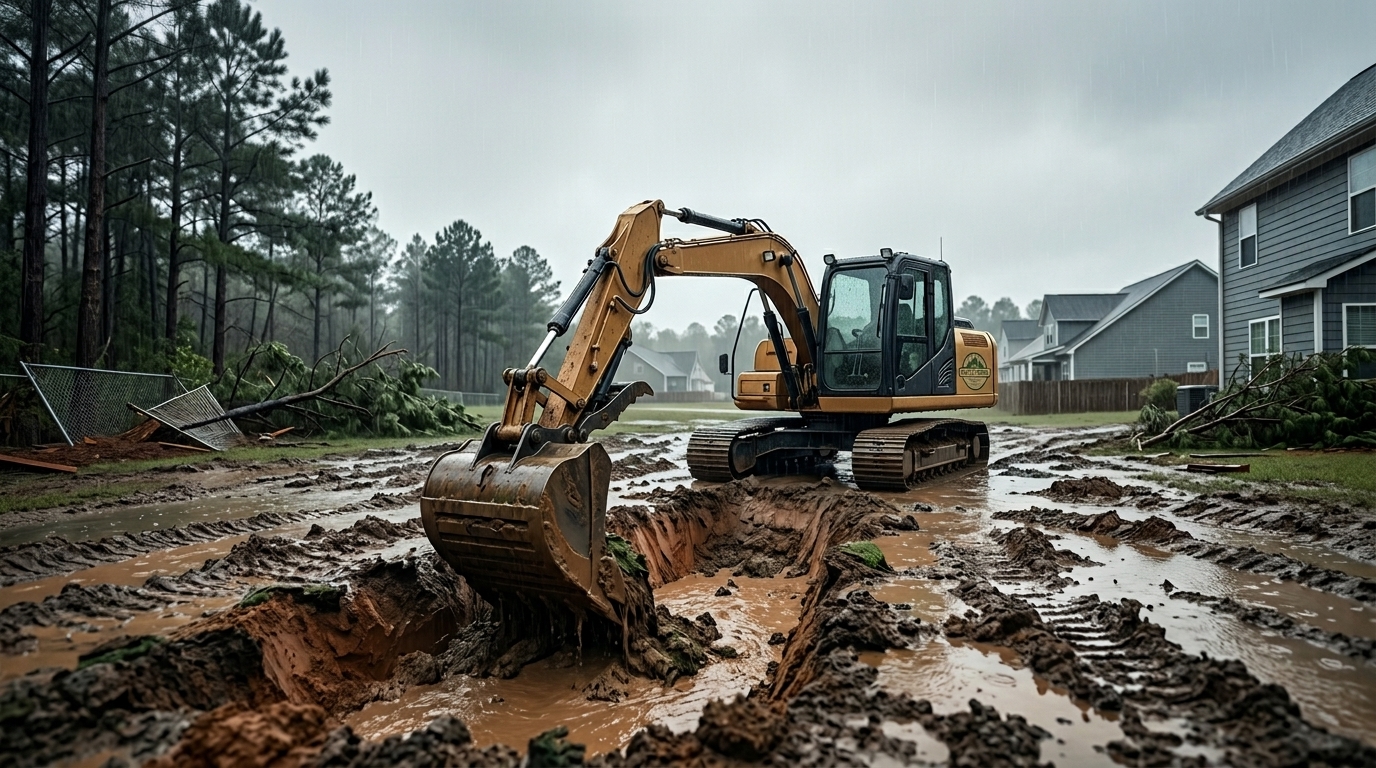
Stay off heavy equipment until the ground firms up. Saturated soil after heavy rain means ruts, stuck machines, and more damage to your property. Give it 48 to 72 hours to dry out before bringing in skid steers or mulching equipment.
When to Call a Tree Service vs. a Land Clearing Company
This is where most property owners get confused, and it costs them time and money.
Tree service: You need a tree service when individual trees are down on structures, blocking driveways, leaning dangerously, or need to be removed piece by piece with precision. Emergency tree work requires climbers, cranes, and crews trained for hazardous removals. If you have trees on your roof or across your driveway and need someone there fast, a company that offers 24/7 emergency tree removal is your first call. For property owners in the greater Atlanta and North Georgia area, All In Tree Services and Pro handles emergency situations around the clock.
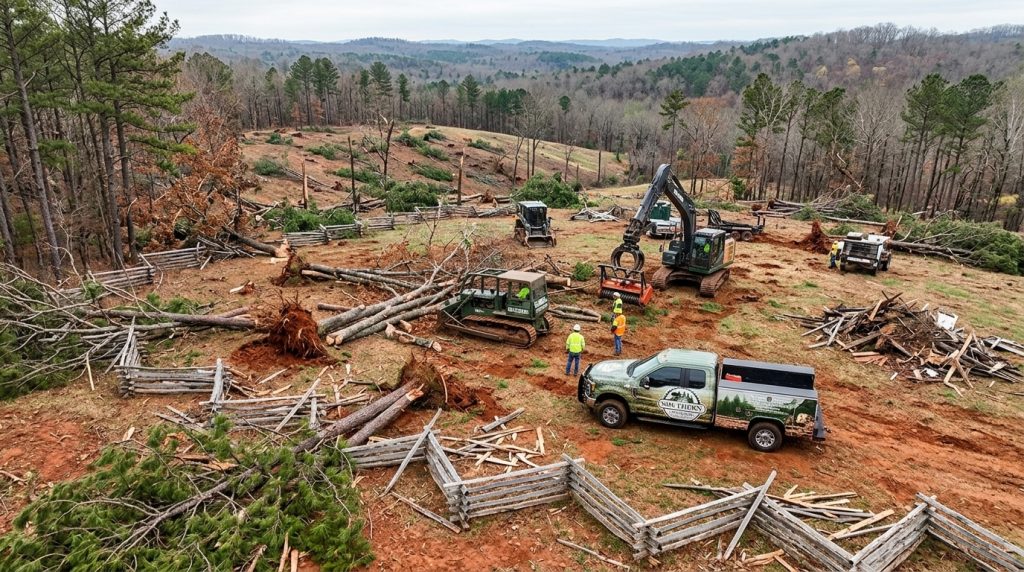
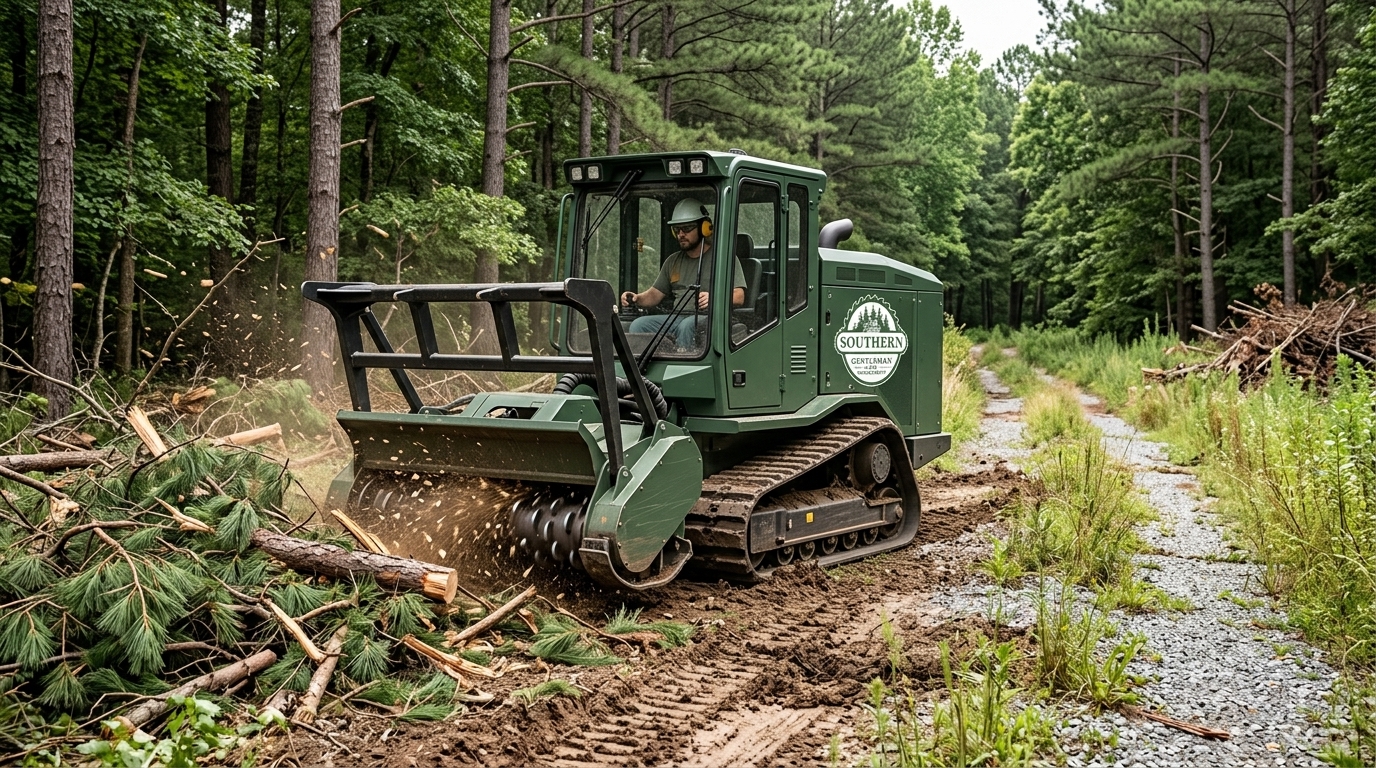
Land clearing company: Once the immediate hazards are handled, many properties still have a bigger problem: acres of scattered debris, uprooted stumps, tangled brush piles, and ground that needs to be restored. That is land clearing work. A tree service will remove the dangerous trees, but they are not set up to mulch 3 acres of storm debris or grade a torn-up pasture back to usable condition. That is where a forestry mulching crew comes in.
The short version: Tree service first for emergencies. Land clearing company second for full property restoration.
The Storm Damage Cleanup Timeline
Every storm is different, but here is a realistic timeline for a typical North Georgia property after significant damage.
Days 1 to 3: Emergency response. Hazardous trees removed from structures and roadways. Power restored. Property made safe to access.
Days 3 to 7: Assessment and planning. Walk the full property. Identify all damaged trees, debris piles, and ground damage. Get estimates from your tree service and land clearing company. File insurance claims.
Weeks 2 to 4: Land clearing and debris removal. This is the heavy lifting. Forestry mulching equipment processes downed trees, brush, and stumps in place, turning them into mulch that protects the soil. Bush hogging handles overgrown areas where smaller debris and vegetation have piled up. Debris that cannot be mulched gets hauled off.
Weeks 4 to 8: Ground restoration. Grading to fix ruts, erosion channels, and uneven terrain. Seeding exposed soil to prevent further erosion. Restoring fence lines, driveways, and access roads.
Months 2 to 6: Monitoring. Watch for delayed tree death. Storm-damaged trees that looked fine initially can decline over months as root damage, bark splitting, and fungal infection take hold. Plan for selective removal as needed.
Why North Georgia Properties Need a Full Cleanup Plan
The mistake most property owners make is stopping after the emergency tree removal. The dangerous tree is gone, the insurance check clears, and they move on. Six months later, they are dealing with a brush-choked property, erosion problems, and stumps sprouting new growth everywhere.
A complete storm damage land cleanup means addressing the entire property, not just the one tree that hit the barn. Across Bartow County, Cherokee County, and the surrounding North Georgia foothills, properties with acreage need professional land clearing to fully recover from storm damage. Forestry mulching is especially effective because it processes debris on-site, returns organic material to the soil, and leaves the land ready for its next use.