Trees Close to Structures
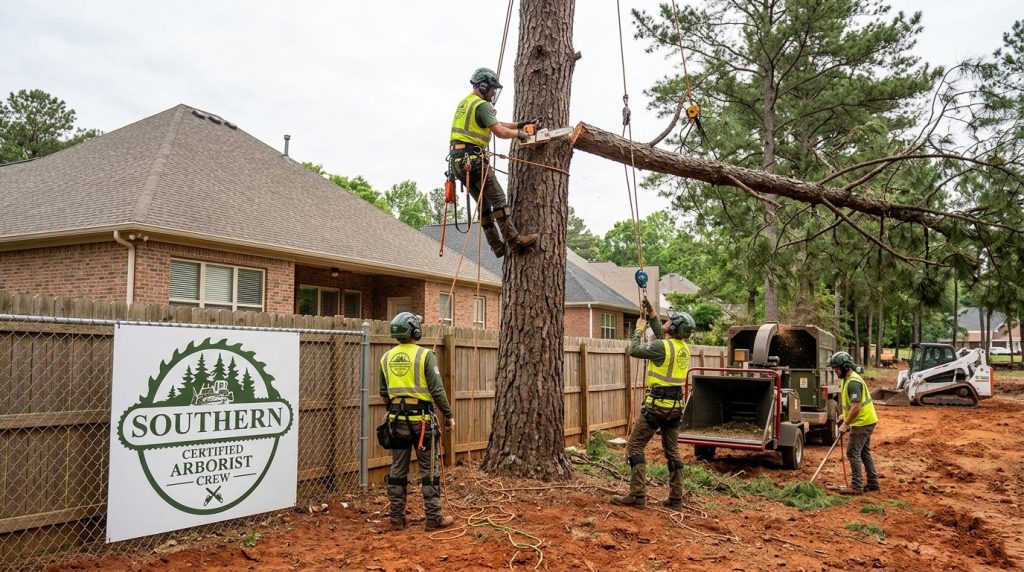
Any tree within striking distance of a building, barn, shed, fence, or septic system needs precision removal, not bulk clearing. A forestry mulcher or bulldozer working near a structure has limited control over where debris falls and how root systems shift under pressure.
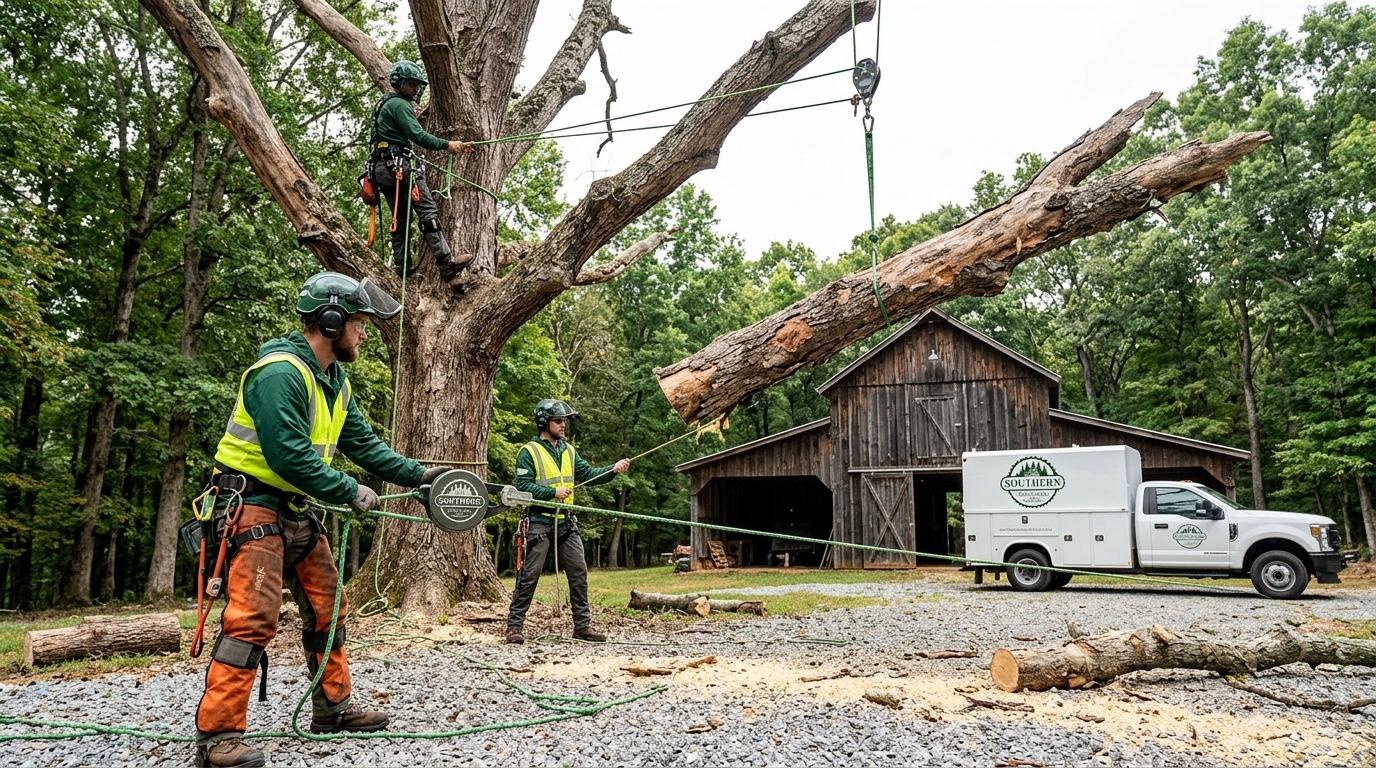
Certified arborists use rigging, sectional dismantling, and directional felling to drop trees exactly where they need to go. That kind of control matters when you are working 15 feet from a roofline or a foundation wall.
Rule of thumb: If a tree’s height is greater than its distance from a structure, get it removed individually before clearing begins.
Trees Near Utility Lines
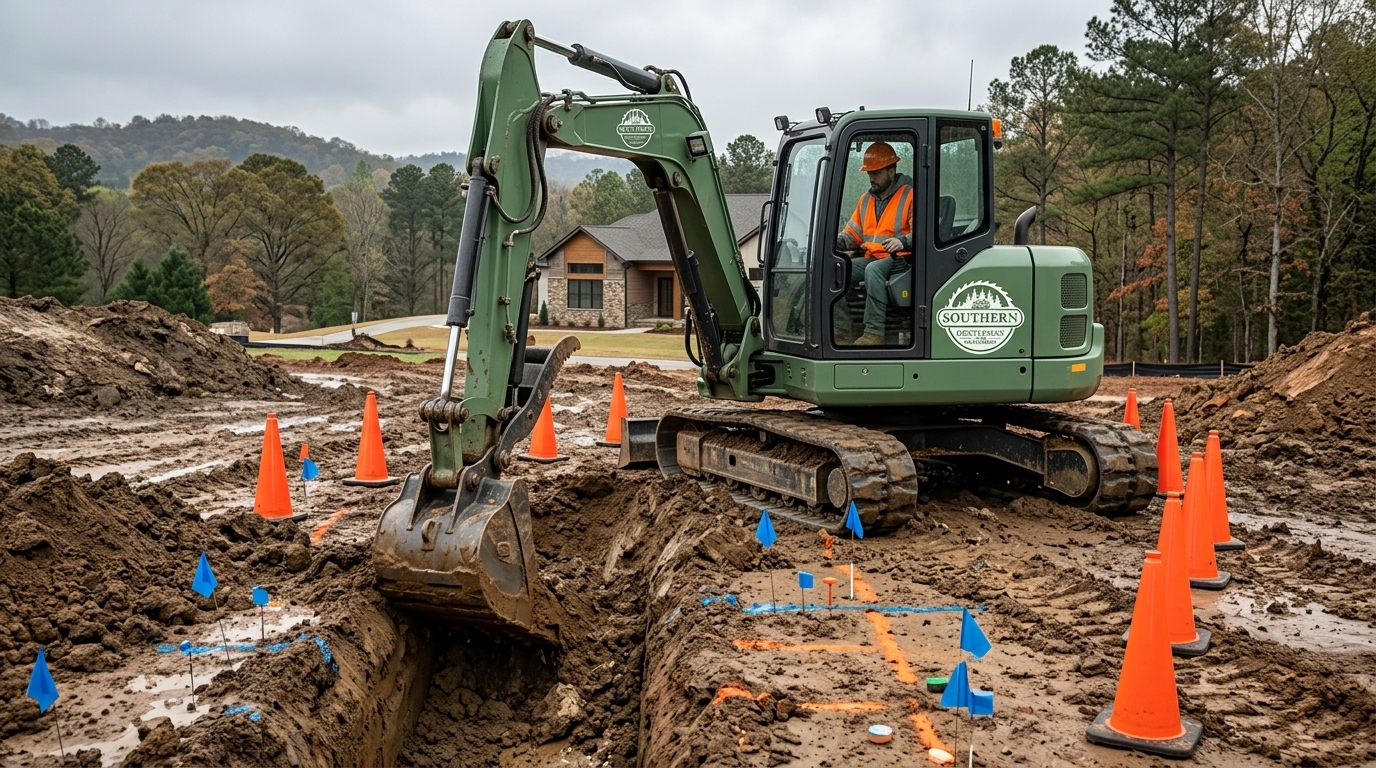
Power lines, gas lines, buried fiber optic, and water mains all create exclusion zones that heavy clearing equipment cannot safely enter. In Georgia, you are required to call 811 before any excavation or land disturbance, and utility companies will mark buried lines on your property.
Overhead power lines are the more immediate danger. A tree that contacts a live line during uncontrolled felling can electrocute crew members, start a fire, or black out the surrounding area. Only qualified line-clearance arborists should handle trees within the utility right-of-way.
We see this frequently in Cobb County and Paulding County where residential lots back up to older power infrastructure. The tree removal has to happen first. Then we bring in our clearing equipment.
Hazard Trees and Widow Makers
A hazard tree is any tree that poses an immediate risk of failure: dead standing timber, trees with major trunk cavities, split leaders, root rot, severe lean, or heavy deadwood in the canopy. In the industry, a large dead limb hanging in the canopy is called a “widow maker” for good reason.
Pushing a hazard tree with a dozer or trying to mulch it with a forestry head is unpredictable. The trunk can snap in the wrong direction. Dead limbs can fall on the cab. A rotten root plate can let the entire tree twist and topple sideways instead of forward.
An arborist assesses the failure risk, determines the safest removal method, and brings the tree down in a controlled sequence. Once the hazards are cleared, the rest of the site is straightforward for forestry mulching equipment.
Protected and Regulated Tree Species
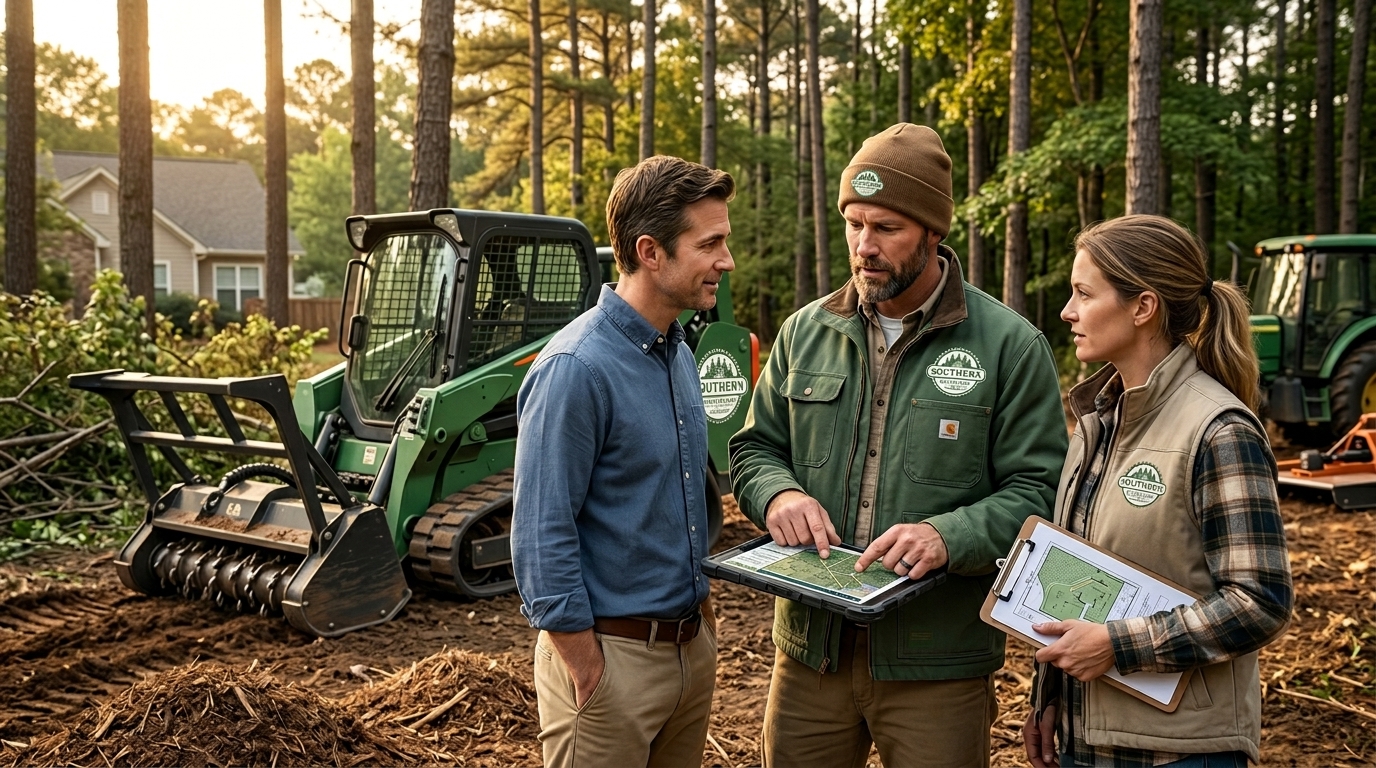
Georgia counties and municipalities enforce tree protection ordinances that vary widely from one jurisdiction to the next. Cherokee County, Bartow County, and many cities in Metro Atlanta have regulations that require permits before removing trees above a certain diameter, especially hardwoods.
Common protected categories include:
- Heritage or specimen trees: Typically oaks, hickories, or other hardwoods above 24 to 36 inches DBH (diameter at breast height), depending on the ordinance
- Trees in stream buffers: Georgia’s Erosion and Sedimentation Act establishes 25-foot undisturbed buffers along state waters, and many counties extend that to 50 or 75 feet
- Trees on the county’s protected species list: Some jurisdictions protect specific species regardless of size
Clearing protected trees without a permit results in fines, mandatory replanting requirements, and potential stop-work orders that shut down your entire project. The correct sequence: get a tree survey, pull the required permits, have a licensed arborist remove any regulated trees with documentation, then proceed with land clearing.
Trees Too Large for Mulching Heads
Forestry mulching is efficient and cost-effective for most vegetation, but every mulching head has a maximum cutting diameter. Most commercial forestry mulchers handle trees up to 12 to 18 inches in diameter. Some heavy-duty units push that to 24 inches.
When your property has mature hardwoods, large pines over 20 inches, or old-growth timber that exceeds your clearing contractor’s equipment capacity, those trees need to come down first through traditional felling or crane-assisted removal.
This is especially common on older properties across North Georgia where 60 to 80-year-old oaks and poplars have had decades to grow. A site walk before the project starts identifies which trees fall outside the mulcher’s capacity so they can be scheduled for individual removal.
How the Two-Phase Process Works
When tree removal is needed before land clearing, the project follows a simple sequence:
- Site assessment: Walk the property and identify any trees that require individual removal (near structures, near utilities, hazard trees, protected species, oversized timber)
- Tree removal phase: A certified arborist removes the flagged trees, handles any permit requirements, and clears the debris
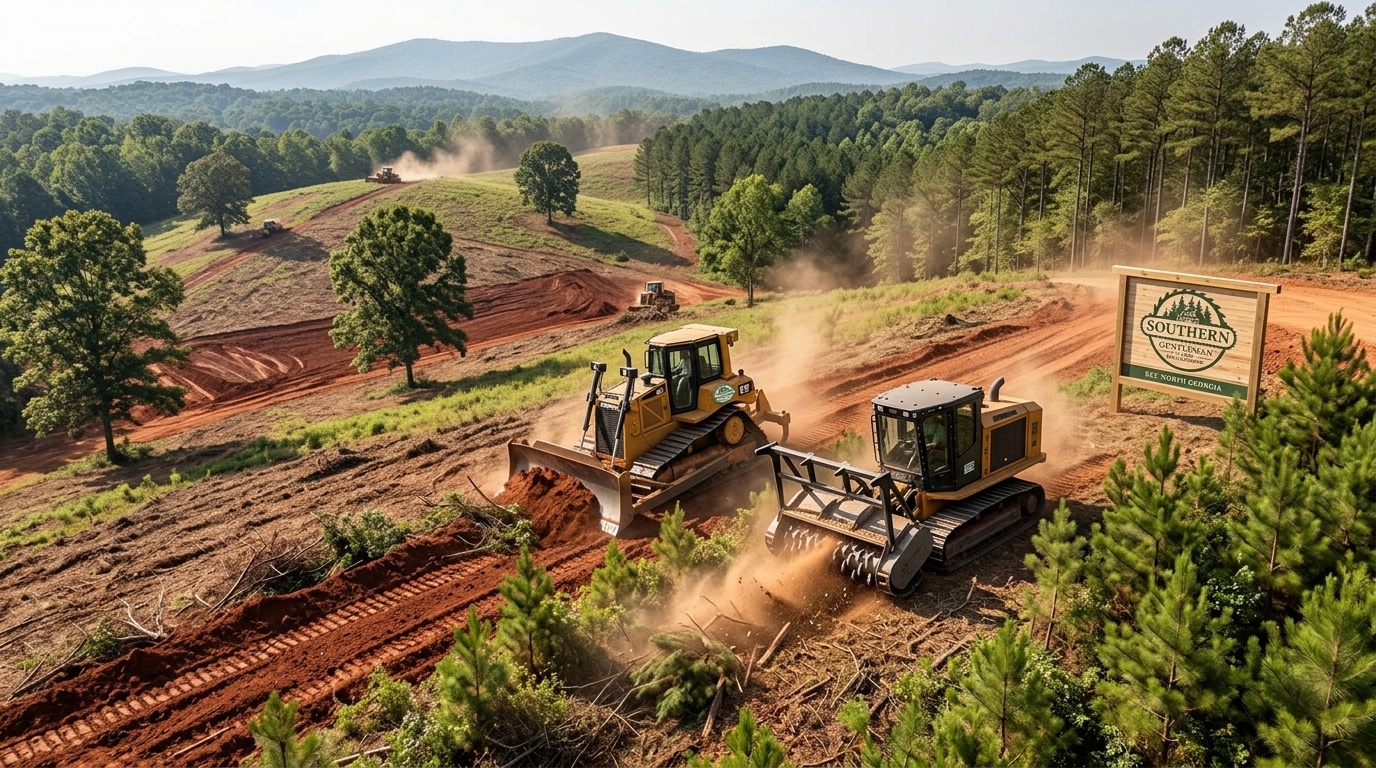
- Land clearing phase: Once the problem trees are out of the way, clearing equipment moves in to handle the rest of the site: underbrush, smaller trees, stumps, and general vegetation
For properties in Fayette County and south Metro Atlanta that need the tree removal phase handled first, tree removal services in Fayetteville from All In Tree Services and Pro are a solid option. They handle the precision work so the site is ready for clearing equipment.
On our end at Southern Gentleman Land Management, we handle the land clearing phase once the site is prepped. That includes forestry mulching, grading, and debris management across Bartow, Cherokee, Cobb, Paulding, Floyd, and Gordon counties.
When You Can Skip the Tree Removal Step
Not every project needs a two-phase approach. If your property meets all of the following conditions, you can likely go straight to land clearing:
- No structures within falling distance of any trees on the lot
- No overhead or underground utilities in the clearing zone
- No dead, dying, or visibly hazardous trees
- No trees above your clearing contractor’s equipment capacity
- No protected species or trees requiring county permits
- Property is outside any stream buffer or wetland setback
Open pasture overgrown with brush and small pines? That is a textbook bush hogging or forestry mulching job with no tree removal needed.