How Forestry Mulching Works
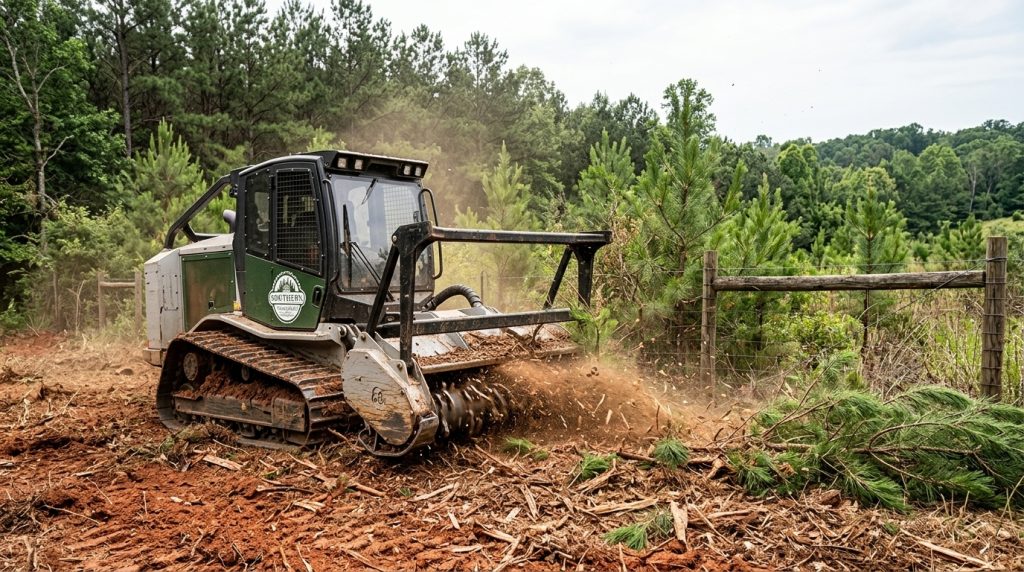
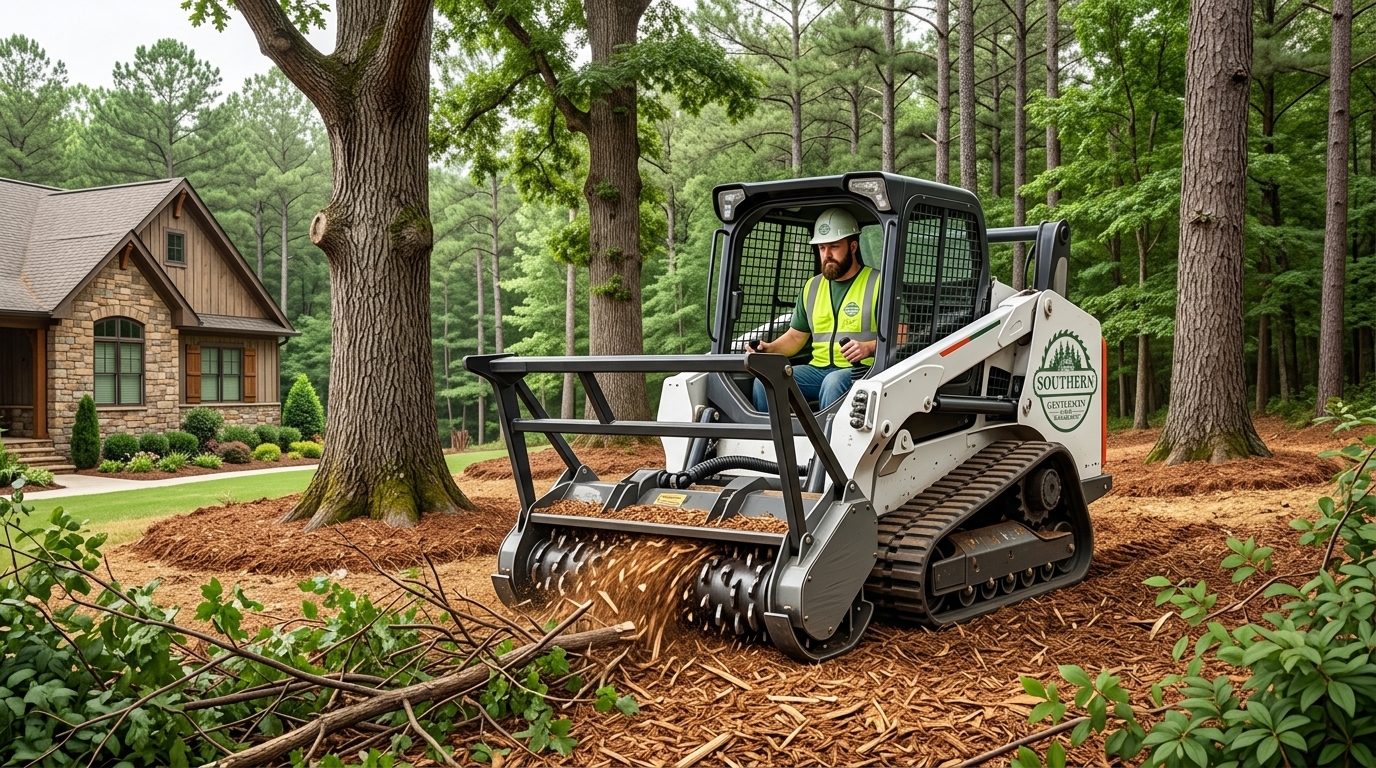
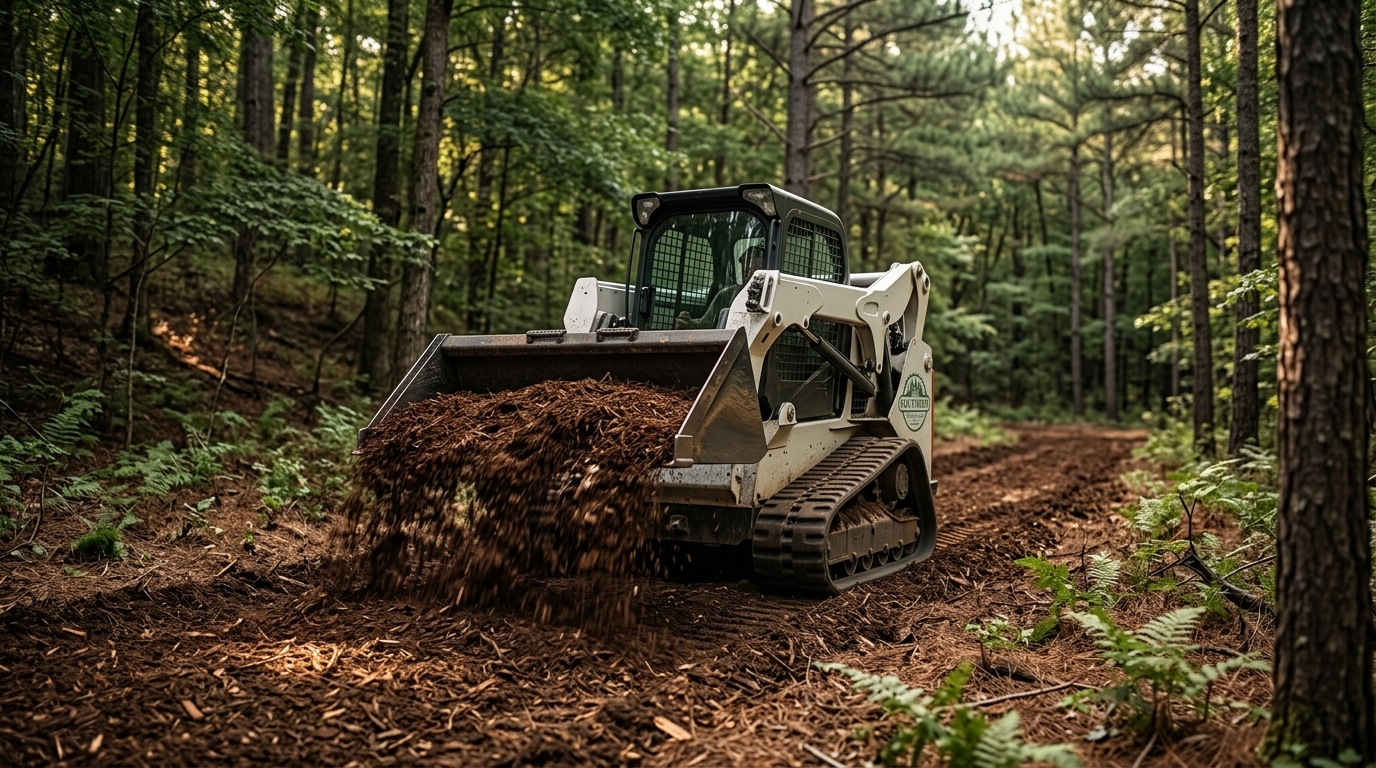
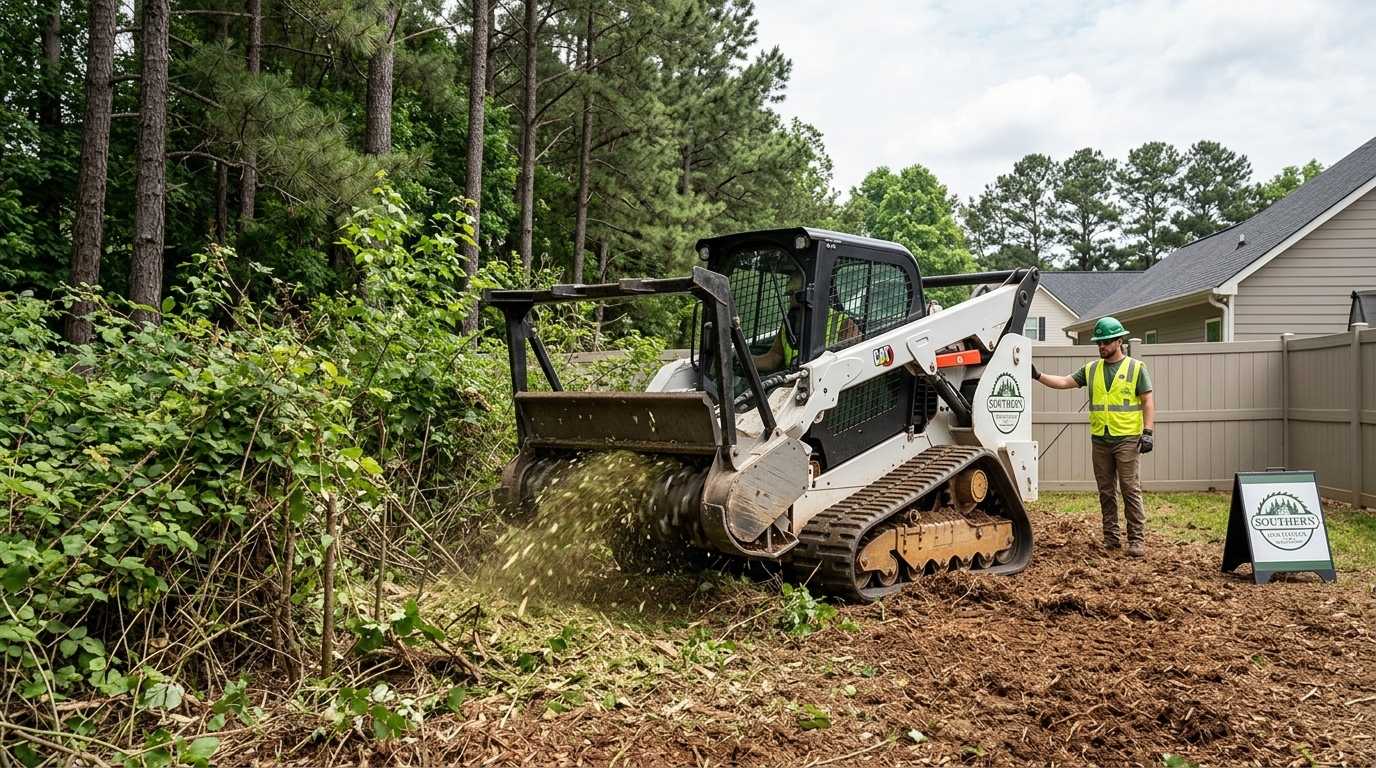
A forestry mulcher is a single machine (typically a skid steer or tracked carrier with a rotary drum attachment) that grinds standing trees, brush, stumps, and vegetation into mulch in one pass. The operator drives through the area, and the mulching head shreds everything in its path down to ground level. The mulched material stays on the ground as a natural layer of organic cover.
There is no hauling, no burning, no separate stump grinding step, and no need for multiple pieces of equipment. One machine, one operator, one pass. The ground underneath remains largely undisturbed.
How Traditional Land Clearing Works
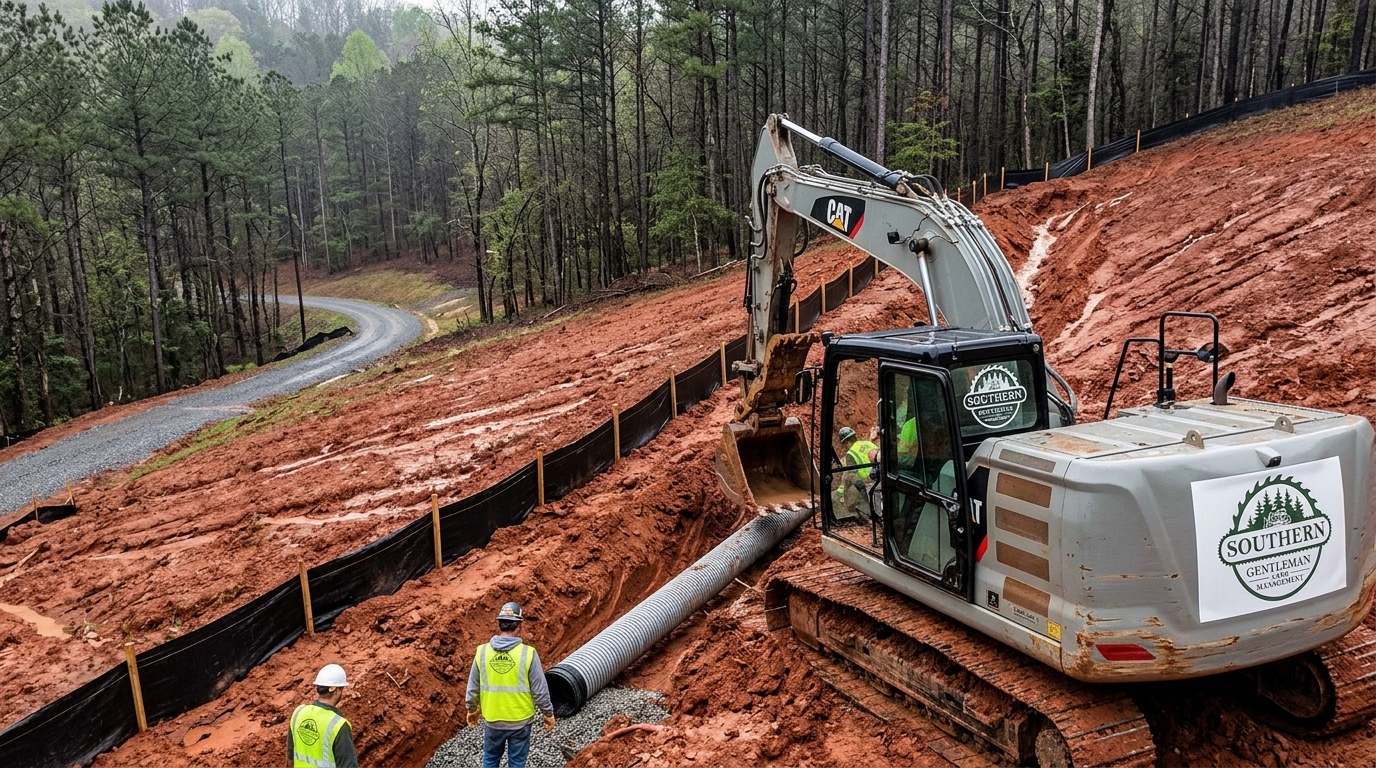
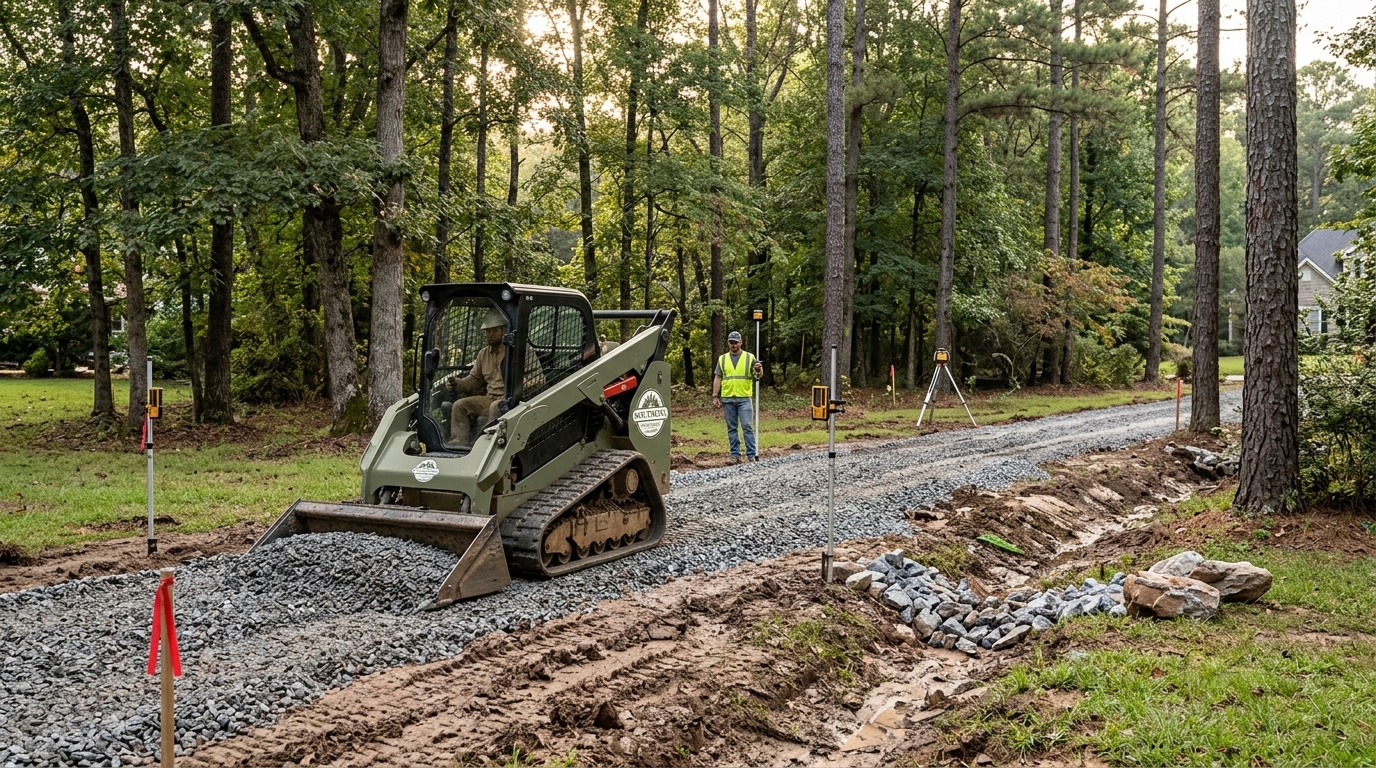
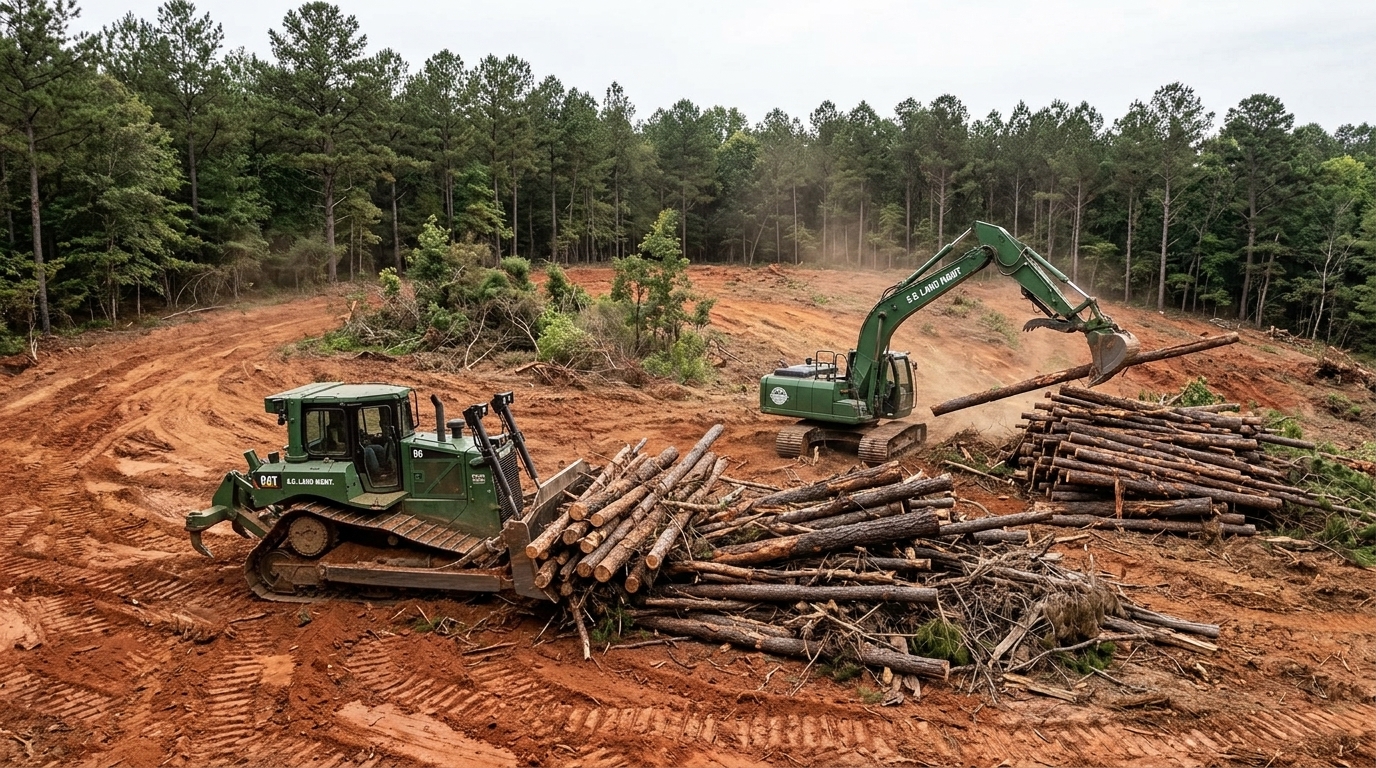
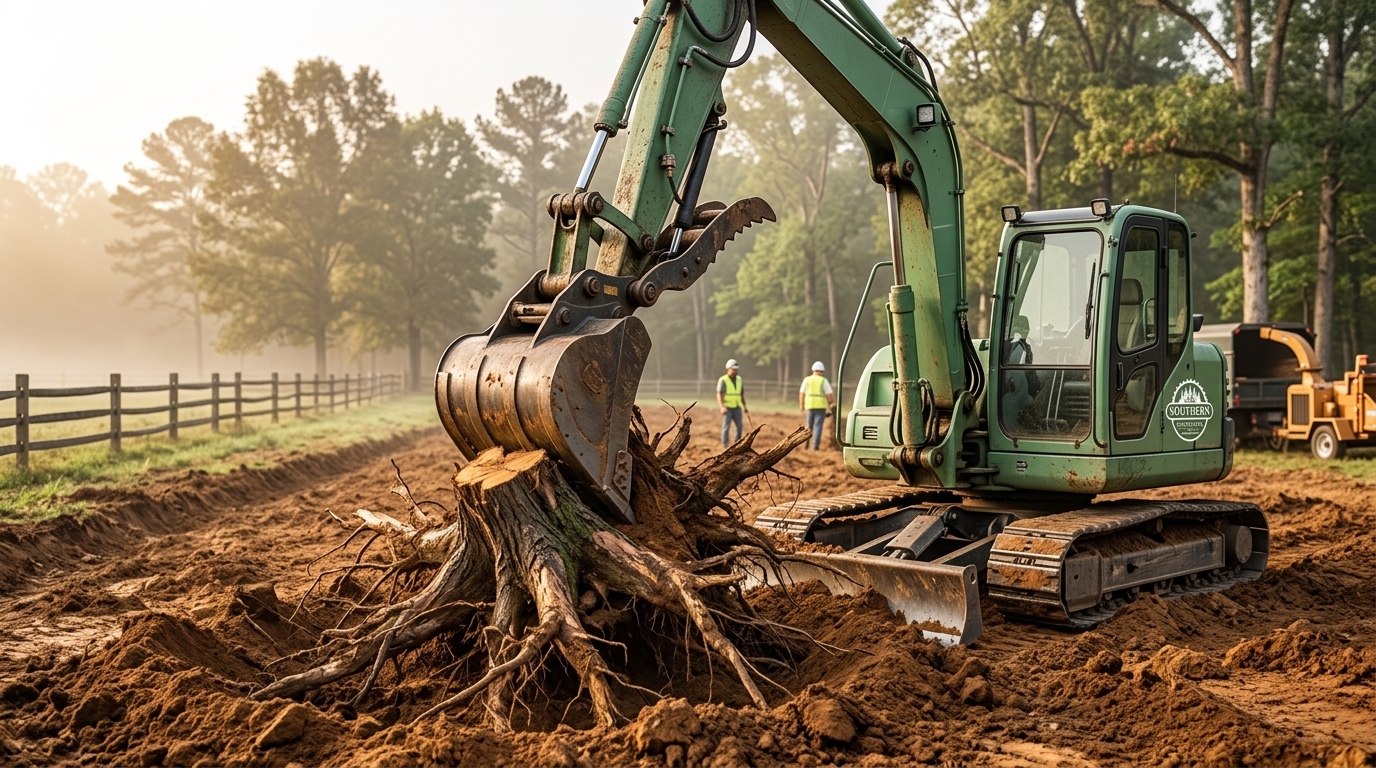
Traditional clearing uses heavy equipment (bulldozers, excavators, sometimes chainsaws for large timber) to push, pull, or cut trees and vegetation, then remove the debris from the site. The typical process looks like this:
- Chainsaws fell large trees and buck them into sections
- Bulldozers or excavators push stumps, brush, and smaller trees into piles
- Debris is either burned on-site (if local regulations and burn permits allow) or loaded onto trucks and hauled to a disposal site
- Stumps are extracted or ground separately
- The site is graded to prepare for its next use
This method requires multiple machines, multiple operators, and multiple steps. The end result is bare dirt, cleared down to mineral soil.
Side-by-Side Comparison
Factor | Forestry Mulching | Traditional Clearing |
|---|---|---|
Equipment needed | Single mulching unit | Bulldozer, excavator, trucks, chainsaw crews |
Passes required | One | Multiple |
Ground disturbance | Minimal (root systems stay intact) | Significant (topsoil removed or compacted) |
Debris disposal | None (mulch stays on-site) | Hauling or burning required |
Erosion control | Mulch layer protects soil immediately | Bare dirt requires erosion measures |
Selective clearing | Yes (operator can work around specific trees) | Difficult (bulldozers are not precise) |
Timeline (1 acre) | 1 to 2 days | 3 to 7 days |
Cost per acre (typical) | $1,500 to $4,000 | $3,000 to $8,000+ |
Best for | Residential lots, trails, selective clearing, slopes | Large-scale development, construction pads, farmland conversion |
Note: Costs vary based on tree density, terrain, access, and location. These ranges reflect typical projects in the North Georgia market.
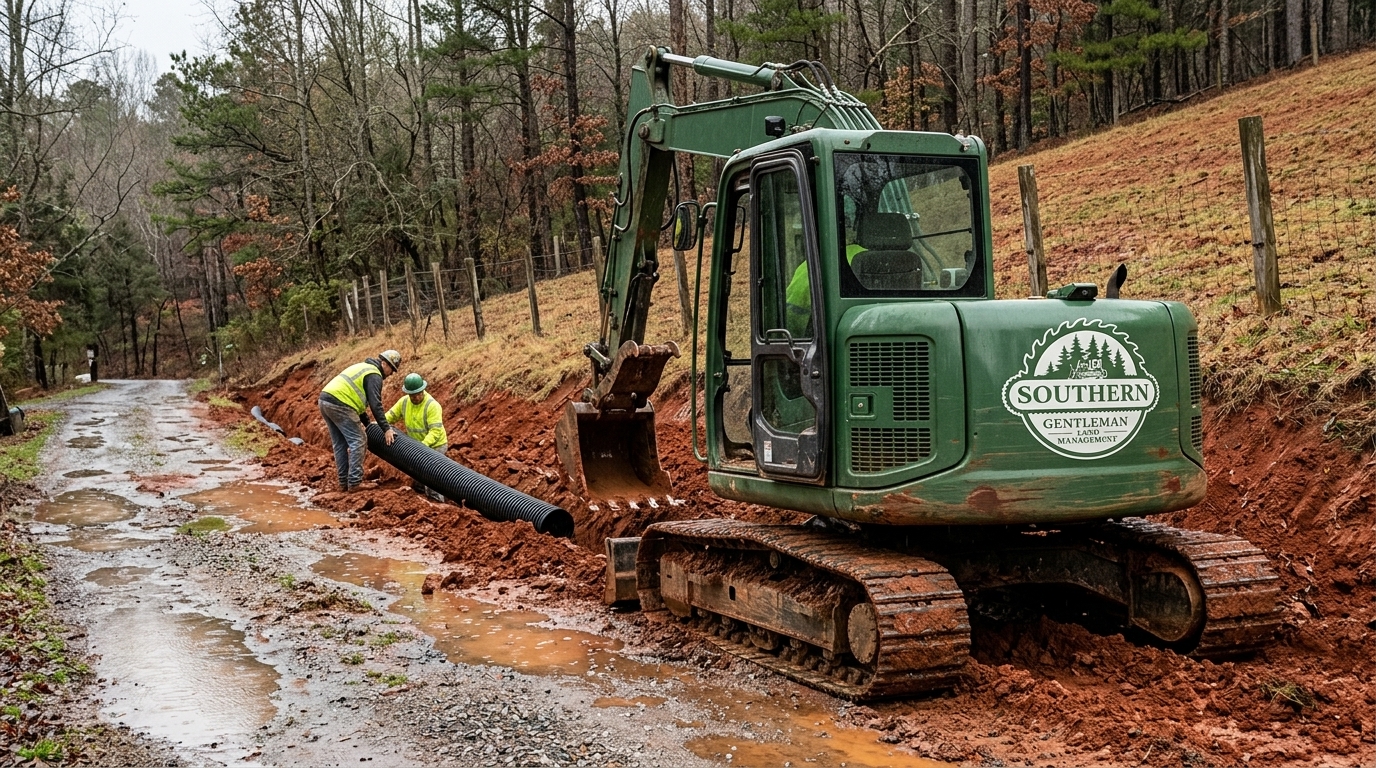
Forestry Mulching: Pros and Cons
Advantages
Speed and efficiency. One machine handles everything: trees, brush, stumps, and ground cover. A skilled operator can clear an acre of moderate brush and small to mid-size trees in a day. No waiting on burn permits, no coordinating haul trucks, no scheduling a separate stump grinding crew.
Soil protection. This is the biggest advantage of forestry mulching and the one most people underestimate. The mulcher leaves root systems in the ground, which hold soil in place. The mulch layer on top acts as a natural erosion barrier and slowly decomposes, returning nutrients to the soil. On sloped properties in our part of Georgia, where red clay washes out quickly once exposed, this matters enormously.
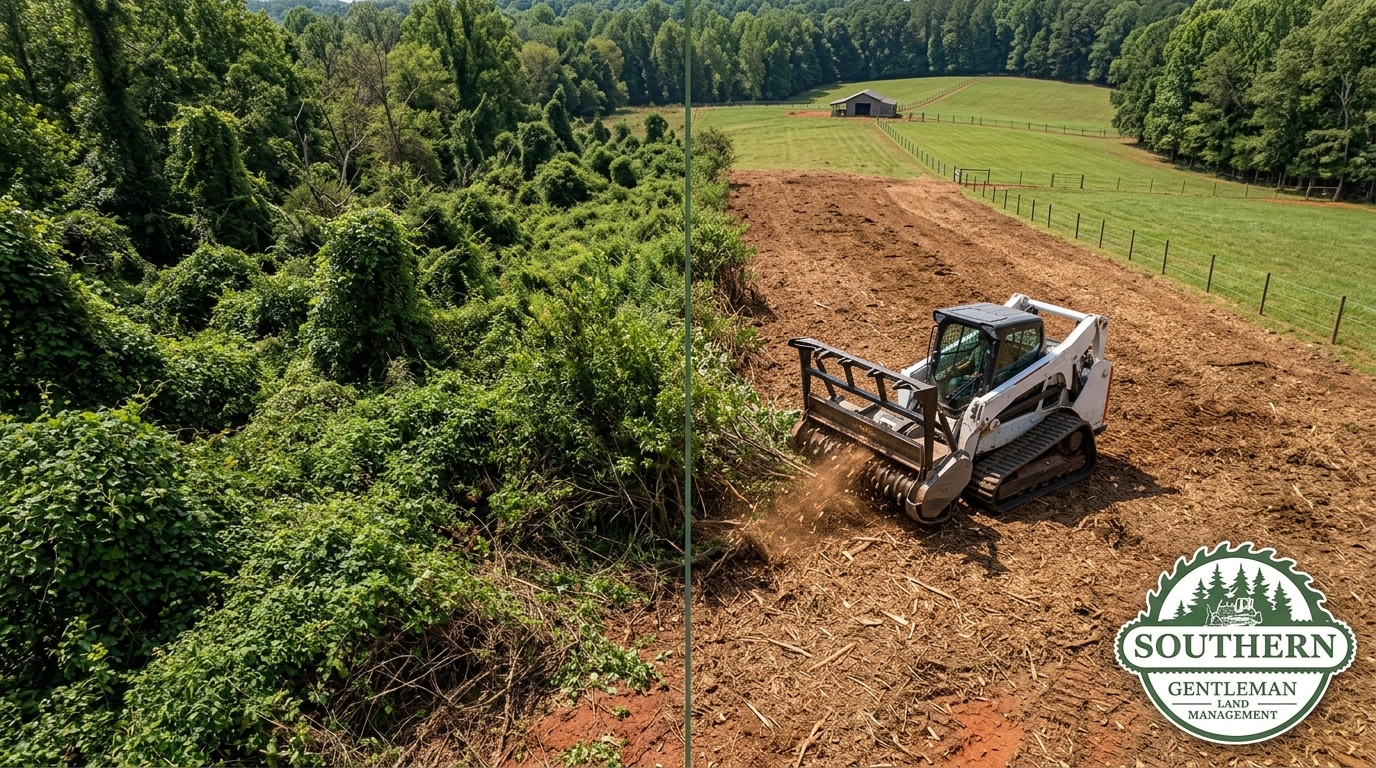
Selective clearing. A forestry mulcher can work around trees you want to keep. The operator can clear underbrush and small trees while preserving mature hardwoods, creating a clean, park-like appearance without removing everything. Try asking a bulldozer operator to thread between two oaks you want to save. It does not go well.
Lower total cost. Because there is no hauling, no burn pit management, and no multi-machine coordination, the total project cost is typically 30% to 50% lower than traditional clearing for equivalent acreage.
No burn permits or disposal fees. Everything stays on-site as mulch. No hauling invoices, no landfill tipping fees, no waiting for the county to approve a burn permit (which can take weeks during dry seasons in Georgia).
Disadvantages
Tree size limitations. Most forestry mulchers handle trees up to 8 to 12 inches in diameter efficiently. Larger trees (18 inches and up) slow the process significantly and may require traditional methods. If your property is covered in mature hardwoods with 24-inch trunks, a mulcher alone is not the right tool.
Not suitable for construction pads. If you need bare dirt for a foundation, slab, or road base, mulching leaves organic material on the surface that must be removed before construction. You cannot pour concrete on a bed of mulch.
No timber recovery. If your property has valuable timber (mature pines, hardwoods with commercial value), a mulcher destroys it. Traditional clearing lets you harvest and sell that timber, which can offset your clearing costs significantly.
Mulch depth. In heavily wooded areas, the mulch layer can be thick enough to interfere with certain next steps like seeding or planting. It breaks down over time, but it is not an instant process.
Traditional Land Clearing: Pros and Cons
Advantages
Handles any size timber. Bulldozers and excavators do not care if a tree is 6 inches or 36 inches in diameter. Traditional clearing handles everything from saplings to old-growth hardwoods.
Creates construction-ready surfaces. When you need bare, compacted dirt for a building pad, driveway, or parking area, traditional clearing and grading delivers exactly that. The site is ready for the next phase of construction immediately.
Timber salvage potential. Large pines and hardwoods have value. A logger can harvest marketable timber before the clearing crew moves in, and those proceeds can offset a meaningful portion of your clearing costs.
Full site transformation. For large-scale development (subdivisions, commercial pads, agricultural conversion), traditional clearing provides the complete site transformation needed. You start with forest and end with a blank canvas.
Disadvantages
Higher cost. Multiple machines, multiple operators, fuel for hauling trucks, disposal fees, and longer timelines all add up. A traditional clearing project easily runs two to three times the cost of mulching for the same acreage.
Significant soil disruption. Bulldozers scrape away topsoil. Excavators rip out root systems. Heavy equipment compacts subsoil. The result is exposed, disturbed ground that is highly vulnerable to erosion until vegetation re-establishes or construction begins.
Erosion risk. Bare clay soil on a Georgia hillside after a bulldozer pass will wash downhill with the first heavy rain. Silt fencing and erosion control measures are required, and they add cost. Even with controls in place, soil loss on cleared land is dramatically higher than on mulched land.
Longer timeline. Coordinating tree crews, equipment operators, haul trucks, and burn permits stretches the project timeline. What a mulcher finishes in two days might take a full week or longer with traditional methods.
Environmental impact. Removing all vegetation and topsoil disrupts the local ecosystem. Neighboring properties may see increased runoff. Streams and drainage areas downstream can be affected by sediment.
When Forestry Mulching Is the Right Choice
Forestry mulching is the better option when:
- You are clearing a residential lot and want to preserve select trees
- The property has slopes where erosion is a concern
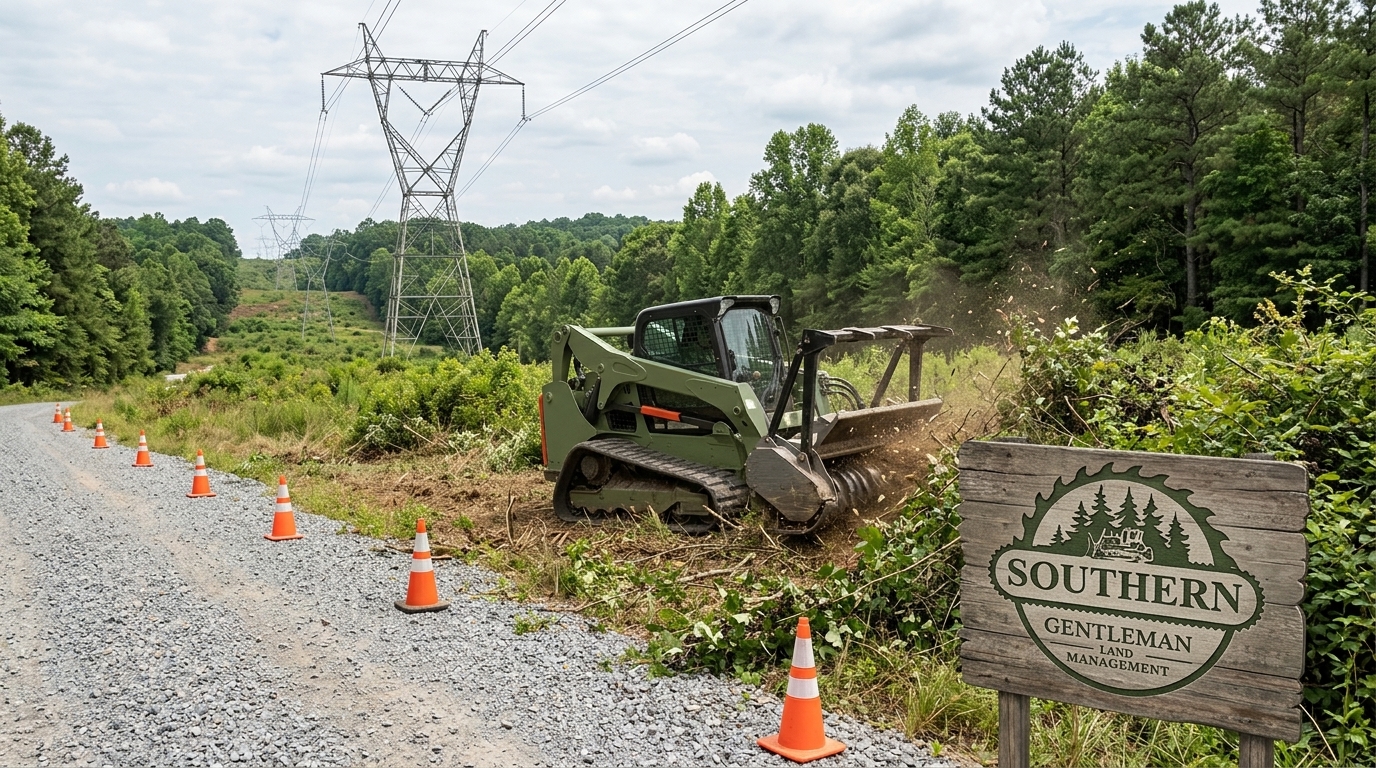
- You are clearing for a fence line, trail, driveway path, or utility easement
- The land will be used for pasture, recreation, or a food plot after clearing
- Trees are primarily small to mid-size (under 12 inches in diameter)
- You want the fastest, most cost-effective result
- You are maintaining previously cleared land that has grown up with brush and small trees
For most residential and small acreage projects across Bartow County and the surrounding North Georgia counties, forestry mulching is what we recommend first. It handles the majority of clearing scenarios better, faster, and at lower cost.
When Traditional Clearing Is the Right Choice
Traditional clearing makes more sense when:
- You are preparing a construction pad that requires bare, compacted soil
- The property has large-diameter timber (18 inches and up) throughout
- Marketable timber is present and you want to recover its value
- You are developing a large subdivision or commercial site
- The site requires cut-and-fill grading with significant elevation changes
- Local regulations require complete stump extraction (some commercial projects)
We are straightforward about this: if you are building a large commercial pad or developing multiple lots, traditional clearing with proper grading is the right approach. Mulching alone will not get you where you need to go.
The Hybrid Approach
Here is what experienced land clearing contractors know: the best projects often use both methods. A common approach for residential construction in North Georgia goes like this:
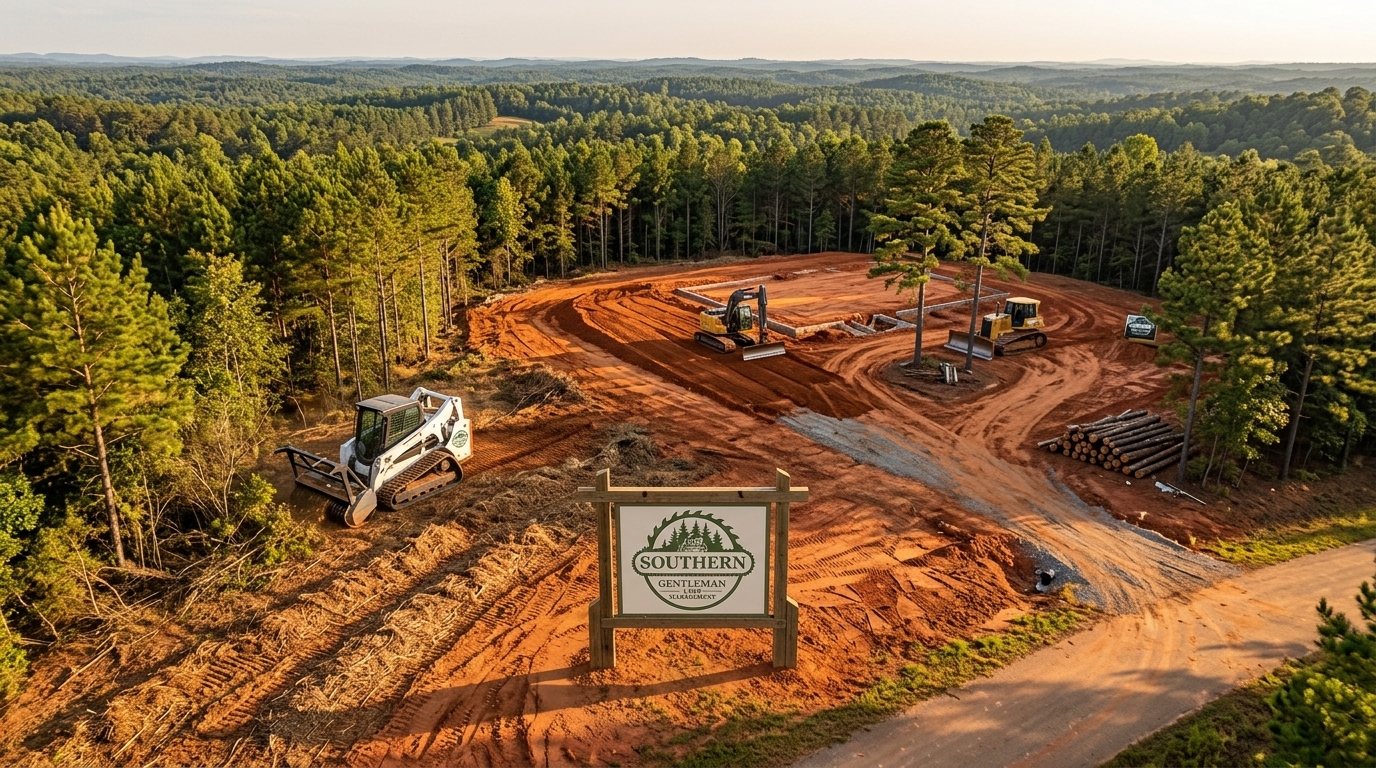
- A forestry mulcher clears the perimeter, brush areas, and sections where trees are being selectively removed
- Traditional equipment handles the building pad, driveway, and any areas requiring excavation and grading
- The mulched areas provide natural erosion control during and after construction
This hybrid approach keeps costs down while still delivering the bare ground where you need it. It is often the smartest play for new home construction on wooded lots.
Is Forestry Mulching Worth It?
For the right project, absolutely. If you are clearing a few acres of brush and small trees for a homesite, pasture, or property maintenance in Cobb County or anywhere in North Georgia, forestry mulching typically saves you 30% to 50% compared to traditional clearing while leaving your soil in better condition.
The math is straightforward: fewer machines, fewer labor hours, zero disposal costs, and zero erosion repair costs afterward. The mulch layer left behind protects your soil, suppresses regrowth, and breaks down into organic matter over time.
Where it falls short is on projects requiring bare dirt, large timber removal, or full-site development grading. In those cases, pay for the right equipment and crew to do the job properly.
Let SG Land Management Handle It
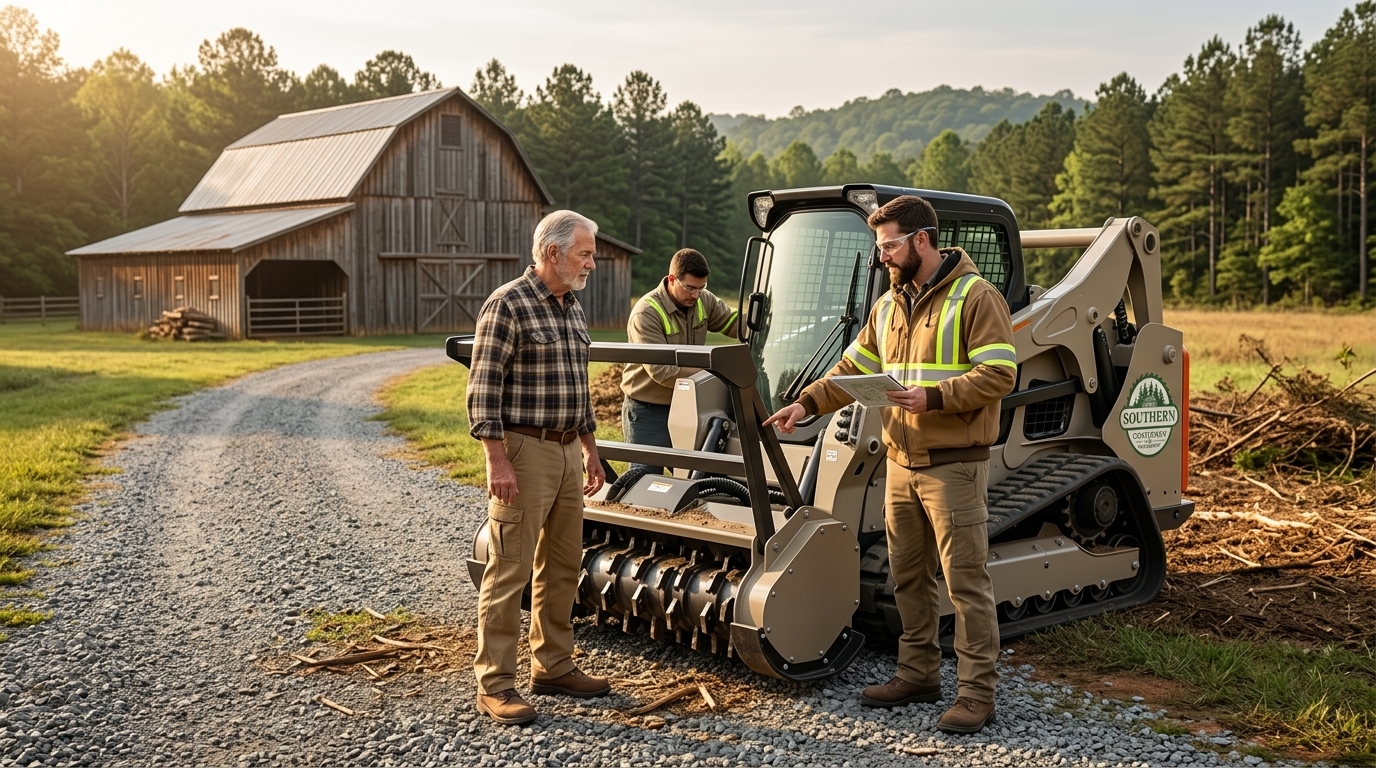
At Southern Gentleman Land Management, we operate both forestry mulching equipment and traditional clearing machinery. We are not locked into one method, which means we recommend what actually makes sense for your property rather than what we happen to have parked in the yard.
We work across Bartow, Cherokee, Cobb, Paulding, Floyd, and Gordon counties. Whether you need a few acres mulched for a homesite or a full traditional clear-and-grade for a building project, we will walk your property, discuss your goals, and give you an honest recommendation on the right approach.
Contact us for a free property evaluation. We will tell you which method fits your project, what it will cost, and how long it will take.