What Does Land Clearing Cost Per Acre in Paulding County?
Here are the general ranges you can expect in 2026 for Paulding County and the surrounding North Georgia area:
Method | Light Vegetation | Heavy Vegetation / Hardwoods |
|---|---|---|
Forestry Mulching | $1,500 to $3,500/acre | $3,500 to $6,000/acre |
Traditional Clearing | $2,000 to $4,000/acre | $4,000 to $6,000+/acre |
Grubbing (add-on) | +$1,000 to $2,000/acre | +$2,000 to $3,000/acre |
These are ballpark figures. A flat, lightly wooded half-acre lot near a paved road will cost far less than a steep, densely forested five-acre parcel at the end of a dirt trail. Every property is different, which is why a site visit matters more than any price chart.
For residential lots in Dallas, Hiram, and Douglasville, most homeowners clearing a quarter-acre to one acre for a home site or outbuilding spend between $1,500 and $5,000 total.
Factors That Affect Your Land Clearing Price
Understanding what drives cost helps you plan your budget and ask the right questions when you call for estimates.
Tree Density and Size
A lot covered in scrub brush and saplings clears fast. A lot with mature hardwoods (oaks, hickories, sweetgums) takes significantly more time and heavier equipment. Large trees may need to be felled and removed individually before the clearing crew can work the rest of the site. If you have large trees that need to come down first, tree removal in Dallas, GA from a qualified crew like Vilchis Tree Services Pro is worth coordinating before your land clearing starts.
Terrain and Slope
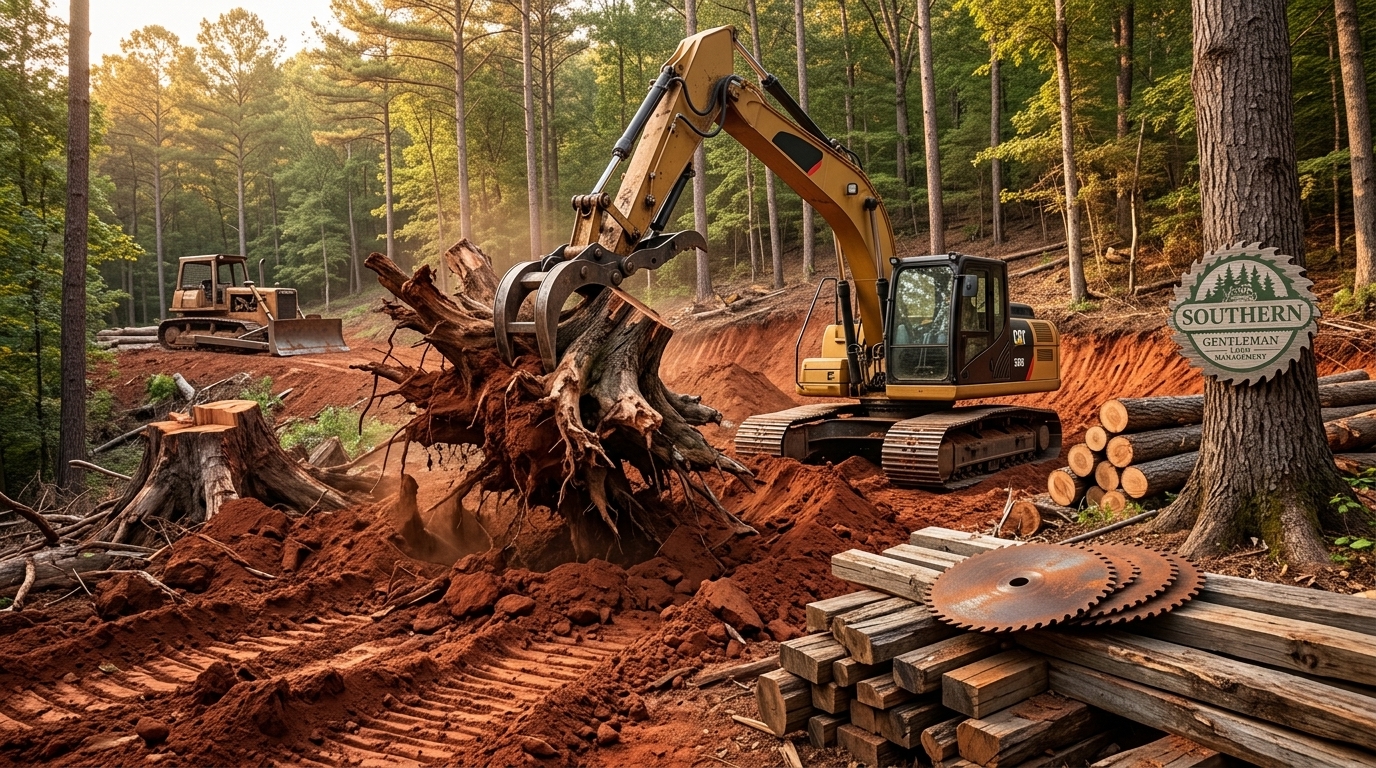
Paulding County has its share of hilly ground, especially in the northern and western portions near the Etowah River corridor. Steep slopes slow equipment down, increase fuel costs, and sometimes require specialized machines. Flat ground clears faster and cheaper.
Access to the Property
Can equipment get to the site easily? Properties with good road frontage and a clear entry point cost less to clear than landlocked parcels or lots where the crew has to cut an access path just to reach the work area. If your property sits off a long gravel drive or behind other parcels, expect the quote to reflect that.
Debris Disposal vs. On-Site Processing
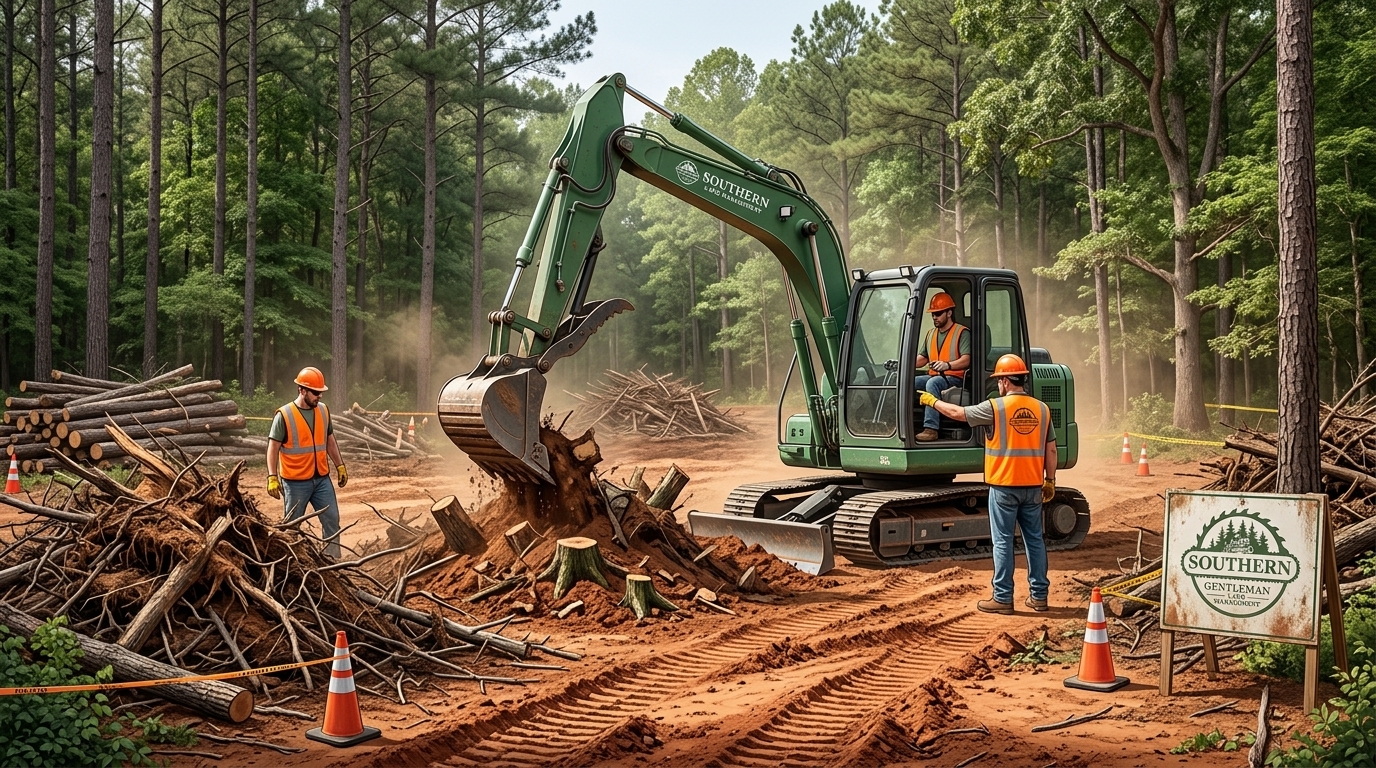
This is where method choice makes a big difference. Forestry mulching processes everything on-site, turning trees, brush, and stumps into a layer of organic mulch that stays on the ground. Traditional clearing generates piles of debris that need to be hauled off, burned (where permitted), or chipped. Hauling adds real cost: dumpster fees, trucking, and landfill charges.
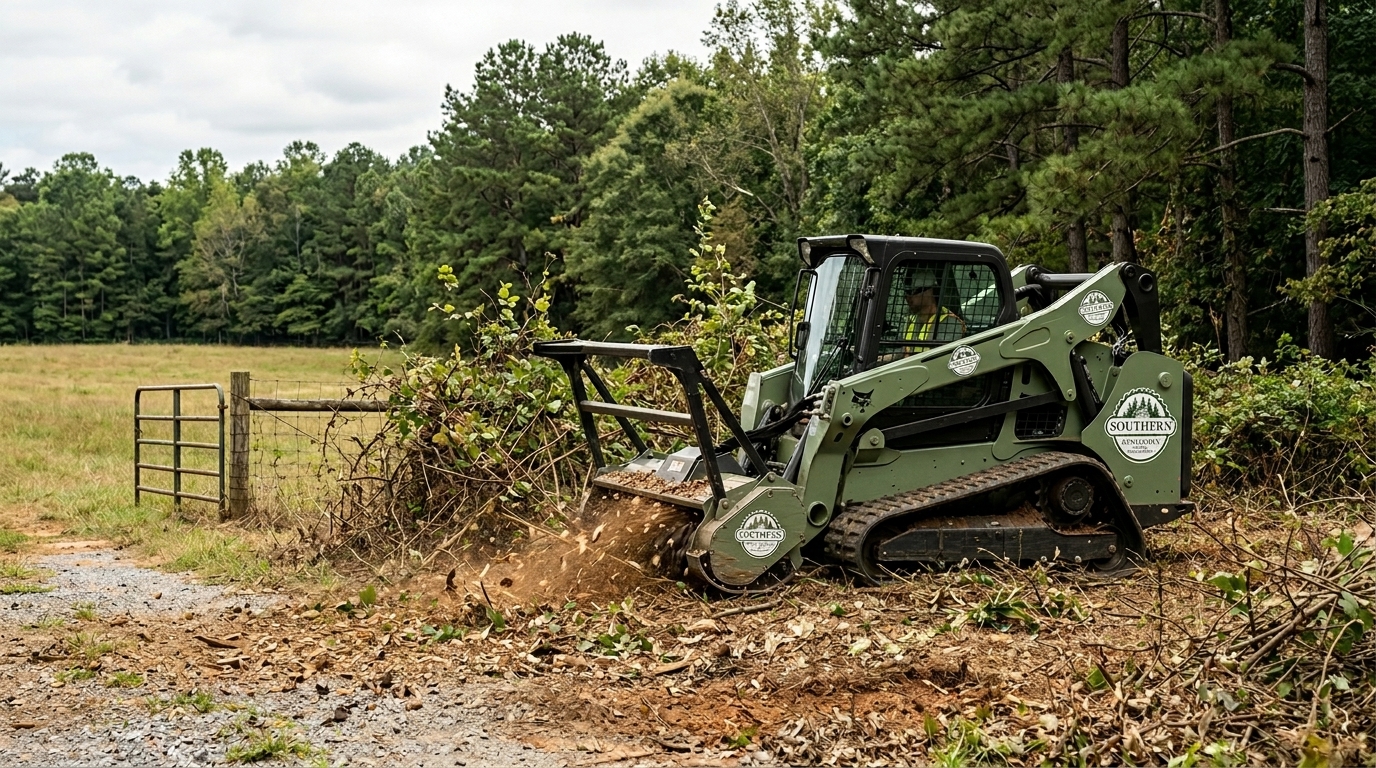
Stump and Root Removal
Basic clearing gets rid of what is above ground. If you need stumps ground down or roots pulled out for construction, that is grubbing, and it is a separate line item. Grubbing is essential if you are pouring a foundation, installing a septic system, or grading for a driveway. For pasture conversion or general cleanup, you may be able to skip it.
Permitting
Paulding County requires land disturbance permits for clearing activities over a certain threshold, especially near streams and wetlands. Your contractor should know the local requirements, but it is smart to check with the Paulding County Community Development office before work begins.
Land Clearing Methods Compared
Forestry Mulching
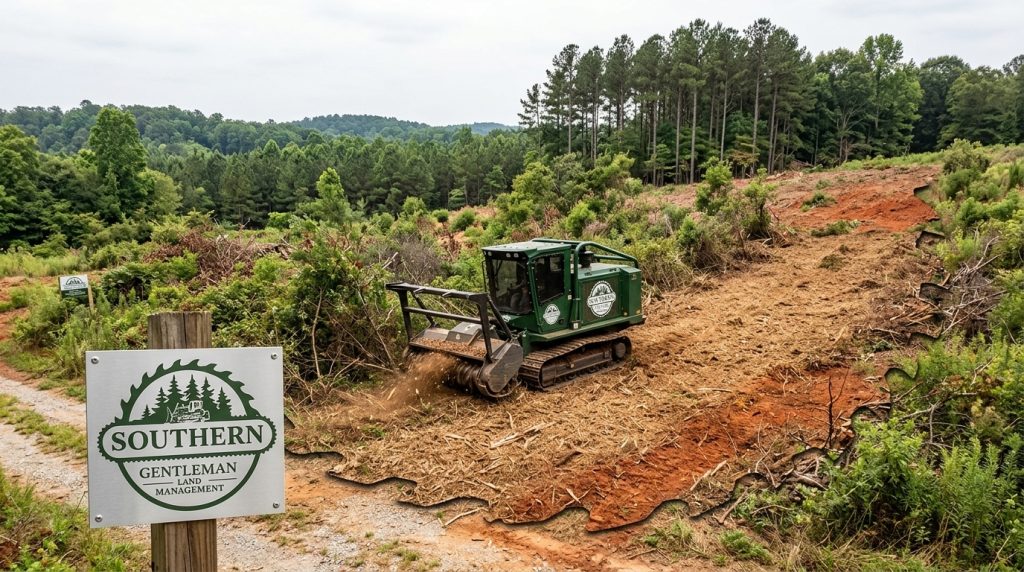
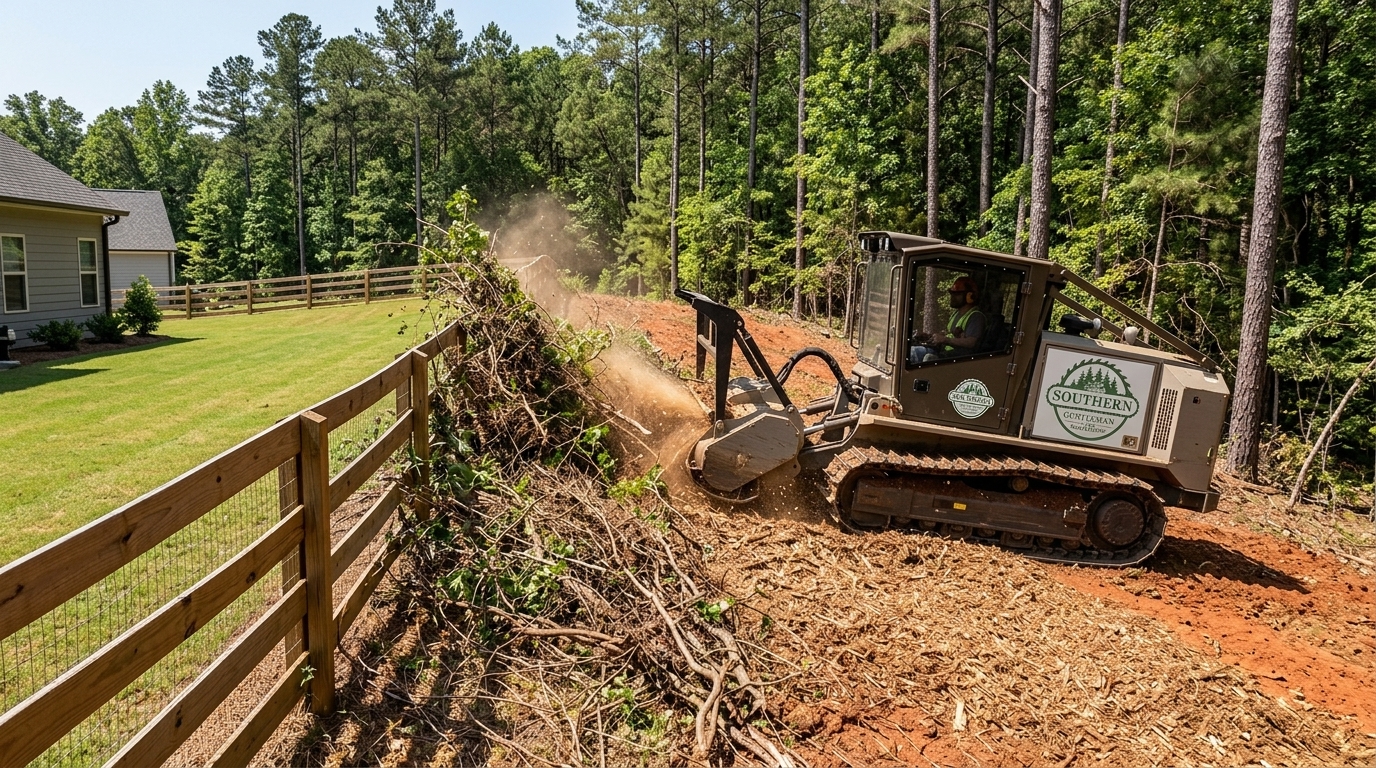
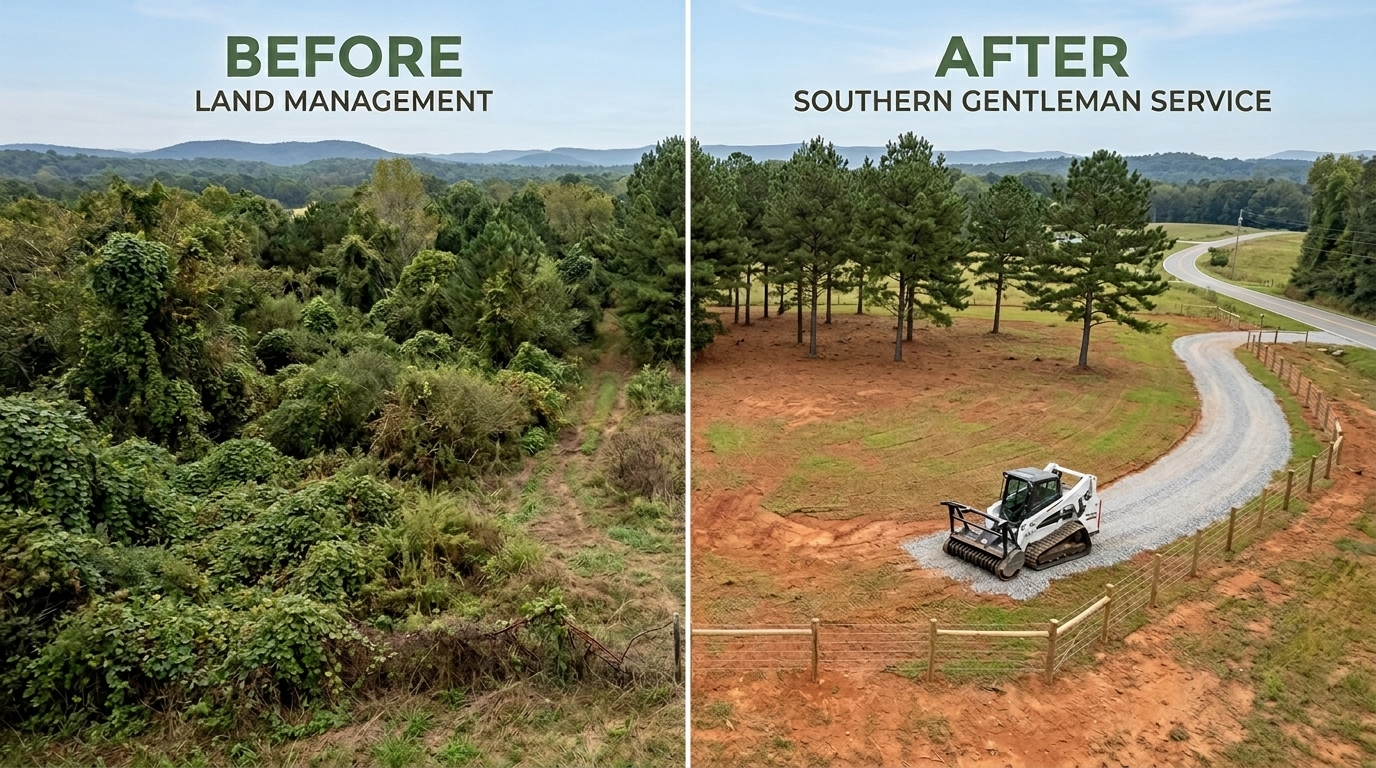
A forestry mulcher is a single machine that cuts, grinds, and spreads vegetation in one pass. This is the most popular method for residential and small-acreage projects in Paulding County for good reason:
- No hauling costs (debris stays on-site as mulch)
- Less soil disturbance and erosion risk
- Faster completion for most residential lots
- The mulch layer helps with erosion control and soil health
Forestry mulching works best on properties with brush, small to medium trees, and undergrowth. For lots with very large trees (24 inches diameter and up), those trees typically need to be felled first. SG Land Management offers forestry mulching across Paulding County and can assess whether your lot is a good fit for this method.
Traditional Clearing (Dozer / Excavator)
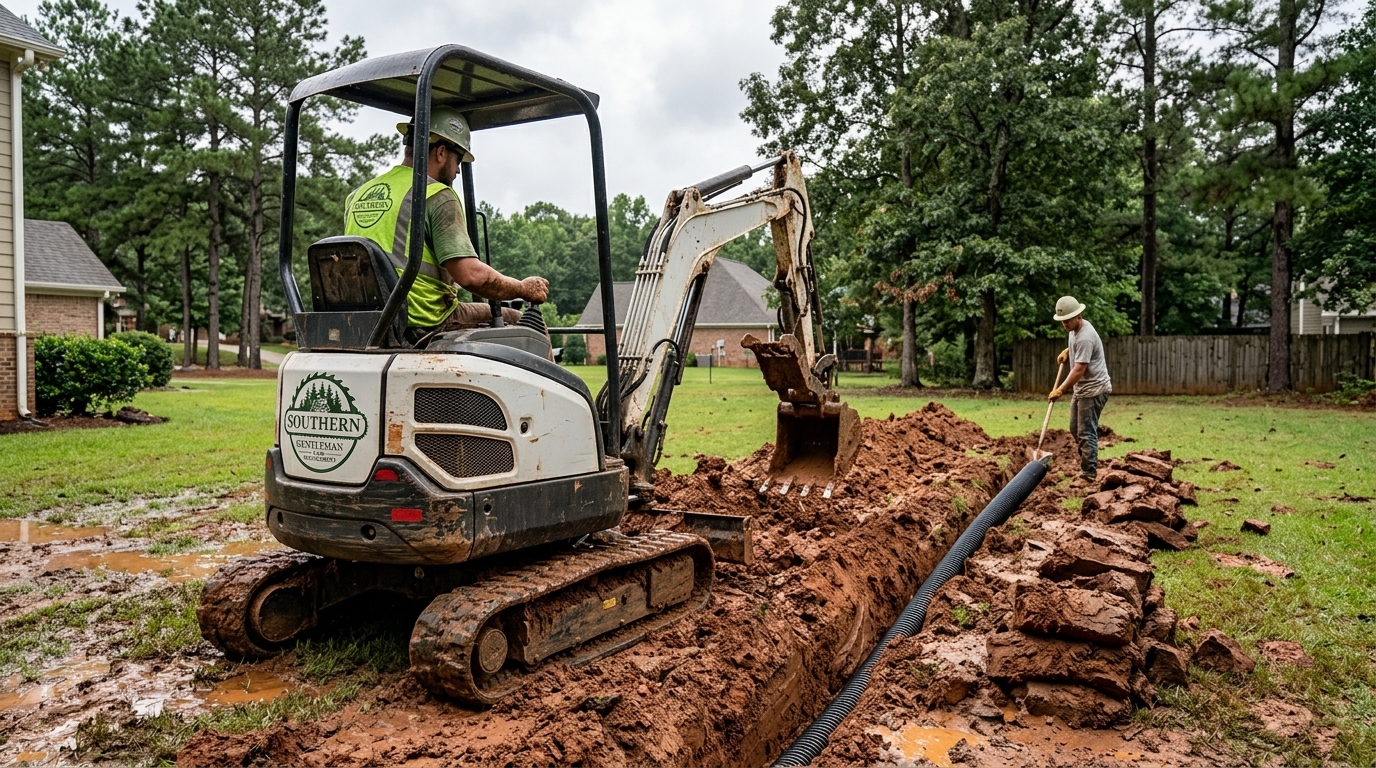
Traditional clearing uses heavy equipment to push over, pile, and remove vegetation. This method makes sense when:
- The site needs to be completely bare for construction
- You are clearing large acreage with heavy timber
- Grading and earthwork will follow immediately
The downside is cost and mess. You will have burn piles or haul-off bills, and the exposed soil needs erosion controls in place before the next rain.
Bush Hogging
For properties that are overgrown but do not have significant trees, bush hogging is the most affordable starting point. It handles tall grass, weeds, briars, and light brush at a fraction of the cost of full clearing. Many Paulding County landowners start with bush hogging to see what they are working with before committing to a full clearing plan.
What Should Be Included in a Land Clearing Quote?
When you are comparing estimates, make sure each quote covers the same scope. A legitimate quote should specify:
- Acreage or square footage being cleared
- Method (mulching, traditional, or combination)
- What stays and what goes (are certain trees being preserved?)
- Stump treatment (ground, pulled, or left in place)
- Debris disposal (included, extra, or on-site processing)
- Timeline for completion
- Site restoration (grading, seeding, erosion control)
If a quote is just a single number with no detail, ask for a breakdown. The cheapest bid is not always the best value if it leaves you with a torn-up lot and a pile of debris.
Tips for Getting an Accurate Estimate
- Walk the property first. Know what you are asking a contractor to clear. Take photos and note large trees, slopes, wet areas, and access points.
- Define your end goal. “Clear it all” means different things to different people. Are you building a house? Creating pasture? Just cleaning up the perimeter? The clearer your goal, the more accurate your quote.
- Get at least three quotes. Pricing varies contractor to contractor. Compare scope, not just price.
- Ask about permits. A contractor familiar with Paulding County will know the local requirements and factor permit costs into the estimate.
Coordinate related work. If you need tree removal, stump grinding, grading, or septic installation after clearing, plan the sequence up front. Bundling work or scheduling it in the right order saves time and money.