Average Forestry Mulching Cost Per Acre in Georgia
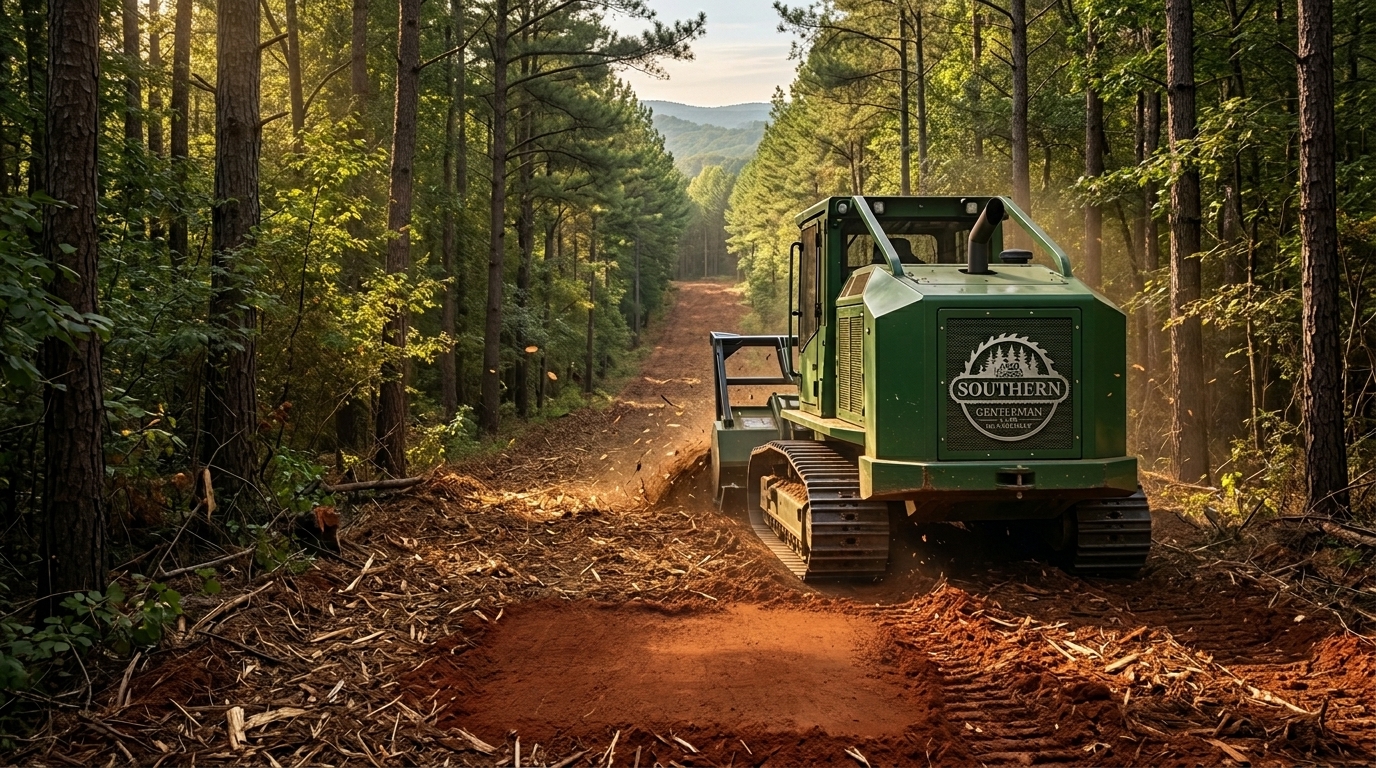
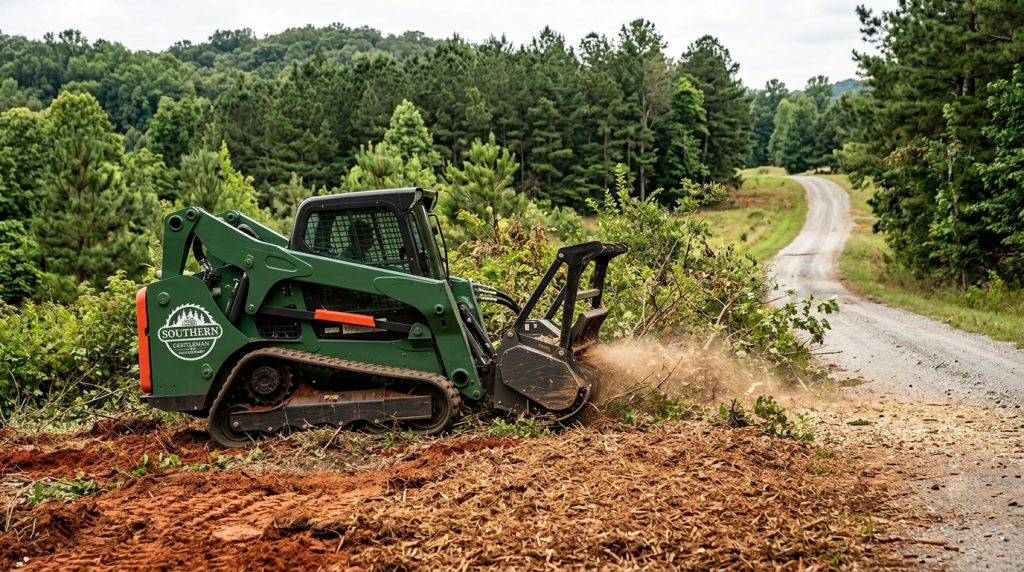
Forestry mulching in Georgia typically costs between $1,500 and $6,500 per acre depending on vegetation density and site conditions. Most residential and small acreage projects fall in the $2,500 to $4,500 range.
Here is a breakdown by vegetation type:
Vegetation Level | What’s on the Land | Cost Per Acre |
|---|---|---|
Light | Brush, tall grass, small saplings under 4″ diameter | $1,500 – $3,000 |
Moderate | Mixed brush and trees 4″ to 8″ diameter | $3,000 – $4,500 |
Heavy | Dense trees 8″ to 12″+ diameter, thick understory | $4,500 – $6,500 |
For smaller properties, pricing works a bit differently:
Project Size | Typical Cost |
|---|---|
Small residential lot (under 1/4 acre) | $500 – $2,000 flat rate |
Half acre lot | $1,000 – $2,500 |
1 acre | $1,500 – $4,500 |
5+ acres | Discounted per-acre rate (ask for bulk pricing) |
Most forestry mulching companies in Georgia have a minimum charge of $500 to $1,000, which covers equipment mobilization and transport costs regardless of job size.
What Factors Affect Forestry Mulching Prices?
No two properties are the same. These are the main variables that push forestry mulching cost per acre up or down.
Vegetation Density and Type
This is the single biggest factor. A field of waist-high brush with scattered saplings mulches fast. A thicket of hardwood trees with 10-inch trunks takes significantly longer. The denser and larger the vegetation, the more machine hours are required.
Softwoods like pine mulch faster than hardwoods like oak and hickory. A property covered in pine saplings will cost less per acre than one full of mature hardwood undergrowth.
Tree Diameter Limits
Most forestry mulching heads handle trees up to 8 to 12 inches in diameter efficiently. Trees larger than that may need to be cut and removed separately before mulching begins, which adds cost. If your property has scattered large trees you want removed, expect that to be quoted as additional work outside the per-acre mulching rate.
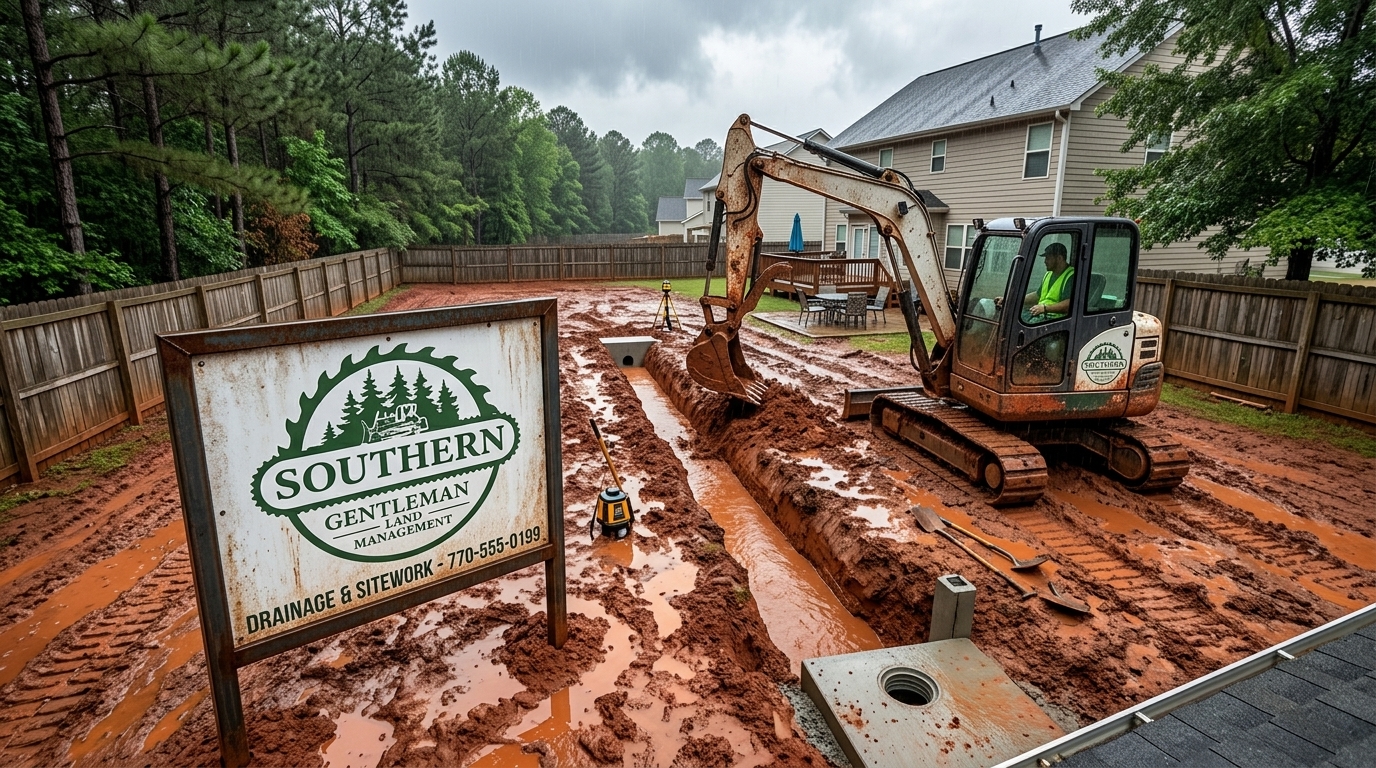
Terrures, or deal with wet ground conditions, that adds time and cost. Properties with no established access road may require additional prep work.ain and Slope
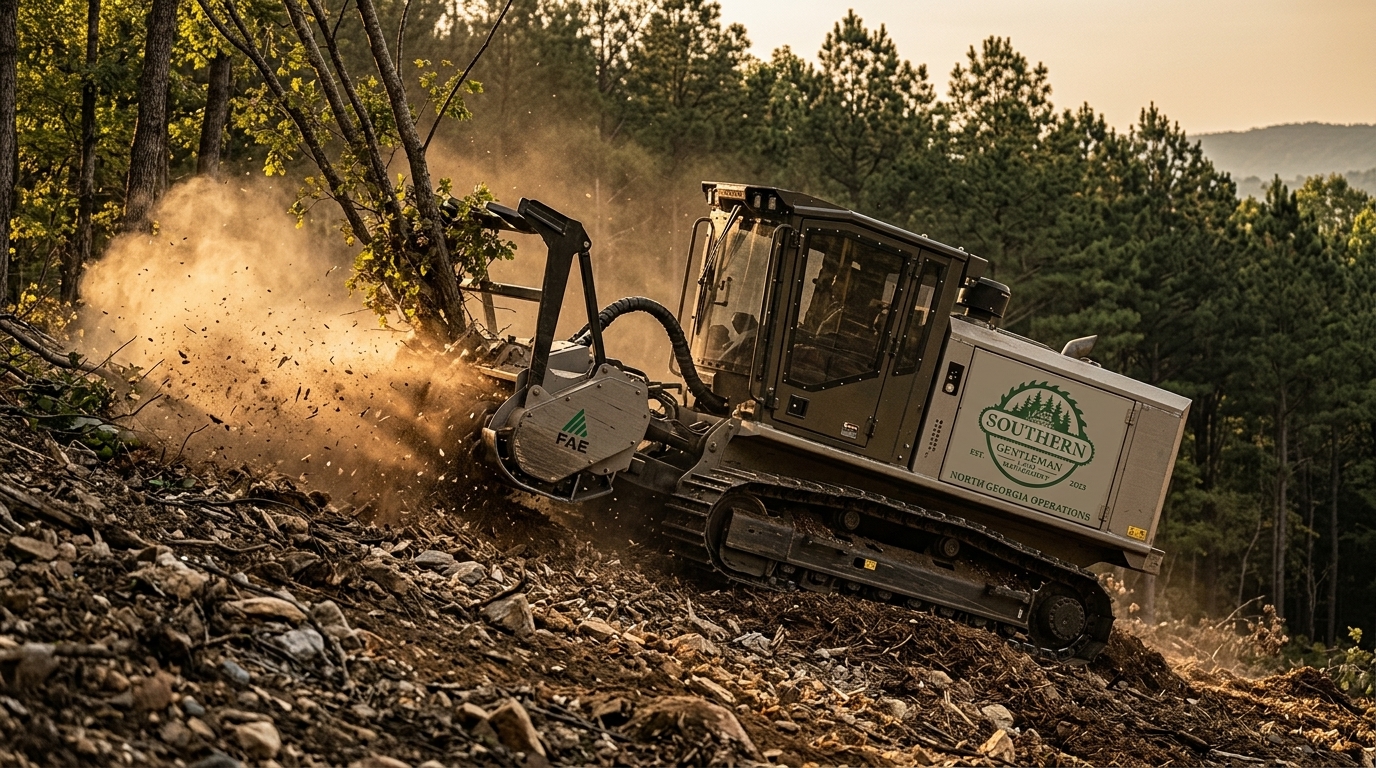
Flat land is straightforward. Slopes, ravines, and rocky terrain slow everything down and increase wear on equipment. Properties in the foothills of North Georgia, particularly in Bartow County and Cherokee County, often have rolling terrain that affects pricing. Steep slopes (greater than 20 degrees) can add 20% to 40% to the base cost.
Site Access
The mulching machine needs to get onto your property. If there is a clear access point with solid ground, mobilization is simple. If the operator has to navigate narrow roads, cross creeks, work around struct.
Distance From Provider
Most companies factor travel and equipment transport into the quote. Jobs within 30 to 45 minutes of the provider’s base are typically straightforward. Projects an hour or more away may include a mobilization fee of $200 to $500 or more, depending on the equipment being transported.
Debris and Cleanup Requirements
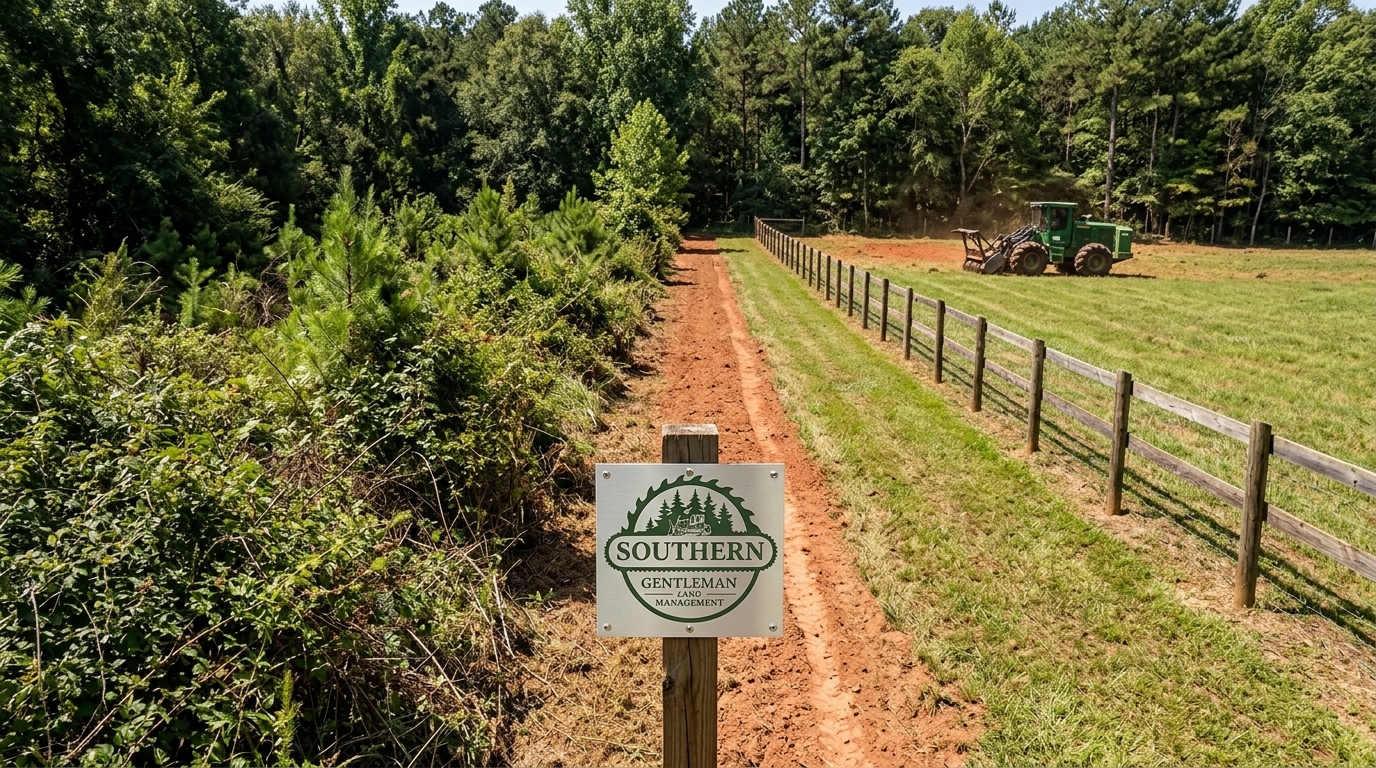
Standard forestry mulching leaves the mulched material on the ground as a natural layer of organic ground cover. This is one of the method’s biggest advantages. However, if you need the mulched material removed, raked, or the site prepped for a specific use (building pad, pasture seeding, etc.), those are additional services that add to the total cost.
Forestry Mulching vs. Traditional Land Clearing: Cost Comparison
One of the most common questions landowners ask is whether forestry mulching is worth the price compared to traditional clearing methods. Here is a direct comparison:
Method | Cost Per Acre | What’s Included | Hidden Costs |
|---|---|---|---|
Forestry mulching | $1,500 – $6,500 | Cutting, grinding, and spreading mulch in one pass | Minimal; mulch stays on-site |
Traditional clearing (dozer + haul-off) | $3,000 – $8,000+ | Pushing trees, piling debris, loading, hauling | Burn permits, dump fees, erosion repair, re-grading |
Hand clearing (chainsaw crews) | $2,000 – $6,000+ | Cutting and stacking; hauling extra | Very slow, labor-intensive, still need debris removal |
Traditional land clearing with a bulldozer looks cheaper on paper in some cases, but the total project cost often runs higher once you add hauling fees, dump charges, stump removal, erosion control, and site re-grading. Dozer clearing also disturbs the topsoil and root systems, which can create drainage and erosion problems.
Forestry mulching processes everything in a single pass. Trees, brush, and stumps are ground into mulch right where they stand. No burn piles. No haul-off trucks. No exposed dirt. The mulch layer left behind suppresses weeds, prevents erosion, and breaks down into nutrients for the soil over time.
For most residential lots and acreage projects in Georgia, forestry mulching delivers the best value when you account for total project cost and long-term land condition.
What’s Included in a Typical Forestry Mulching Quote
A professional forestry mulching quote should include:
- Equipment mobilization: Transport of the mulching machine to your property
- Mulching labor: Machine operation time to process all targeted vegetation
- Mulch distribution: The ground material is left as a natural cover layer (typically 2 to 4 inches deep)
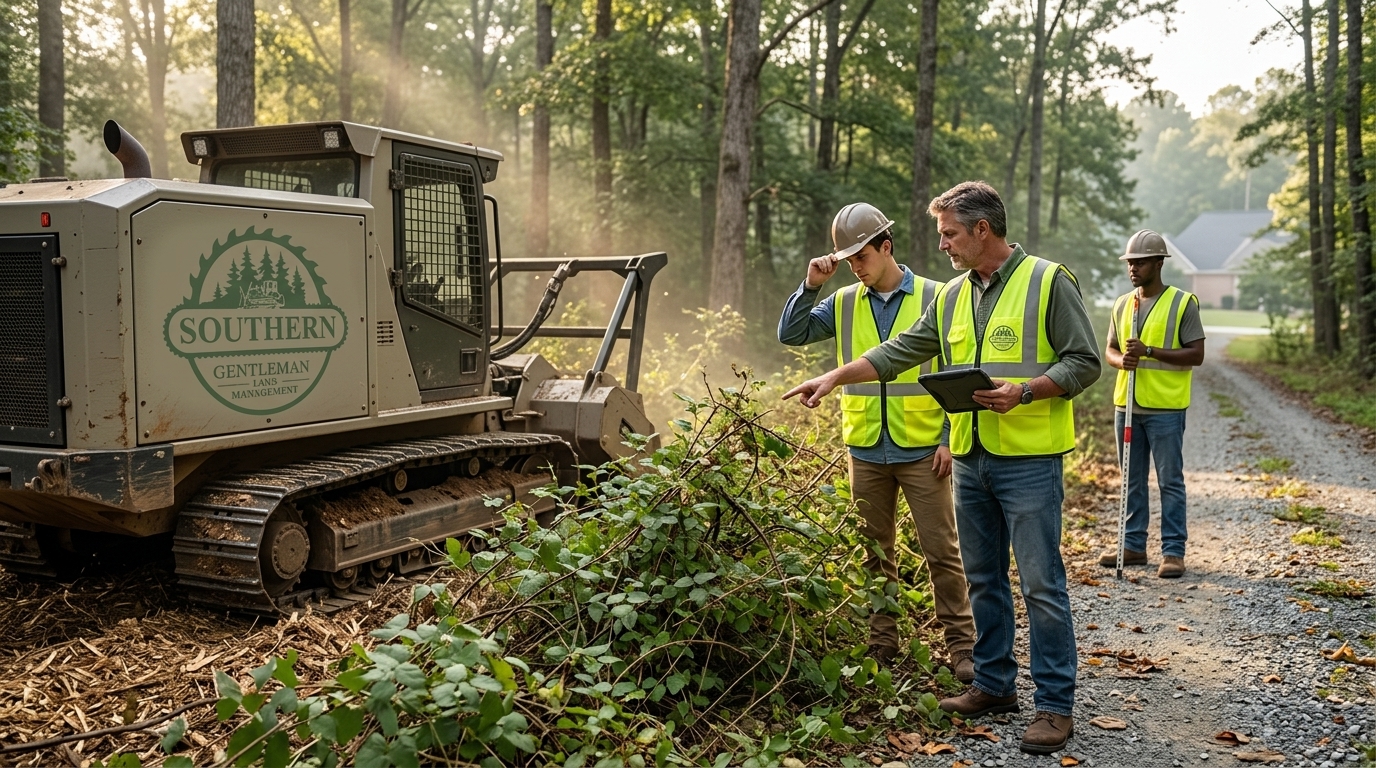
- Site walkthrough or assessment: Most reputable companies will visit the property or review detailed photos before quoting
What is typically NOT included unless specified:
- Removal of trees exceeding the machine’s diameter capacity
- Mulch removal or hauling
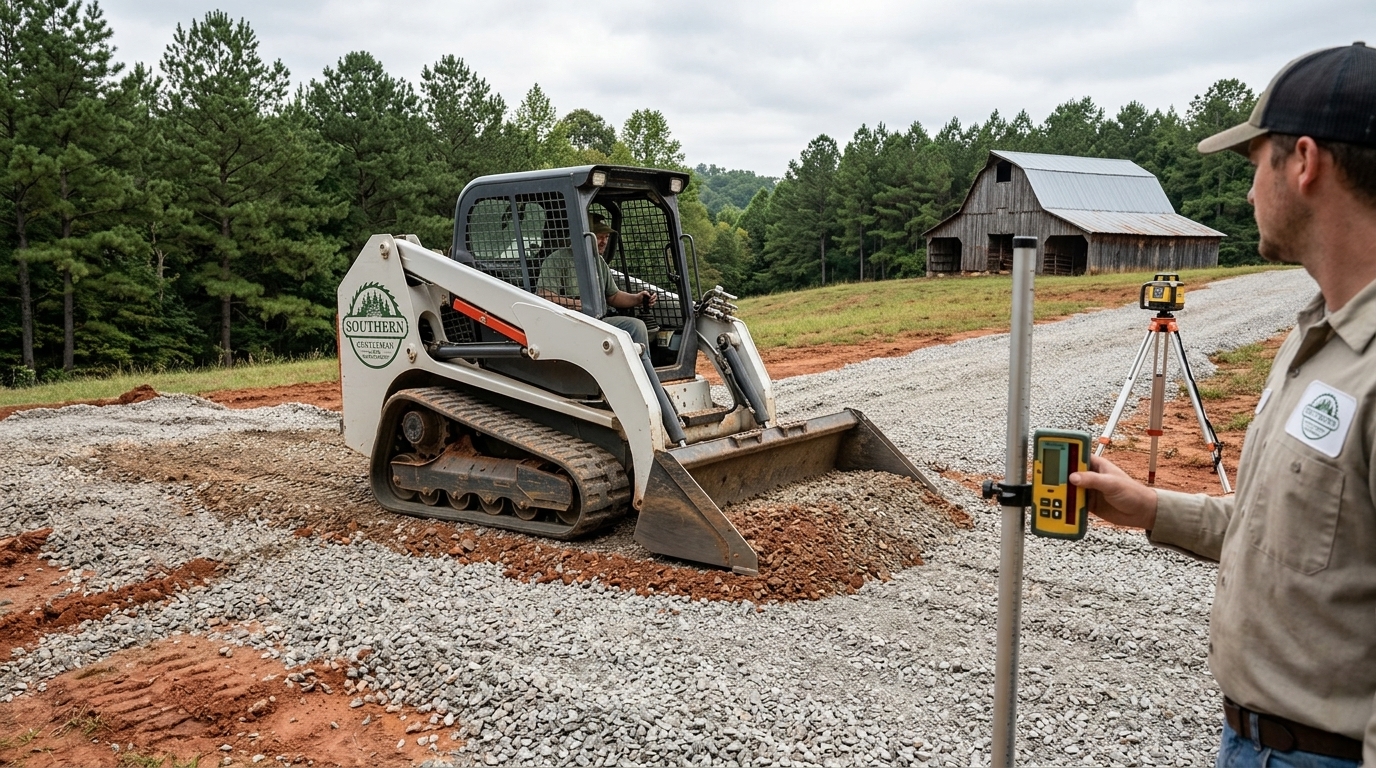
- Grading or site prep for construction
- Fence line work or precision clearing near structures
- Bush hogging for open field areas (this is a separate, less expensive service for grass and light brush)
Always ask for a written quote that specifies the area to be cleared, what vegetation is included, and any exclusions.
How to Save Money on Forestry Mulching
Clear the Easy Stuff First
If you have open field areas mixed with wooded sections, consider having the open areas bush hogged separately. Bush hogging runs $75 to $150 per acre for basic grass and light brush. Reserve the forestry mulching equipment for the areas that actually need it.
Bundle Acreage
Per-acre rates typically drop on larger jobs. A 10-acre project will almost always cost less per acre than a 1-acre lot. If you have neighbors who also need clearing, coordinating jobs while the equipment is already on-site can save everyone money on mobilization costs.
Time It Right
Late fall through early spring is the best time for forestry mulching in Georgia. The ground is firmer, vegetation is dormant, and many providers have more availability. You may find better pricing and faster scheduling outside of the peak spring and summer season.
Be Specific About What You Need
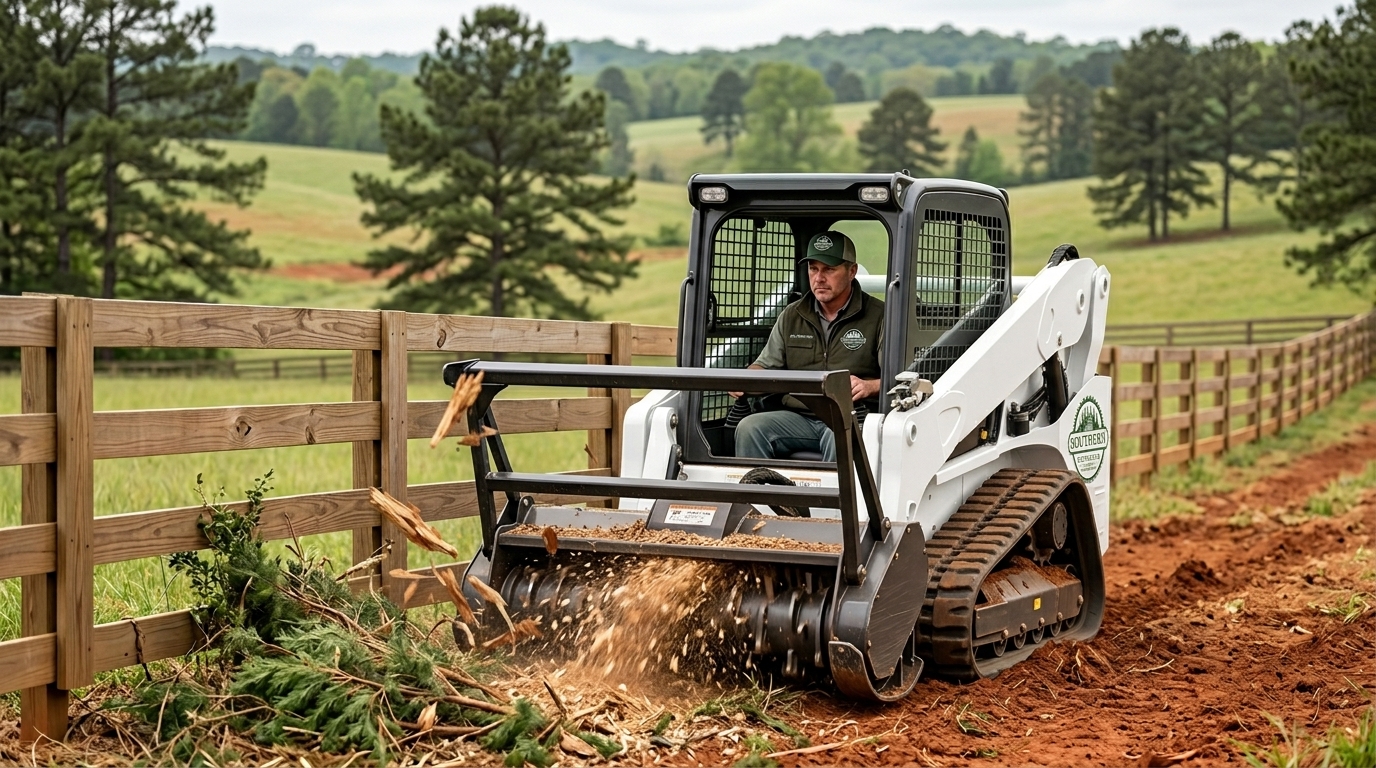
Some landowners want every last sapling removed. Others just need the undergrowth cleared while leaving desirable trees standing. The more precise you are about what stays and what goes, the more accurately a provider can quote the job, and selective mulching (leaving mature hardwoods, for example) often costs less than total clearing.
Get Multiple Quotes
Pricing varies between providers based on equipment, overhead, and travel distance. Get at least two or three quotes for any project over $2,000. Compare what is included in each quote, not just the bottom-line number.
When Is Forestry Mulching the Best Value?
Forestry mulching makes the most financial sense for:
- Overgrown residential lots: Clearing 1/4 to 2 acres of brush and small trees for a home site, yard expansion, or fence installation
- Pasture reclamation: Taking back fields that have grown up with cedar, privet, and hardwood saplings
- Hunting land and food plots: Creating clearings and shooting lanes without disturbing the soil
- Fire mitigation and defensible space: Clearing undergrowth around structures in wooded areas
- Right-of-way and property line clearing: Opening up boundaries and access roads
- Pre-construction site prep: Clearing for driveways, outbuildings, or septic systems where topsoil preservation matters
For properties in Cobb County and the surrounding North Georgia area, where development and land management are constant needs, forestry mulching is the go-to method for efficient, environmentally responsible clearing.