What Does Bush Hogging Actually Cost in Georgia?
Bush hogging pricing depends primarily on two things: how much land you have and what condition it is in. Here are the realistic ranges you should expect from reputable contractors in Georgia for 2026.
Land Condition | Cost Per Acre | Notes |
|---|---|---|
Flat, maintained field (regular mowing) | $50 to $75 | Grass and low vegetation kept under 12 inches |
Moderate overgrowth (waist-high weeds/grass) | $75 to $150 | Thick weeds, tall grass, light brush |
Heavy overgrowth (chest-high, some saplings) | $150 to $250 | Dense vegetation with scattered saplings under 2 to 3 inches |
Small lots under 1 acre | $150 to $350 flat rate | Minimum charges apply regardless of lot size |
Minimum charge: Most bush hogging companies in Georgia charge a $150 to $250 minimum per visit. Mobilizing a tractor and rotary cutter to your property costs the same whether you have a quarter-acre lot or three acres, so small jobs carry a higher per-acre rate.
Recurring service discount: If you schedule regular bush hogging (monthly or seasonal), expect 15 to 20 percent off the per-visit rate. Maintenance mowing is faster, easier on equipment, and more predictable for the contractor, so the savings get passed along.
What Affects Bush Hogging Prices
Not every acre costs the same to mow. Here are the factors that move your price up or down.
Vegetation Height and Density
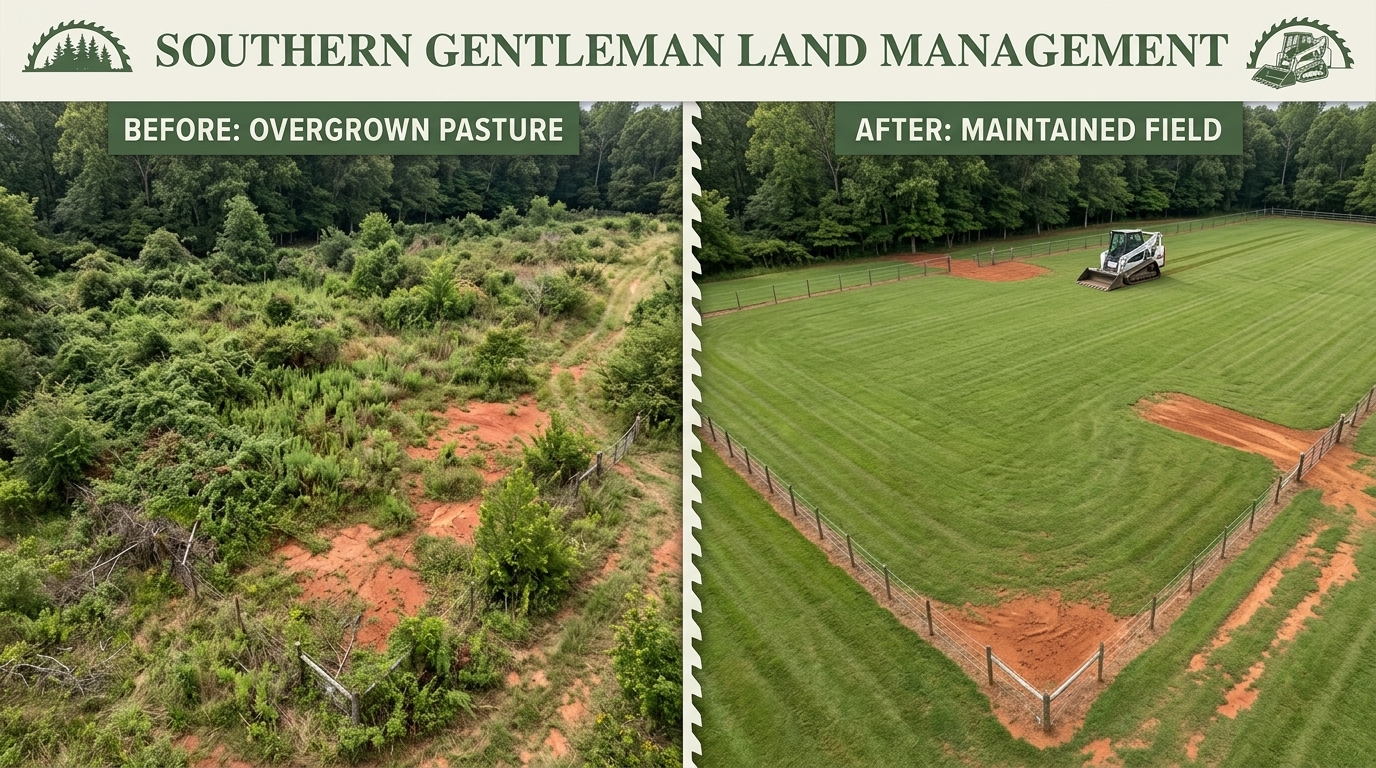
This is the single biggest cost driver. A field that has been maintained throughout the season takes one pass and minimal time. A field that has not been touched in two years with chest-high Johnson grass, blackberry brambles, and privet saplings takes multiple passes, more fuel, and more wear on cutting equipment. The worse the overgrowth, the higher the cost.
Terrain and Slope
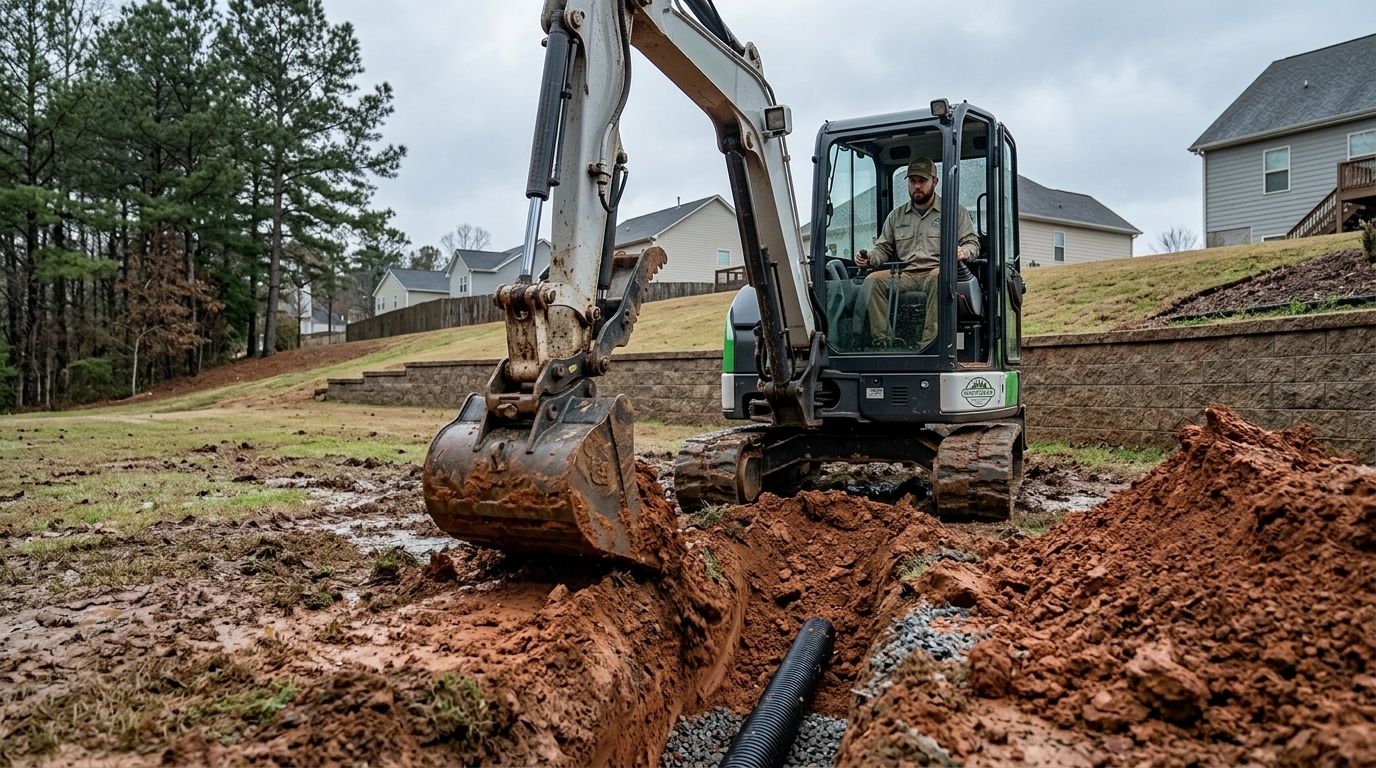
Flat, open pastures are straightforward work. Hilly terrain, ditches, ravines, and uneven ground slow the tractor down, require more careful operation, and increase the risk of equipment damage. Properties in the foothills of North Georgia often run higher than flat farmland in the Piedmont for this reason.
Access and Obstacles
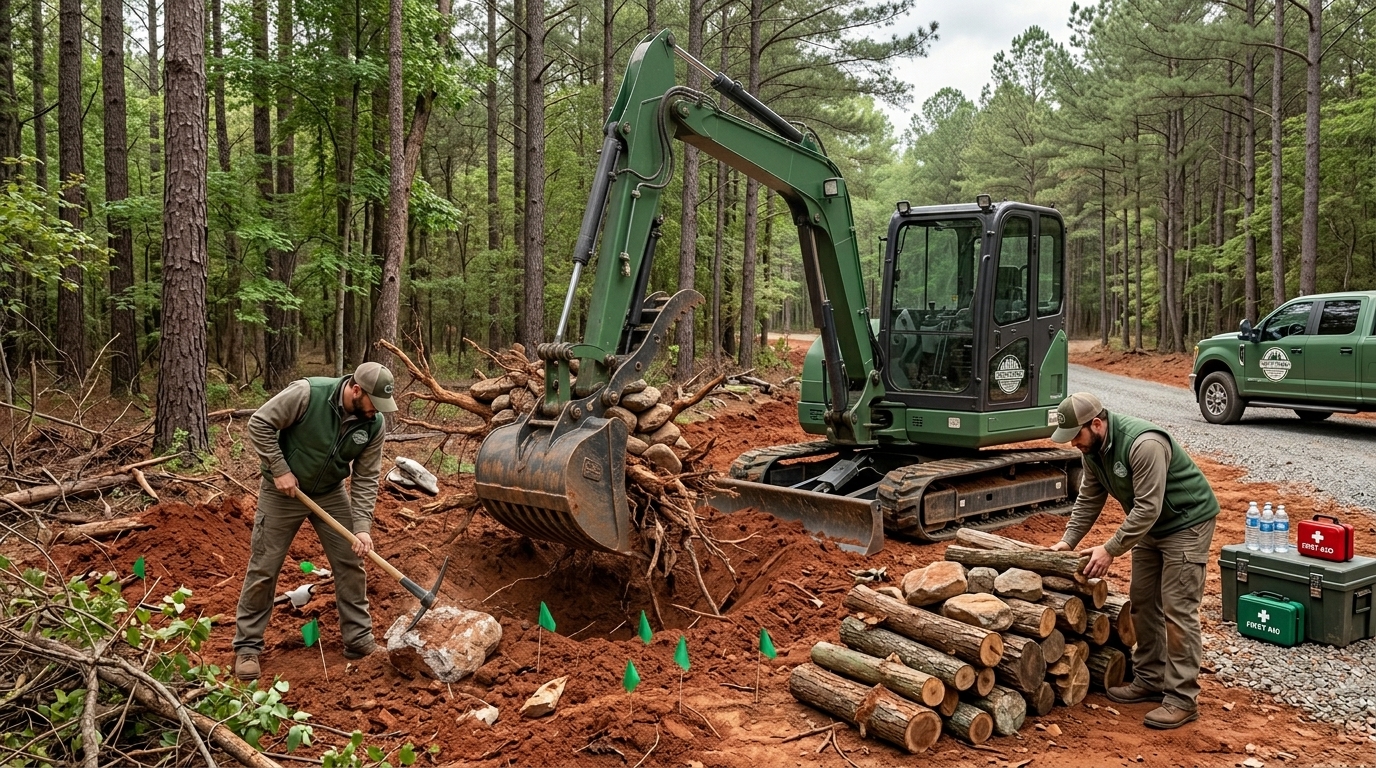
Can a tractor and bush hog get to the property easily? Narrow gates, no road access, fencing that needs to be worked around, scattered debris, and hidden obstacles (old fence posts, concrete, rock outcrops) all add time and cost. If the contractor has to stop repeatedly to navigate around obstacles, your price goes up.
Acreage
Per-acre cost drops as acreage increases. A single acre might cost $75 to $150 depending on condition. Ten acres of the same condition might run $50 to $75 per acre because the tractor runs continuously without repositioning. Larger properties almost always get a better per-acre rate.
Travel Distance
If your property is 45 minutes from the contractor’s base, mobilization costs are factored in. This is especially relevant for small jobs where travel time represents a significant portion of the total project time.
What Bush Hogging Includes (and What It Does Not)
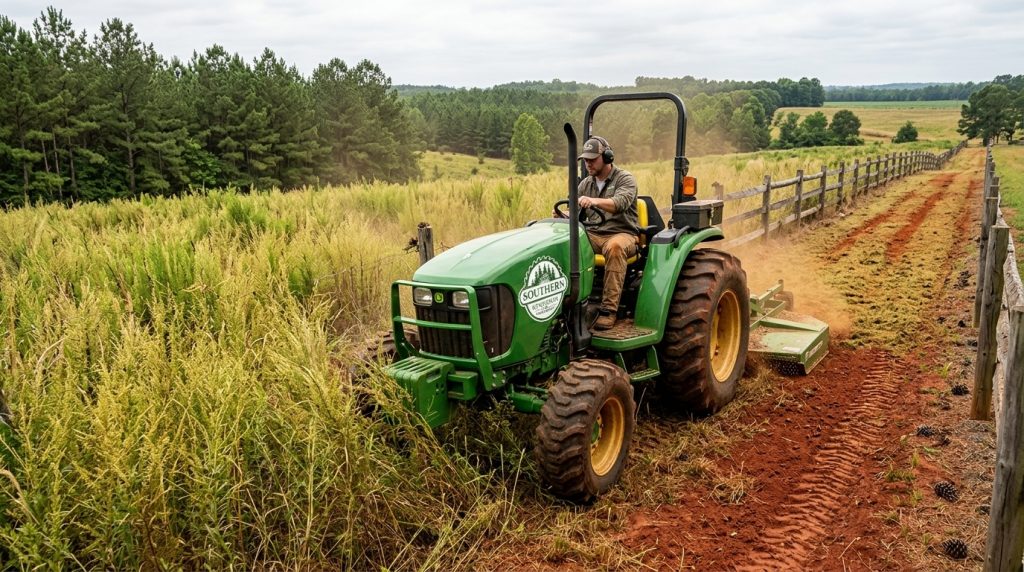
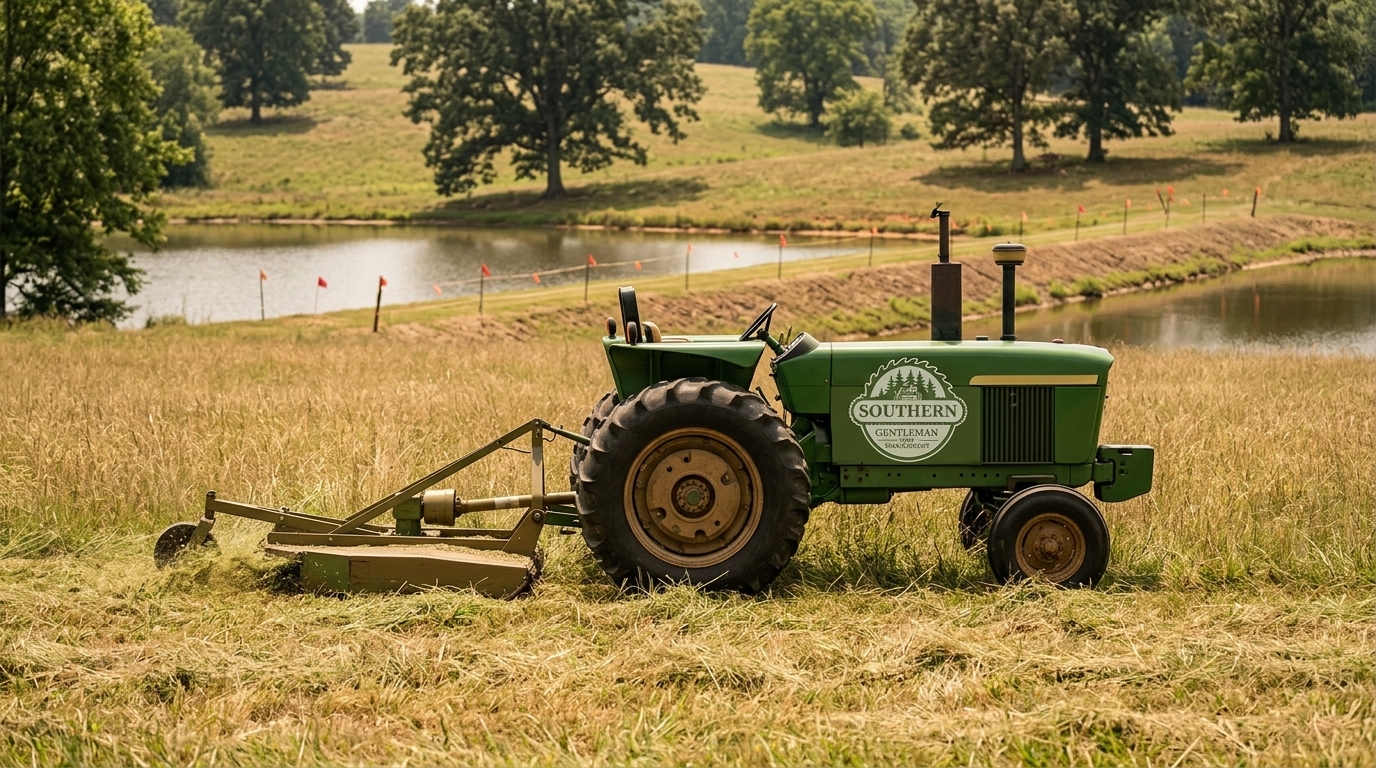
Bush hogging is rotary mowing with a heavy-duty cutting deck pulled behind a tractor. It handles grass, weeds, brush, and light vegetation efficiently.
What bush hogging handles:
- Tall grass and pasture maintenance
- Weeds, wildflowers, and broadleaf overgrowth
- Light brush and thin-stemmed vegetation
- Saplings under 2 to 3 inches in diameter
- Field edges, fence lines, and property boundaries
What bush hogging does NOT handle:
- Trees and woody growth over 2 to 3 inches in diameter
- Stumps of any size
- Dense undergrowth with established shrubs and vines
- Rocky terrain where blade contact would damage equipment
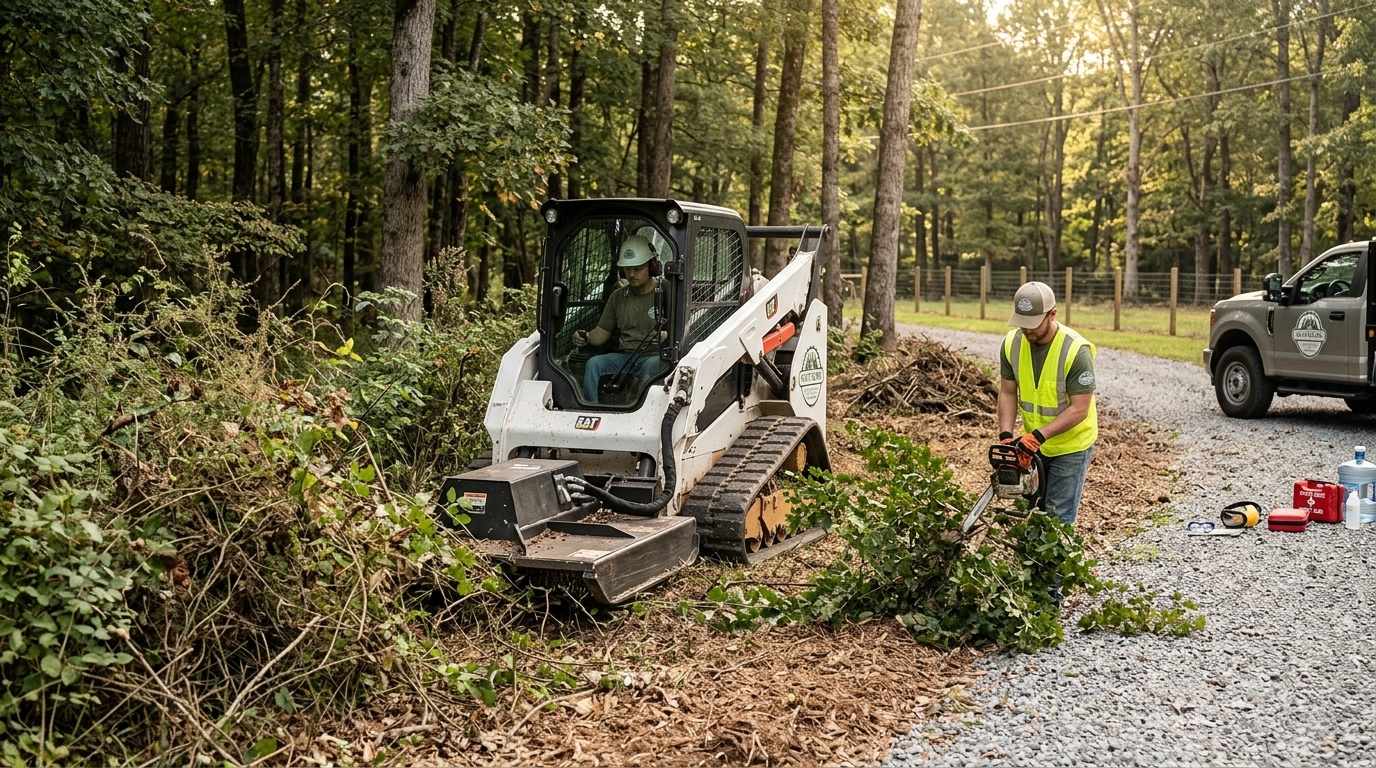
If your property has established trees, thick woody brush, or significant saplings, bush hogging is the wrong tool. That work requires forestry mulching, which uses a specialized mulching head to grind standing trees, stumps, and heavy brush in a single pass.
Bush Hogging vs. Forestry Mulching: Which Do You Need?
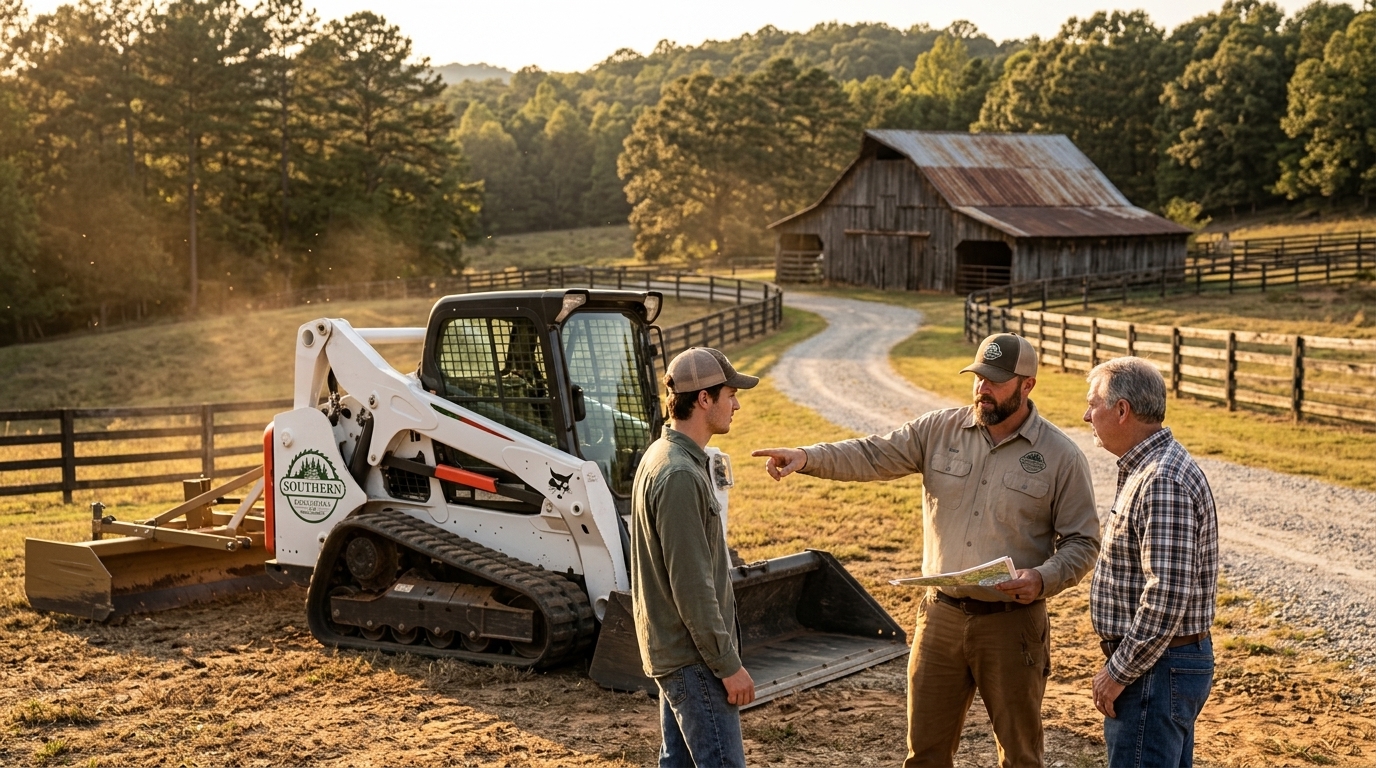
This is the most common question property owners get wrong, and choosing the wrong service wastes money.
Choose bush hogging when:
- You are maintaining open fields, pastures, or hay land
- Vegetation is primarily grass, weeds, and light brush
- You plan to mow regularly (monthly, quarterly, or seasonally)
- The land has been maintained before and just needs to be kept in check
Choose forestry mulching when:
- The land has not been touched in years and has woody growth
- There are trees, thick brush, and saplings over 3 inches
- You are reclaiming overgrown property or clearing for a new use
- You want a one-time clearing that reduces everything to ground-level mulch
Think of it this way: bush hogging is maintenance mowing for open land. Forestry mulching is land reclamation for overgrown or wooded property. Many landowners need forestry mulching first to reclaim a neglected property, then switch to regular bush hogging to keep it maintained going forward.
Seasonal Timing: When to Schedule Bush Hogging in Georgia
Georgia’s growing season runs long, from late March through early November. That affects both when you need bush hogging and what it costs.
Spring (March through May)
The first mow of the season. Growth explodes in April and May with warm temperatures and spring rain. If you only bush hog once a year, early spring before growth gets out of control is the most cost-effective time. This is also peak season, so book early.
Summer (June through August)
Fast growth continues, especially after afternoon thunderstorms. Monthly or bi-monthly mowing keeps fields manageable. Waiting until late summer often means heavier growth and a higher per-acre cost.
Fall (September through November)
The second peak season. A fall mow cuts down the season’s growth before winter dormancy, prevents woody vegetation from establishing root systems, and leaves the property clean heading into the cooler months. Late October through November is ideal.
Winter (December through February)
Growth is dormant, but winter bush hogging can be strategic for properties that got away from you during the growing season. Ground conditions may be softer after winter rain, which can limit access on some properties.
Best practice for maintained fields: Two to three mowings per year (spring, midsummer, and fall) keeps most Georgia pastures and fields under control at the lowest total annual cost.
How to Get the Best Value on Bush Hogging
A few practical steps will save you money without cutting corners.
- Schedule recurring service. A maintenance agreement at 15 to 20 percent off beats paying emergency rates for overgrown land every time.
- Combine acreage with neighbors. If you and an adjacent property owner both need bush hogging, scheduling together reduces mobilization costs for both of you.
- Do not let it go. The longer you wait, the more it costs. Waist-high grass costs twice as much per acre as maintained grass. Chest-high overgrowth with saplings costs three to four times as much. Regular mowing is always cheaper than catch-up clearing.
- Clear obstacles before the crew arrives. Walk the property and remove or flag anything that could damage equipment: old fencing, concrete chunks, metal debris, large rocks. Time spent avoiding obstacles is time you are paying for.
Get quotes based on current condition, not last year’s. If your field has grown significantly since your last mow, be honest about it so the quote matches reality. Surprises on arrival lead to price adjustments or delays.