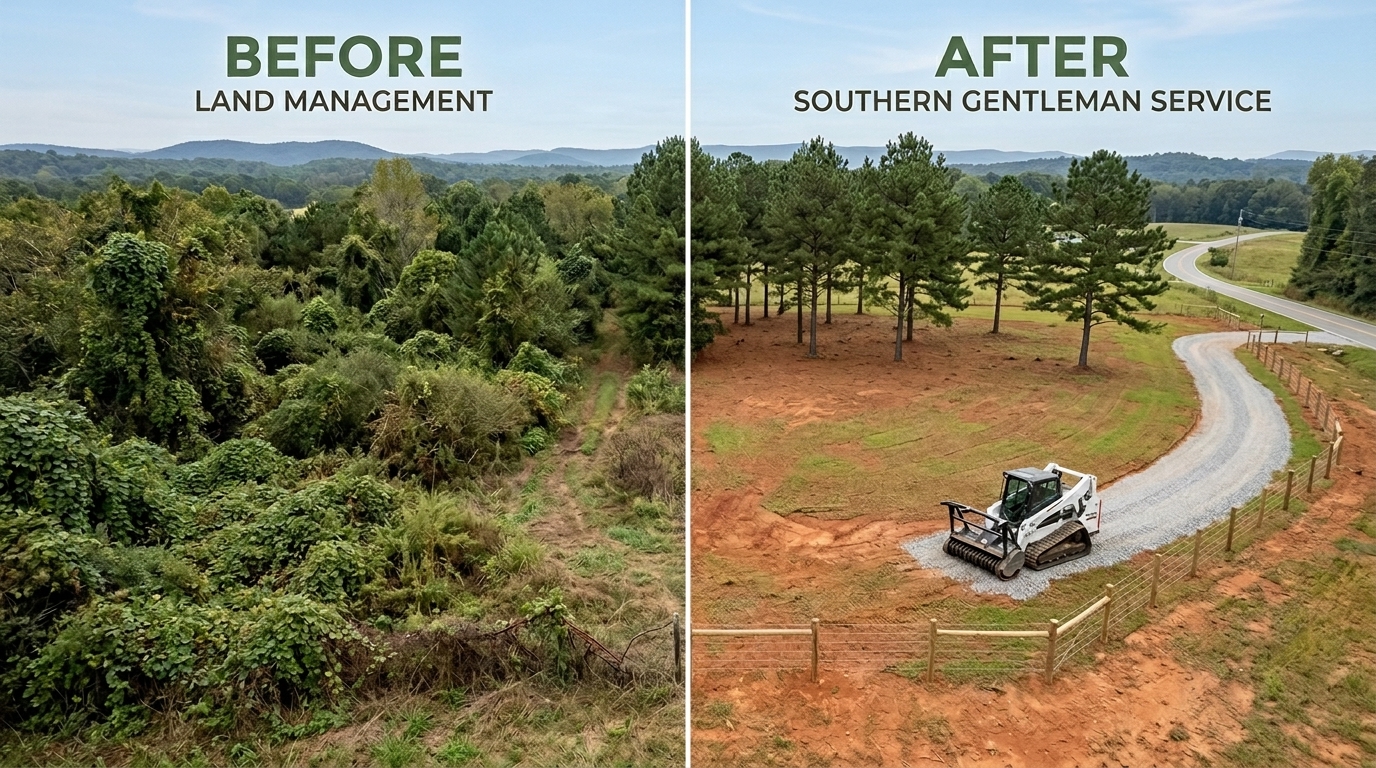
Step 1: Understand What You Are Working With
Before any equipment touches the ground, you need a clear picture of the property. That starts with two things: a land survey and a soil test.
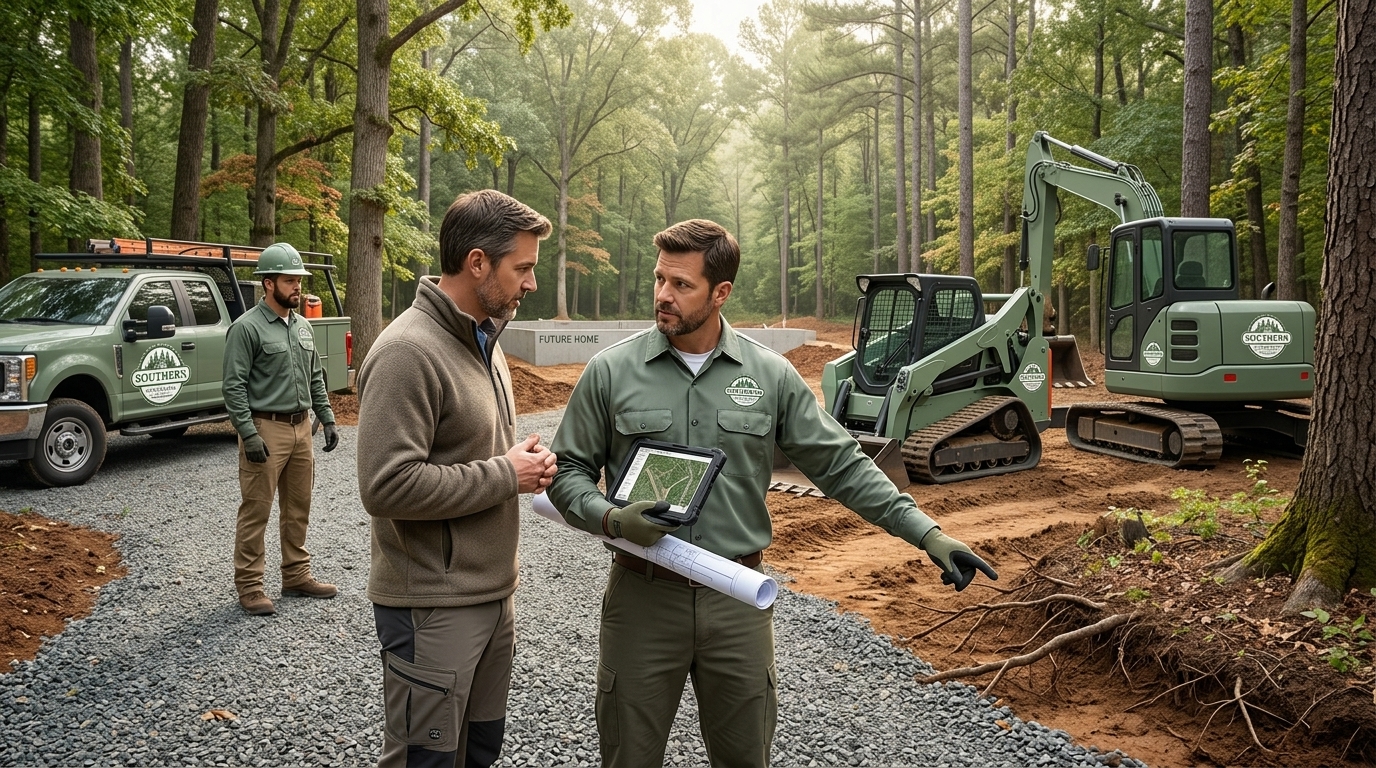
A licensed surveyor will stake property boundaries, identify easements, and flag setback lines required by Paulding County zoning. You will also need a soil/perc test if the lot requires a septic system rather than county sewer. Paulding County Environmental Health handles septic permits, and failing a perc test can change your entire site plan.
Walk the lot yourself and take note of the terrain. Is it heavily wooded? Sloped? Does water pool anywhere after rain? These factors directly affect your clearing and grading costs.
Step 2: Pull the Right Permits
Paulding County requires permits before you start clearing or grading. Here is what you will typically need:
- Land disturbance permit (LDP): Required for any project disturbing more than one acre. Issued by the Paulding County Community Development Department. You will need an erosion and sediment control plan prepared by a licensed engineer.
- Timber harvest notification: If you are removing timber with commercial value, Georgia requires a notification to the Georgia Forestry Commission.
- Building permit: Your general contractor typically handles this, but clearing and grading must comply with the approved site plan before the building permit is issued.
- Septic permit: Required before construction if you are not on county sewer. The lot must pass a perc test.
Do not skip permits or cut corners. Paulding County inspectors will shut down a site, and the fines add up fast.
Step 3: Tree Removal and Brush Clearing
Most raw lots in Paulding County are partially or fully wooded. Clearing is usually the most visible and labor-intensive part of lot prep.
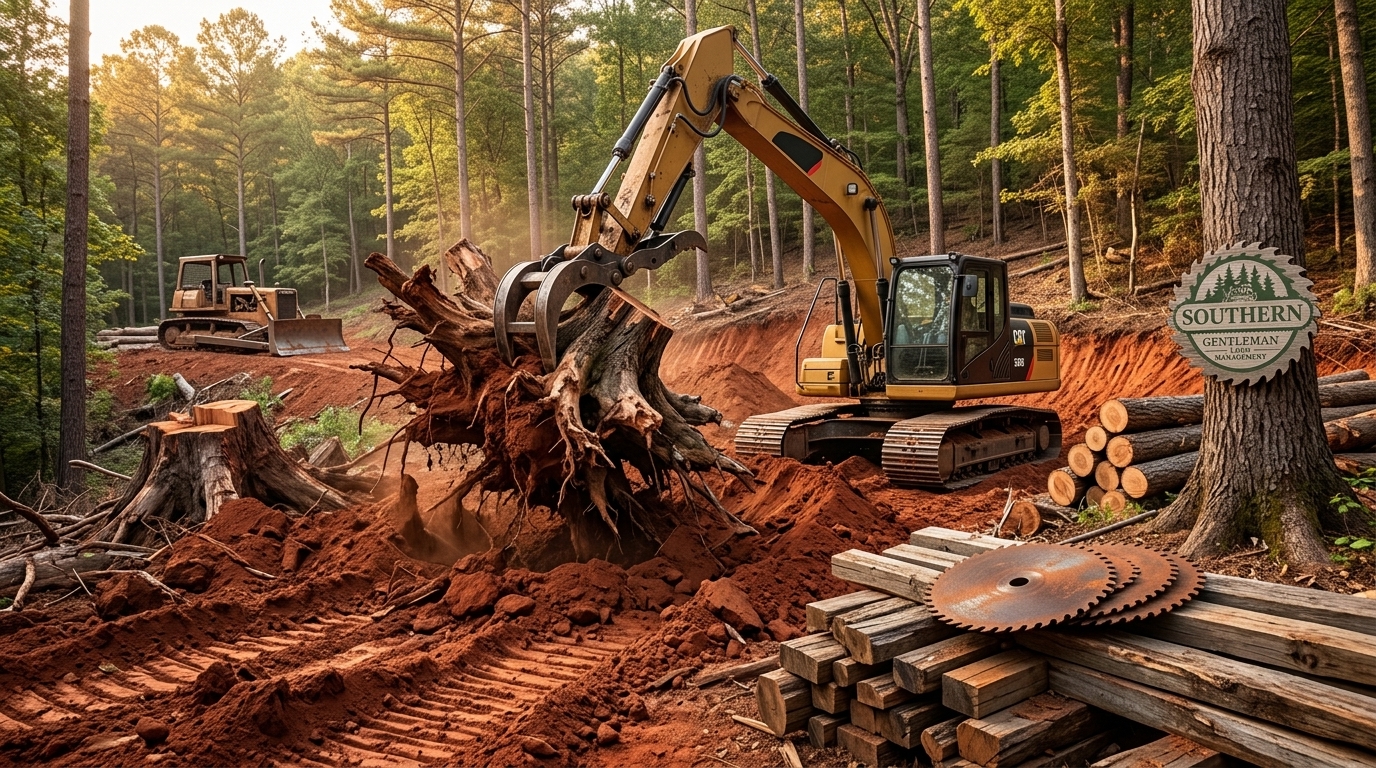
The approach depends on the lot. For heavily wooded properties with large hardwoods, you need professional tree removal: felling, sectioning, and hauling. Stumps must be ground below grade so they do not interfere with foundation work or grading. If you are building in the Hiram area, All In Tree Services and Pro is a reliable option for tree service in Hiram that handles both removal and stump grinding.
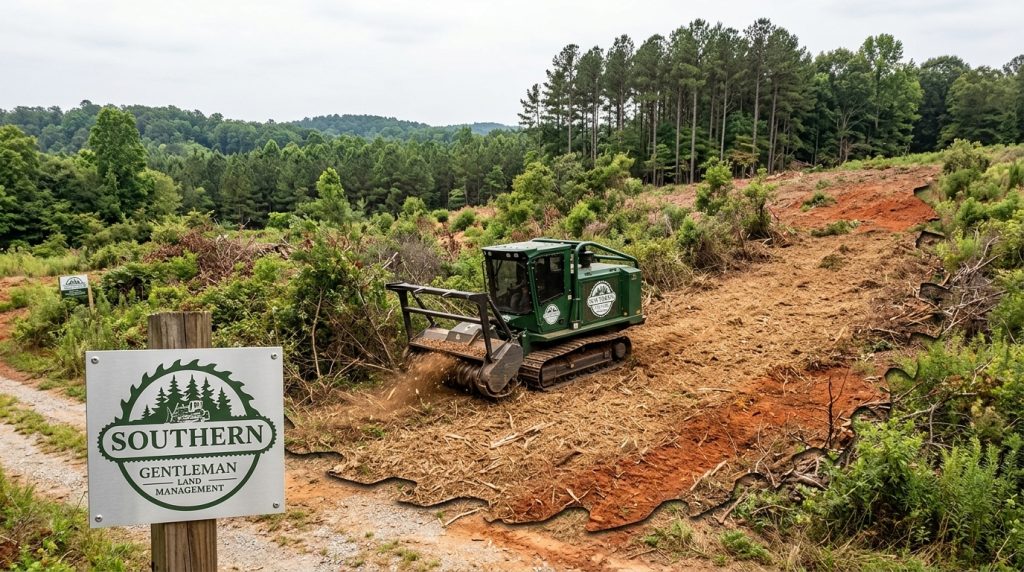
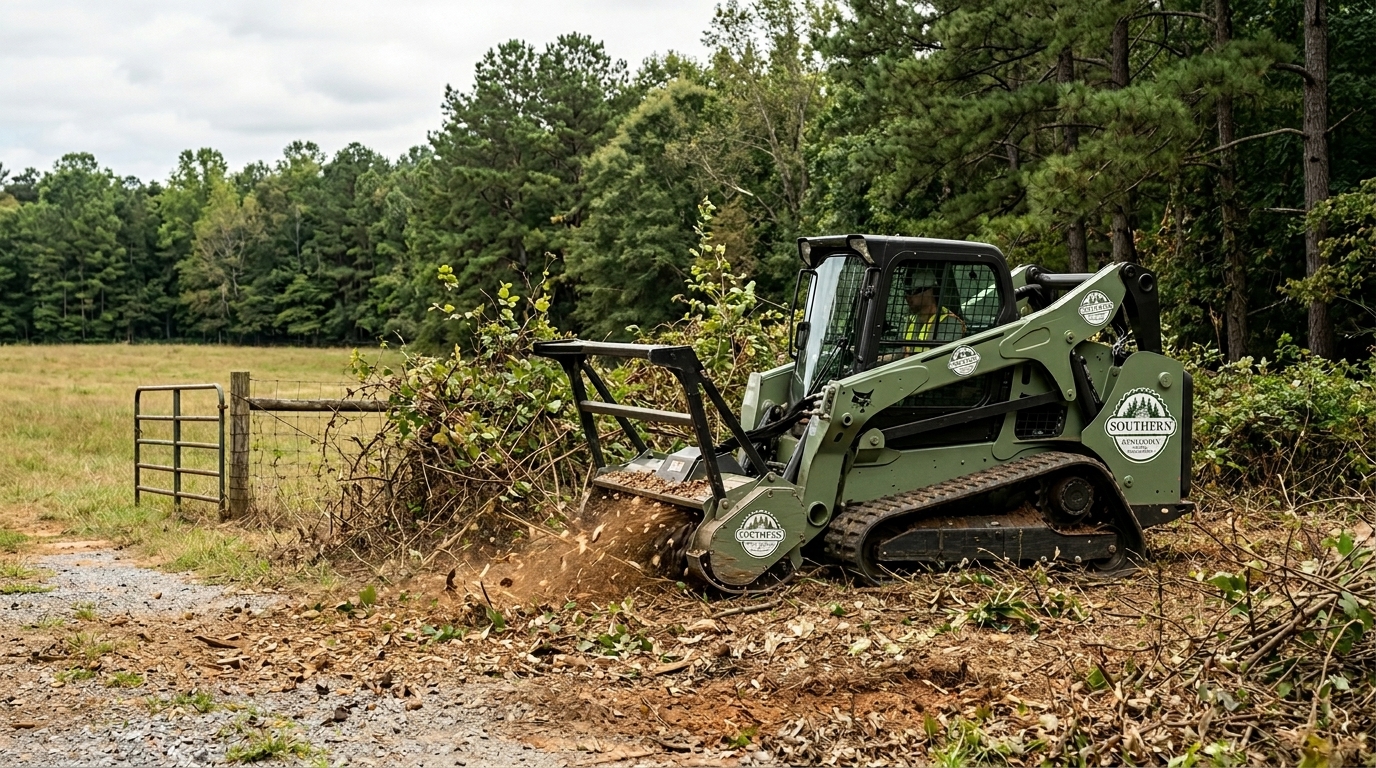
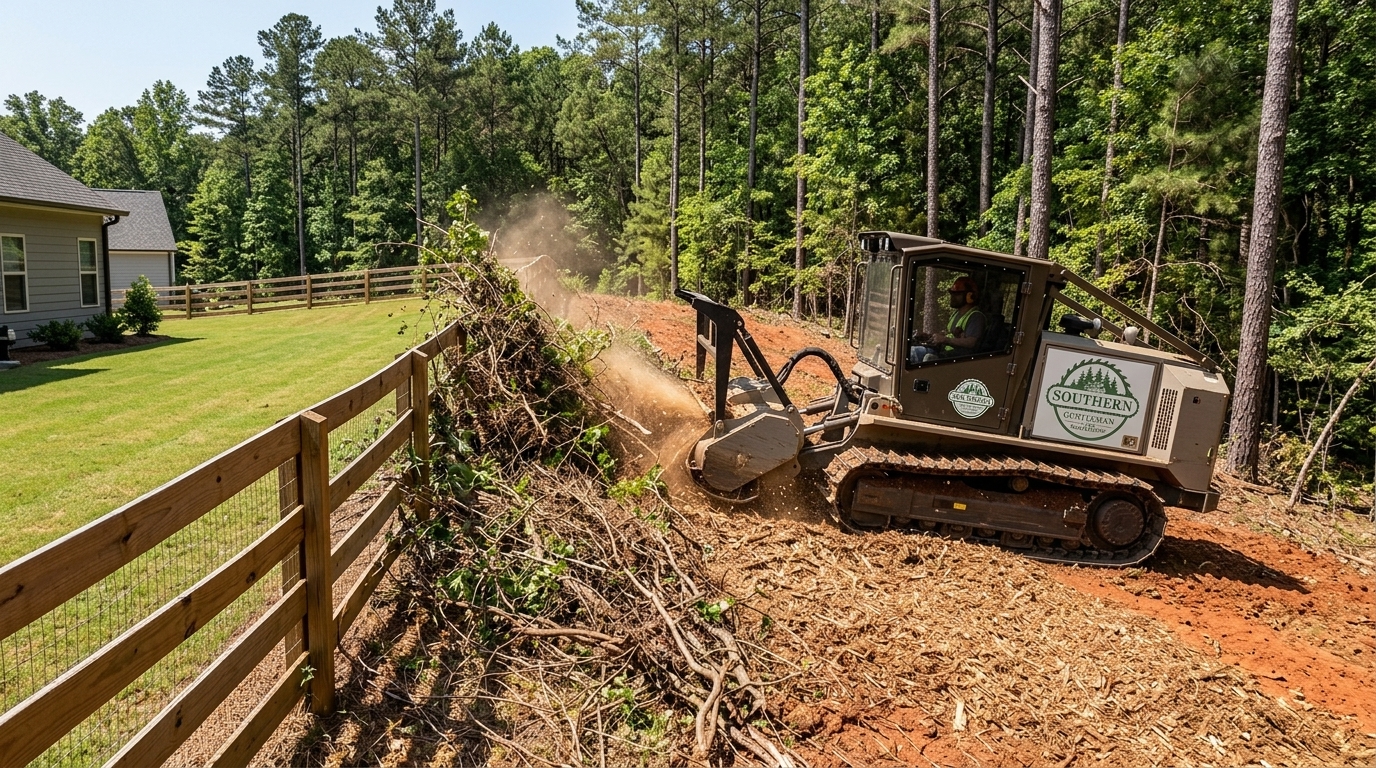
For lots with smaller trees, underbrush, and mixed vegetation, forestry mulching is often the more efficient and cost-effective method. A forestry mulcher grinds standing trees, brush, and stumps in a single pass, leaving behind a layer of mulch that helps with erosion control during the build phase. This method works particularly well on lots where you do not need to salvage timber.
The goal is a clean, debris-free lot with stumps removed and the footprint of the home, driveway, and septic field (if applicable) fully cleared.
Step 4: Grading and Drainage
Once the lot is cleared, grading shapes the land to direct water away from the future structure. This is not optional. Poor grading is the number one cause of foundation problems, crawl space moisture, and yard drainage issues after the home is built.
A grading contractor will:
- Establish finish grade elevations based on the approved site plan
- Create positive drainage away from the building pad in all directions
- Build swales or drainage channels to route stormwater to the street, detention area, or natural drainage path
- Compact the building pad to meet engineering specifications for the foundation type
Paulding County requires erosion control measures (silt fencing, check dams, construction entrance pads) to be in place before grading begins and maintained throughout construction. Inspectors check these regularly.
If your lot has significant slope, you may need retaining walls or engineered fill, which adds cost and time. Get a grading plan from a civil engineer before you commit to a lot with challenging topography.
Step 5: Utility Connections
With the lot cleared and graded, the next step is getting utilities to the building site.
- Water: Paulding County Water System handles connections. Submit your application early because tap fees and meter installation can take several weeks.
- Sewer or septic: If county sewer is available, your builder coordinates the lateral connection. If not, the septic system is installed after grading but before the foundation pour.
- Electric: Georgia Power or Cobb EMC (depending on your location in the county) will run service to a temporary power pole during construction. Request this early as scheduling can back up.
- Gas: Atlanta Gas Light handles natural gas service. Not all areas of Paulding County have gas lines, so confirm availability before assuming it is an option.
- Internet/cable: Coordinate with providers after the home is framed. Conduit for low-voltage wiring should be included in your site plan.
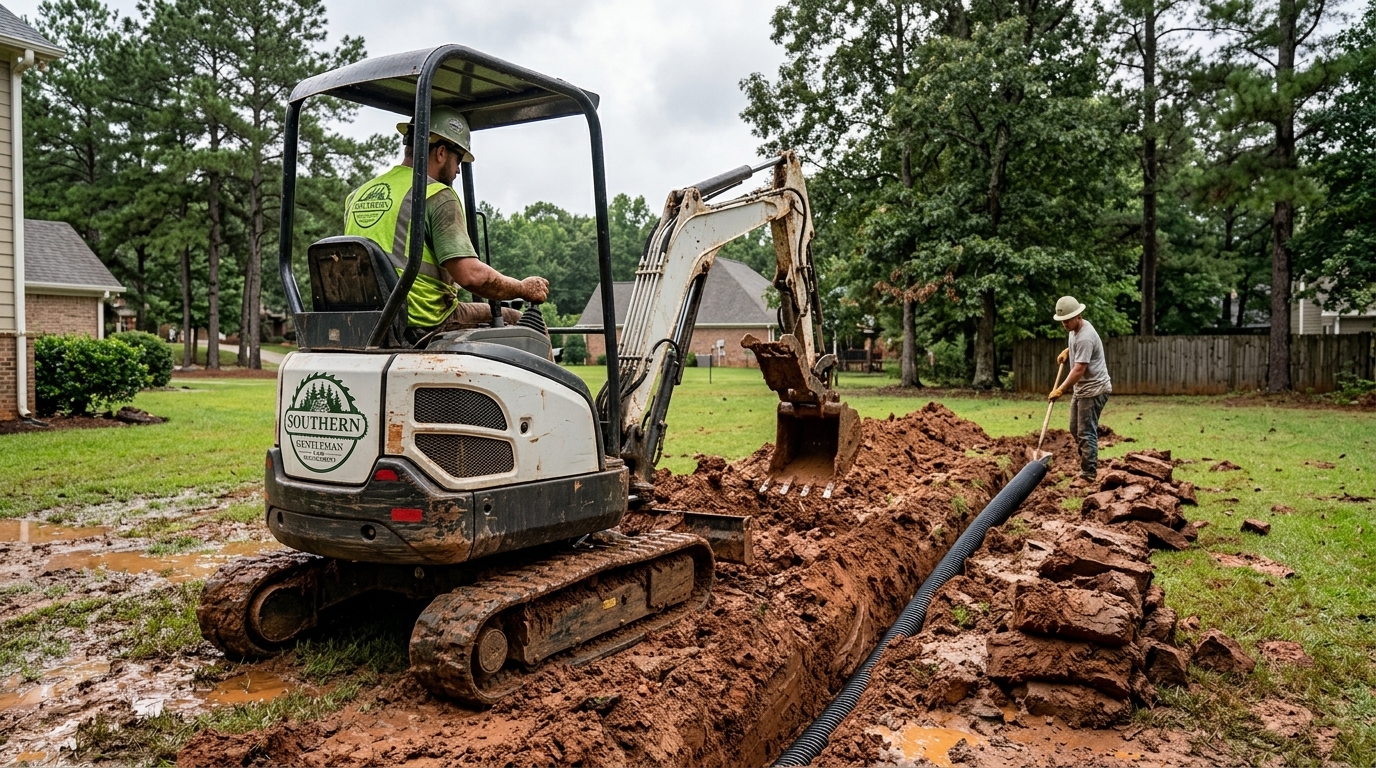
Utility trenching must happen after grading and before foundation work. Coordinate the sequence carefully with your builder so you are not re-grading after trenches are dug.
Step 6: Final Site Prep and Builder Handoff
Before your builder mobilizes, do a final walkthrough to confirm:
- All stumps are ground and removed from the building footprint
- The lot is graded to plan with proper drainage established
- Erosion control measures are installed and intact
- Utility stub-ins are marked and accessible
- The construction entrance meets county requirements (typically a gravel pad to prevent mud tracking onto public roads)
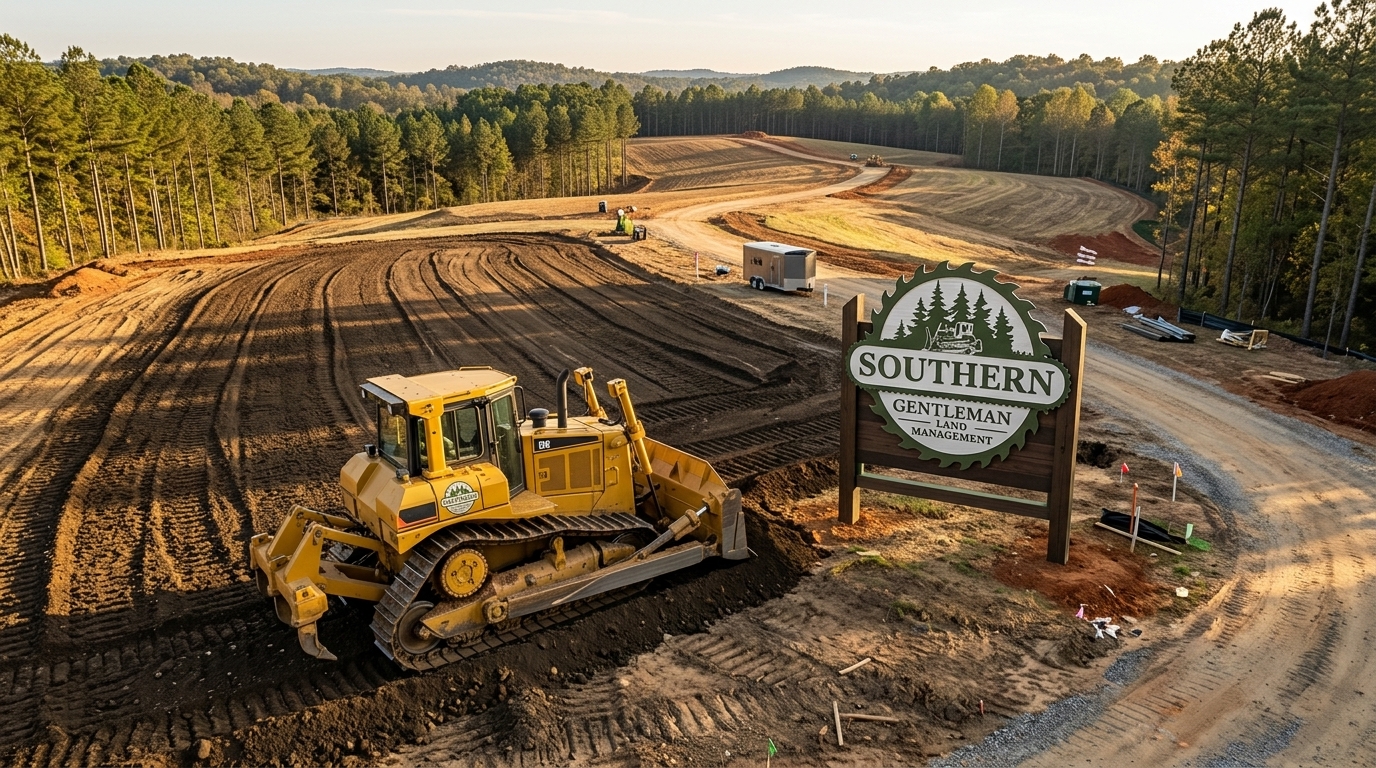
A well-prepared lot saves your builder time and keeps the project on schedule. Cutting corners on site prep almost always costs more in the long run through change orders, delays, and rework.
Why Lot Preparation Matters More Than Most People Think
Builders want to show up to a clean, graded, permitted site and start pouring concrete. When the lot is not properly prepared, everything downstream suffers: the foundation crew waits on the grading contractor, the grading contractor waits on tree removal, and the whole project slides weeks behind schedule.
If you are planning new construction in Paulding County, getting the lot prep right from the start is the single best investment you can make in a smooth build.