How Georgia Regulates Open Burning
The Georgia Environmental Protection Division (EPD) is the primary authority on open burning statewide. The EPD classifies all open burning as prohibited unless it falls into one of 13 approved burn types. The Georgia Forestry Commission (GFC) handles burn permits for activities that require them.
Here is the basic structure:
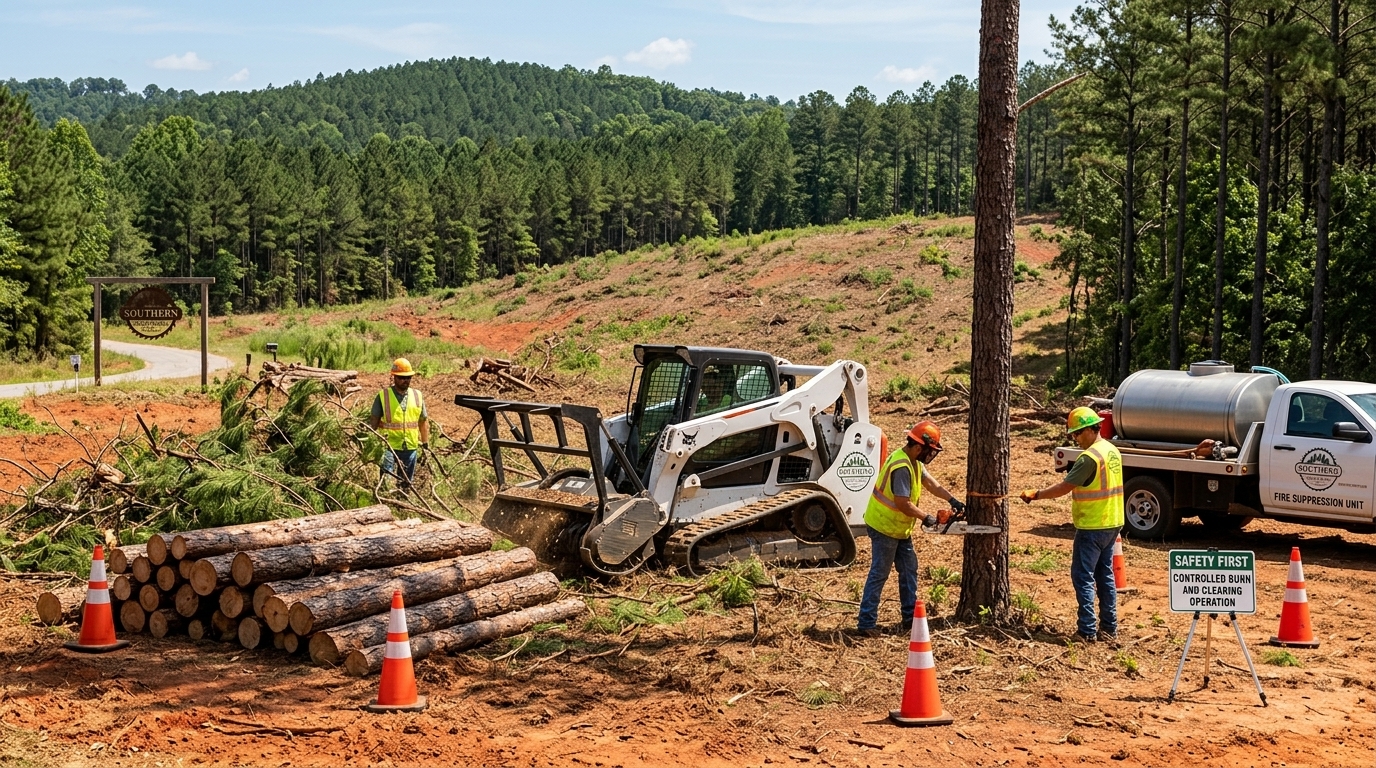
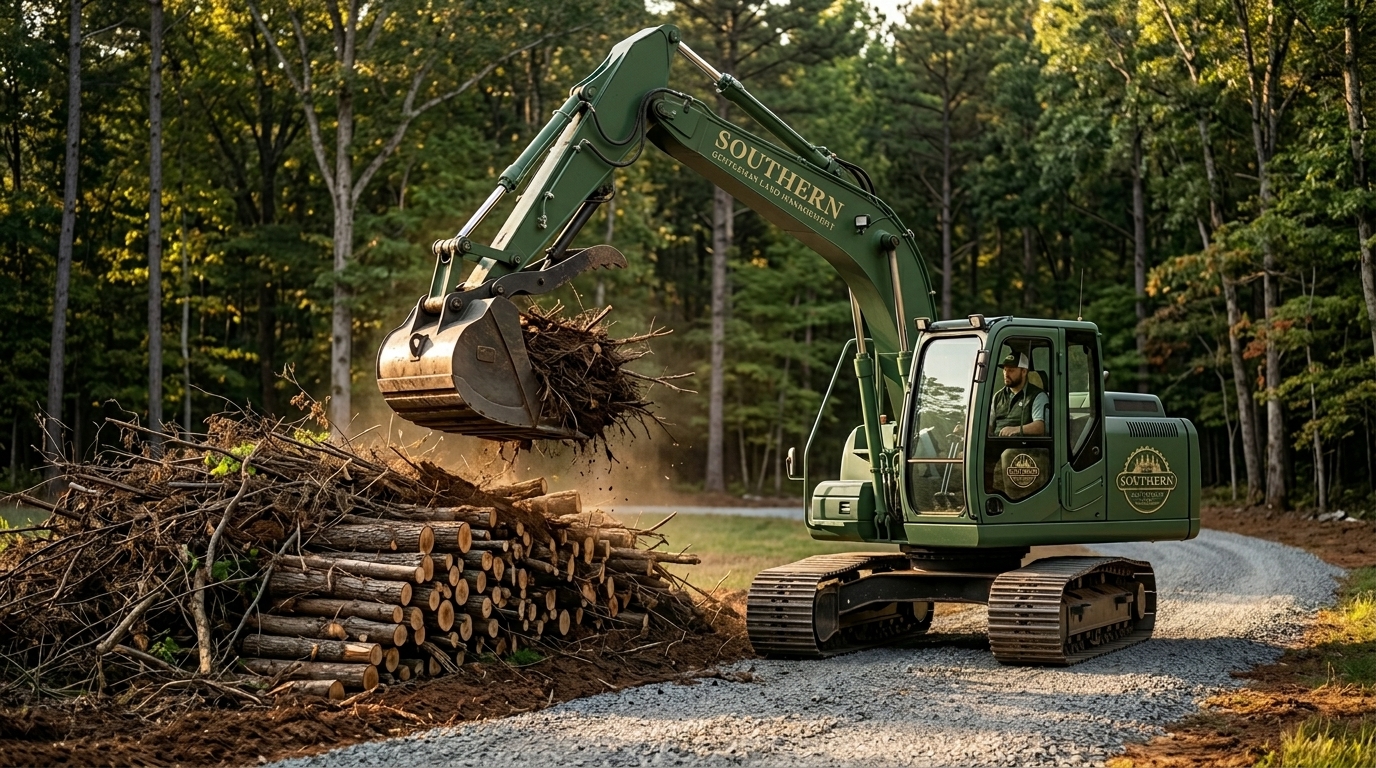
13 approved burn types. Georgia law recognizes 13 categories of legal open burning, including reduction of yard debris, agricultural burns, prescribed burns, recreational fires, firefighter training, storm debris, weed abatement, land clearing, and land clearing with air curtain destructors. Everything outside these categories is illegal.
Permit requirements. Seven of the 13 burn types require a permit from the Georgia Forestry Commission: agricultural burns (both under and over 5 acres), prescribed burns, storm debris, weed abatement and pest prevention, land clearing and right-of-way maintenance, and land clearing with air curtain destructors. Permits can be obtained online at GaTrees.org or by calling 1-800-GA-TREES (428-7337). Burn permits are valid only for the day they are issued.
No permit needed for basic yard debris. Under Senate Bill 119, hand-piled natural vegetation and yard debris on your own property no longer requires a GFC notification or permit. You still must follow all other rules about timing, materials, and safety.

The Summer Burn Ban: May 1 Through September 30
Every year from May 1 through September 30, the Georgia EPD enforces an open burning ban across 54 counties in northern and central Georgia. This is Georgia’s ozone season, and open burning is a significant contributor to the pollutants that form ground-level ozone.
During the summer burn ban, you cannot burn yard waste, land-clearing debris, or forest land. You cannot use air curtain destructors for land clearing. Prescribed burning is also prohibited in the 19 metro Atlanta non-attainment counties.
What you can still do during the ban: Recreational fires for cooking (grills, barbecue pits, campfires), fires in outdoor fireplaces or fire bowls using clean wood, and open flame devices like welding torches are allowed year-round.
Metro Atlanta Non-Attainment Counties: Stricter Rules Year-Round
Nineteen counties in the metro Atlanta area are classified as non-attainment for ozone under federal air quality standards. These counties face tighter restrictions than the rest of the state, and several of them overlap directly with SG Land Management’s service area.
The 19 non-attainment counties: Bartow, Carroll, Cherokee, Clayton, Cobb, Coweta, DeKalb, Douglas, Fayette, Forsyth, Fulton, Gwinnett, Hall, Henry, Newton, Paulding, Rockdale, Spalding, and Walton.
Summer (May 1 to September 30): Full burn ban on yard debris, land clearing, storm debris, and most other categories. Only cooking fires and similar exemptions apply.
Winter (October 1 to April 30): Counties with populations over 65,000 (which includes Cobb, Cherokee, and several others) are limited to 10 of the 13 burn types. Land clearing, storm debris burning, and weed abatement burns are among those restricted.
If your property falls in Bartow, Cherokee, Cobb, or Paulding counties, you are dealing with non-attainment restrictions on top of everything else. Plan accordingly.
County-by-County Differences in North Georgia
State rules set the floor. Your county can add restrictions on top of them. Here is what property owners in our service area should know.
Bartow County: Falls under the summer burn ban and non-attainment restrictions. Additional local ordinances govern burn hours and setbacks. See our full Bartow County burning regulations article for specifics.
Cherokee County: Non-attainment county. Summer burn ban applies. During the allowable season, residential burning of natural vegetation is permitted with conditions. Always check with Cherokee County Fire for current local restrictions.
Cobb County: Among the strictest in the region. Open burning of yard debris is only allowed October 1 through April 30, between 10 a.m. and one hour before sunset. No smoldering or hot coals can remain after that window. Bonfires require a permit from the Cobb County Fire Marshal’s Office. Fines range from $100 to $1,000 and can include up to 6 months in jail.
Paulding County: Non-attainment county with its own burning guidelines that layer on top of state rules. The county publishes specific residential burning guidelines that property owners should review before striking a match.
Floyd County and Gordon County: These counties are included in the 54-county summer burn ban. Outside the ban period, standard EPD rules apply. Always confirm with your local fire department, as drought conditions can trigger additional temporary bans at any time.
What You Cannot Burn: Prohibited Materials Statewide
This list applies year-round, in every county, regardless of permits or season.
- Tires
- Plastics of any kind
- Treated or painted lumber
- Shingles and roofing materials
- Household garbage and trash
- Construction debris
- Rubber
- Any man-made material
Burning prohibited materials is a separate violation from burning without a permit. The Georgia EPD can impose fines up to $10,000 for burning hazardous materials. This is not a slap on the wrist.
Safety Requirements for Legal Burns
Even when you have the right permits and are burning approved materials during the approved season, you still need to follow these requirements.
Maintain a firebreak. Clear a bare-dirt perimeter around your burn area to prevent fire from escaping.
Have a water source available. A charged garden hose at minimum. Larger burns may require a water truck or tank on site.
Never burn during air quality alerts. The EPD issues these through local media and the Georgia air quality monitoring system. Burning during an alert is a violation.
Check fire danger ratings. The Georgia Forestry Commission posts daily fire danger ratings. Do not burn when the rating is Class 4 or 5.
Attend the burn. You must stay present at the fire from ignition until it is fully extinguished. Leaving a fire unattended is a violation and a liability nightmare.
Watch wind conditions. High winds spread fire. If gusts are above 15 mph, postpone your burn.
Penalties for Violations
Fines and penalties vary by county and the nature of the violation, but here is the range.
- Standard burn ban violations: $300 to $3,000 depending on the county
- Cobb County violations: $100 to $1,000 and up to 6 months in jail
- Burning prohibited materials (EPD enforcement): Up to $10,000
- Liability for damages: If your fire escapes and damages a neighbor’s property, timber, or structures, you are personally liable for all costs. In Georgia, this can include the value of destroyed timber, structural damage, suppression costs, and legal fees.
The financial exposure from an escaped fire far exceeds the cost of any alternative. One bad burn can cost tens of thousands of dollars.
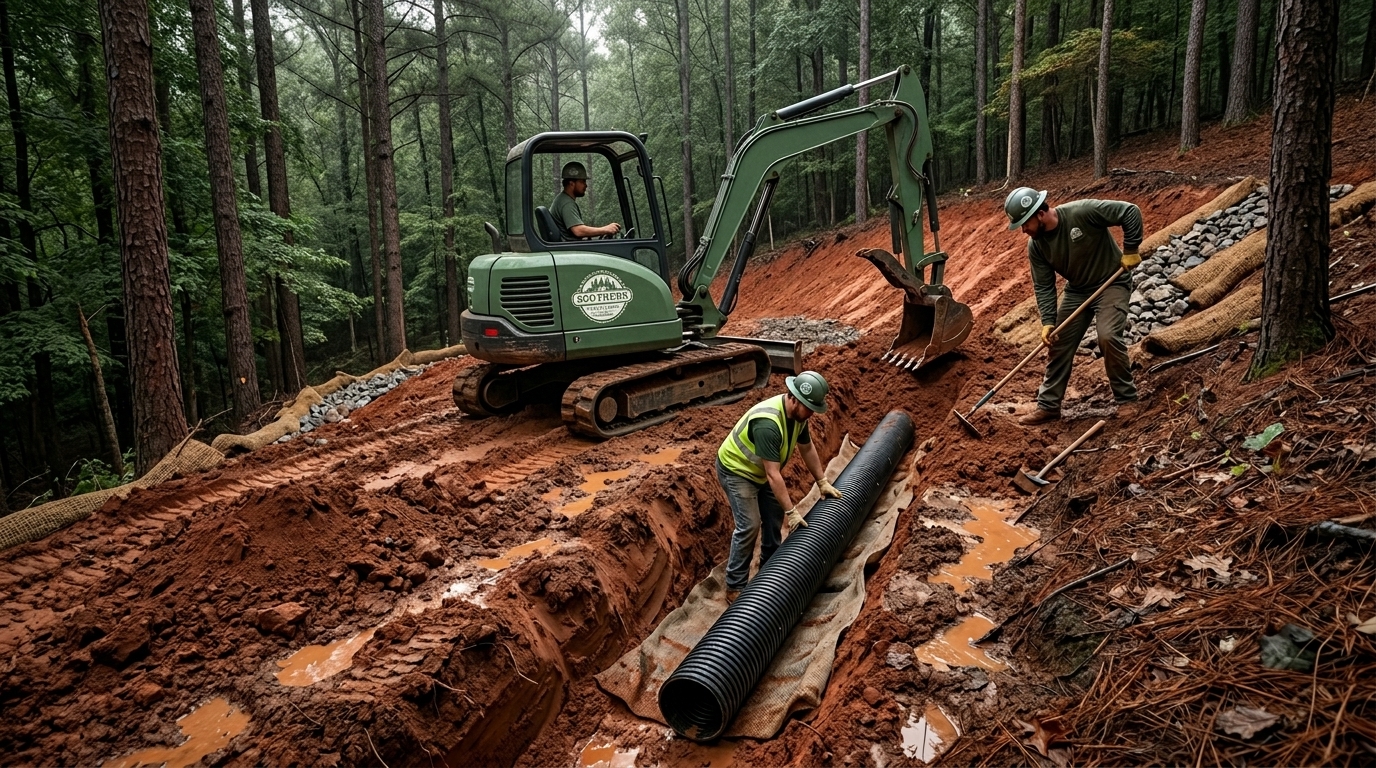
The Smarter Alternative: Forestry Mulching
Here is the practical reality: between seasonal bans, permit requirements, non-attainment restrictions, drought-triggered bans, and liability exposure, open burning is becoming less viable as a land management tool in North Georgia every year.
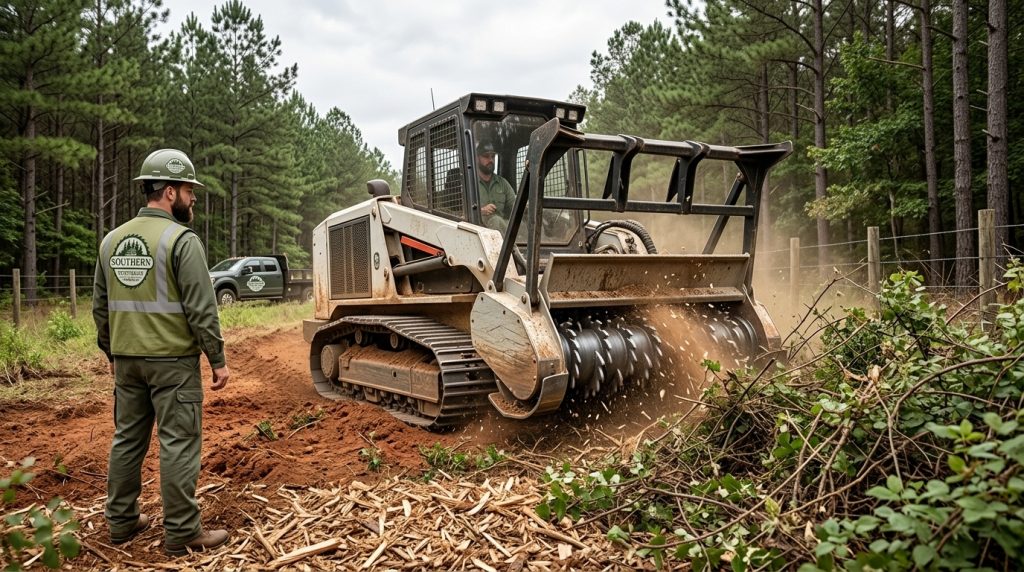
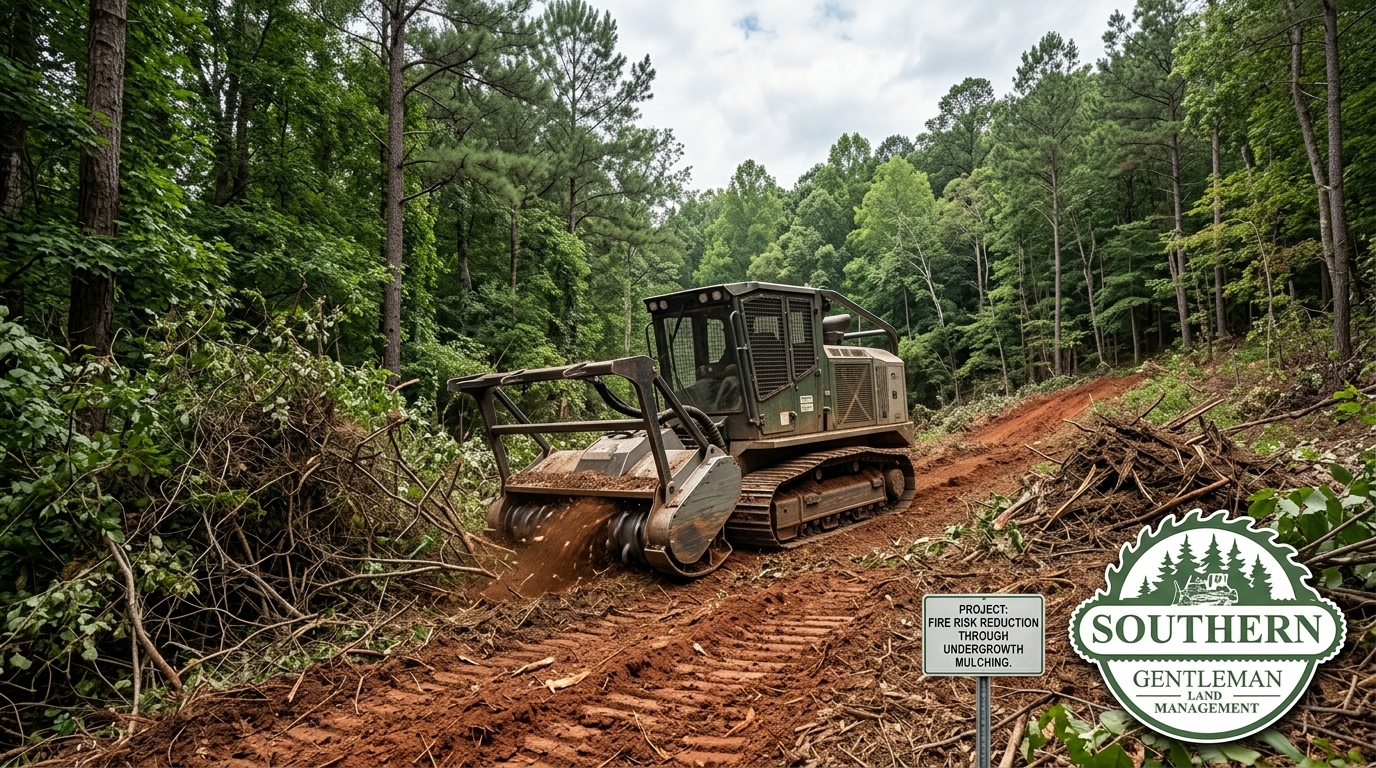
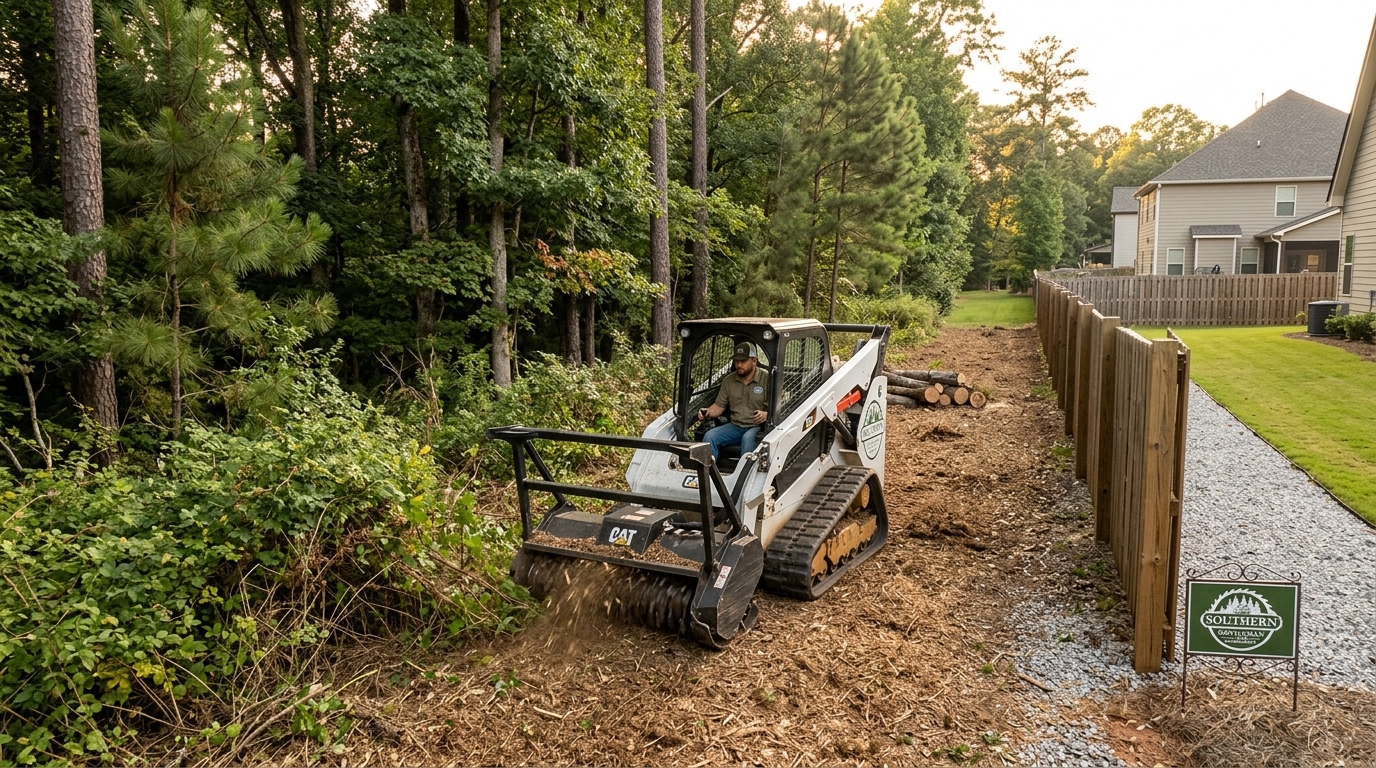
Forestry mulching eliminates the need to burn altogether. A forestry mulching machine grinds trees, brush, stumps, and undergrowth into mulch right where they stand. No smoke, no fire risk, no permits, no seasonal restrictions.
No permits or seasonal limitations. Forestry mulching can be done any day of the year, in any county, regardless of burn bans or air quality conditions.
No liability exposure. There is no fire to escape. No risk of spreading to neighboring property. No smoke complaints from neighbors calling the fire marshal.
Better for the soil. The mulch left behind protects the ground from erosion, retains moisture, and breaks down into organic matter over time. Burning, by contrast, strips the topsoil of nutrients and leaves bare ground exposed to washout.
Faster than burning. A professional forestry mulching crew can clear acreage in hours that would take days of staged burns, permit applications, weather delays, and fire watch.
For land clearing projects of any size, forestry mulching is the method that keeps you compliant, on schedule, and out of legal trouble.
How to Stay Compliant
- Know your county. Non-attainment counties have stricter rules. Check with your local fire department before any burn.
- Know the season. May 1 through September 30 is off-limits for most burning in 54 Georgia counties.
- Get permits when required. Use GaTrees.org or call 1-800-GA-TREES. Permits are free but mandatory for land clearing and agricultural burns.
- Check daily conditions. Fire danger ratings and air quality alerts can shut down burning even during the legal season.
- Never burn prohibited materials. The fines are steep and enforcement is real.
- Consider alternatives. Forestry mulching handles the same job without any of the regulatory burden.